Ligustrum is a hard plant to beat if all you want is a tough, dense privacy screen. I grew and sold plenty of it as a nurseryman, and I used it between my old house and a neighbor. The commonly planted ‘Recurvifolium’ selection is easy to control and can be maintained somewhere between 6 and 15 feet tall.
But a screen can do more than block a view. It can have fragrant flowers, berries, interesting foliage, and different textures. I would much rather have a mixed border screen than a long row of the exact same shrub.
There is also the seed issue. Flowering privets produce fruit that birds eat and distribute. We pull volunteer ligustrum out of our garden regularly. That does not mean every species or selection behaves identically, but it is a good reason to look carefully at what you are planting.
These alternatives range from manageable shrubs for a small patio to substantial evergreens for a property boundary. The important thing is to choose the plant that fits your space, not simply the one that looks full in a nursery container.
Key Takeaways
- Choose screening plants by natural width, eventual height, cold hardiness, and the conditions along your boundary.
- A mixed border provides privacy while adding varied foliage, fragrance, flowers, and seasonal interest.
- Naturally narrow selections reduce the pruning needed to maintain privacy in tight spaces.
- Frequent shearing controls size but can sacrifice the flowers and berries that make screening shrubs attractive.
Table of Contents
- Start With the Screen You Actually Need
- Cleyera: Dense Screening With Very Little Fuss
- Viburnums for Fragrance, Fast Growth, or Spring Flowers
- Osmanthus for Fragrant Fall Flowers
- Hollies: Choose the Habit Before the Name
- Japanese Hollies for Smaller, Narrower Screens
- Shade-Friendly and Native-Species Options
- Other Broadleaf Choices for Narrow Spaces
- Junipers for Sun, Heat, and Tough Conditions
- Other Conifers for Color or Larger Screens
- Two Colorful Options I Would Choose More Cautiously
- Prune for the Result You Want
- What About Sunshine Ligustrum?
- Build a Mixed Screen, Not Just a Green Wall
Start With the Screen You Actually Need
For many gardens, a screen around 10 to 15 feet tall is the sweet spot. It provides useful privacy without becoming a 30-foot problem that is difficult to maintain. Width matters just as much, especially between closely spaced houses or beside a patio.
- Match the natural habit to the space. An upright plant is much easier to keep narrow than a naturally broad, rounded shrub.
- Separate maintained size from eventual size. A plant that can be held at 8 feet may grow much larger without pruning.
- Account for sun, shade, and water access. A dry, sunny property line needs different plants from a shaded garden edge.
- Check cold hardiness. Some excellent Southern screening plants are less cold hardy than ligustrum.
- Decide whether flowers or berries matter. Frequent shearing can remove the very features that made a plant appealing.
If you are unsure of your zone, the USDA Plant Hardiness Zone Map is a useful starting point. For the privet side of the decision, NC State Extension’s Chinese privet profile provides additional background on that species and its invasive behavior.
Cleyera: Dense Screening With Very Little Fuss
Bigfoot Cleyera
Bigfoot cleyera would be near the top of my list. Ours has spent about five years in one of the toughest spots in the garden, beside a large red maple with roots running everywhere. It is dry, root-filled ground where we have had an almost impossible time getting other plants to grow.
The cleyera has never missed a beat. It is also about as far from the water hose as a plant could get. It receives occasional supplemental water when we remember that corner, but it has asked very little from us.
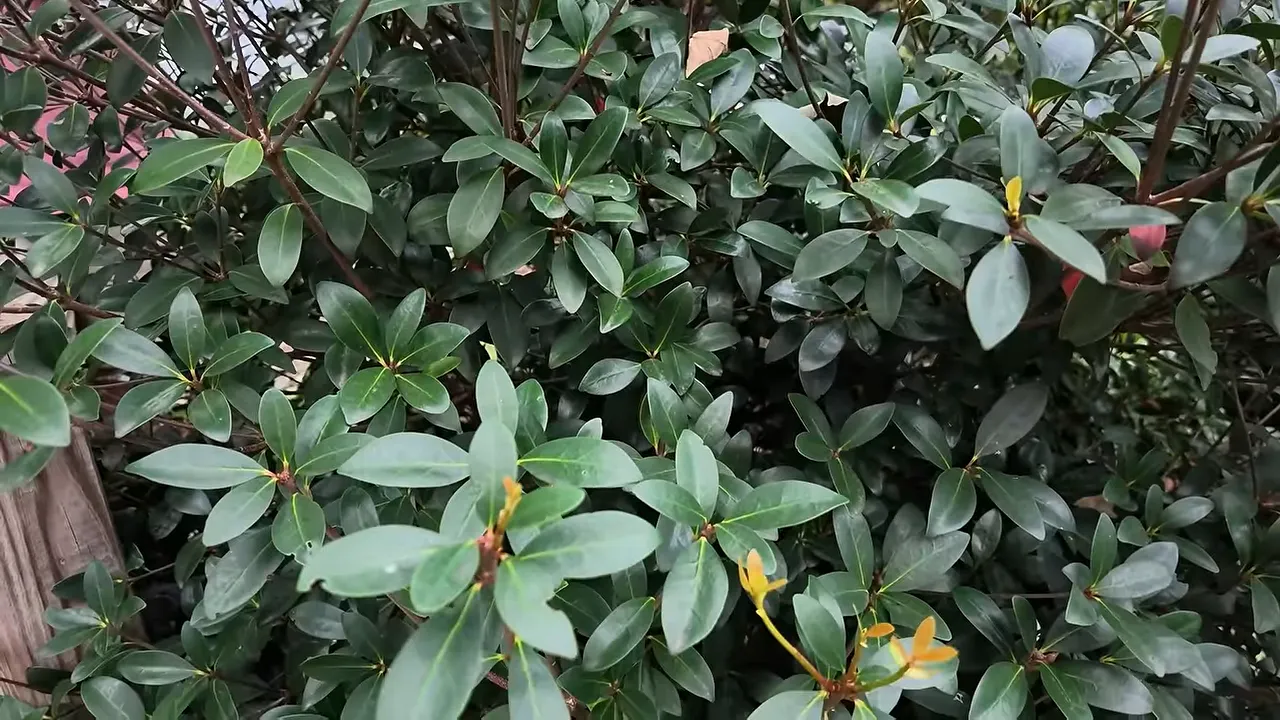
New growth has a bronzy cast before settling into shiny green foliage. What impresses me most is the fullness. I cannot find evidence that we have even pruned ours. We planted it, more or less forgot it, and it still developed into a dense shrub.
LeAnn Cleyera
LeAnn is another excellent choice when you want a moderate-size screen, roughly 10 to 12 feet tall, with an upright habit that does not eat up an enormous amount of ground space.
Its new growth is reddish whenever it is actively growing, then settles back to green. In colder winter weather, the outer foliage can take on a purple tinge. That gives it interest well beyond one spring flush.
We have three in our front garden that we maintain around 3 to 4 feet tall. Every pruning produces another colorful flush. That works nicely for us, but I think its best use for most people is along a property edge, where it can become a thick screen from top to bottom with relatively little maintenance.
Viburnums for Fragrance, Fast Growth, or Spring Flowers
Sweet Viburnum: Sugar Cookie and Coppertop
Sweet viburnum, Viburnum odoratissimum, is a very good broadleaf screening option for the Deep South. Think primarily of zones 8 through 10, although selections differ in cold tolerance.
Sugar Cookie, a Southern Living Plant Collection selection, has a remarkably full habit and fragrant flowers. Availability may vary, but other sweet viburnum selections offer similar usefulness.
Coppertop adds another feature: reddish new foliage during active growth in spring and early summer. Outside that growth period, it may look like a straightforward green shrub. When it is flushing, though, the color is quite striking. It also produces fragrant flowers.
The limitation is cold hardiness. These are not direct replacements for ligustrum in every climate, but in a warm garden they give you dense evergreen foliage with something extra.
Chindo Viburnum
Chindo has become an enormously popular screening plant, and it is easy to see why. It strongly wants to grow upward, so it provides height without immediately spreading across the garden.
- Height: Can exceed 25 feet over time.
- Hardiness: Approximately zones 7b through 9b.
- Main attraction: Fast, upright growth and lustrous green foliage.
You may get an occasional horizontal branch that needs attention, but the overall habit is naturally vertical. Flowers and fruit can develop as plants mature, although those are not the main reasons most people grow it.
Do not judge Chindo entirely by an older, crowded nursery container in late winter. A plant that has been waiting too long to go into the ground, especially after some cold damage, is not showing its best foliage.
Nantucket Viburnum
Nantucket is the choice here for someone who wants a screen component that really shows off in spring. It is a complex hybrid with Chinese snowball viburnum in its parentage, and it can cover itself in conspicuous white flower clusters around April.
It grows to roughly 10 to 12 feet, making it useful where a larger snowball viburnum would be too much. The foliage is attractive in its own right, with a noticeable contrast between the upper and lower leaf surfaces.
The important qualification is that Nantucket is not a dependable fully evergreen screen everywhere. It can be semi-evergreen farther south and loses more foliage as you move north. I would use it for seasonal interest within a mixed border rather than assume it will provide the same winter coverage as a holly.
Osmanthus for Fragrant Fall Flowers
Fragrant Tea Olive
Osmanthus fragrans can be maintained in much the same size range as a ligustrum screen. It has shiny, dark green foliage and is a very easy plant to get established in a suitable climate.
The flowers are the bonus. Instead of spring bloom followed by privet seedlings, fragrant tea olive flowers in fall and can continue intermittently through winter. It brings fragrance during months when you might not expect much to be flowering.
It is non-native, but it is not the invasive seed-spreading problem that privet can be here. It is also less cold hardy than ligustrum, so it is most comfortably considered a warm-climate option, generally around zones 8 through 10, with some variation among selections and sites.
Carl Wheeler Osmanthus
If fragrant tea olive is not quite hardy enough, look at Osmanthus × fortunei ‘Carl Wheeler’. This hybrid combines O. fragrans and O. heterophyllus and offers another opportunity for fall fragrance in approximately zones 7 through 9.
Carl Wheeler has a dense, compact habit, although it ultimately becomes a substantial shrub. The dark green leaves have interesting toothed margins that look more formidable than they feel. New growth can carry a burgundy tint.
It is a standout plant in a nursery, and its fairly uniform habit makes it particularly useful in a mixed border screen.
Hollies: Choose the Habit Before the Name
There are a tremendous number of upright hollies, but they do not all grow the same way. Some are naturally narrow. Others are broad plants that have been sheared into narrow shapes for sale. That distinction can determine how much pruning you do for the next twenty years.
Screen Play Holly
Screen Play is appropriately named. It is very fast growing, has foliage that is not spiky, and produces an impressive crop of berries. On ours, the fruit begins changing color in early fall, with the promise of a very showy plant by Christmas.
It is more cold hardy than the sweet viburnums and fragrant tea olive discussed above, making it a useful option when those plants are marginal. We have also noticed more growers producing it, which should help with availability.
Oakland and Golden Oakland Holly
Oakland is one of the hollies that naturally does what people are often trying to force other hollies to do: grow vigorously upward while remaining relatively narrow.
It is self-fruiting, and its leaves look sharper than they really are. For a corner foundation planting or an upright element in a screen, that natural growth habit is a considerable advantage.
Golden Oakland is the variegated version. Ours developed into a real showstopper in about six years from a 3-gallon plant. It gets a few hours of morning sun, then shade from an oak in the afternoon, and still carries excellent color.
Give both room for eventual height. Golden Oakland can grow beyond the 8- to 15-foot range that many people have in mind when they begin shopping for a ligustrum replacement.
Monarch Purple Holly
Monarch belongs to the purple holly group, named for breeding that combines red holly and blue holly lines. The name does not mean you are getting purple leaves.
What you get is exceptionally dark foliage, particularly in winter, on an upright, narrow plant. Monarch can be maintained around 10 to 12 feet tall, and the narrow habit is not simply the result of constant nursery shearing.
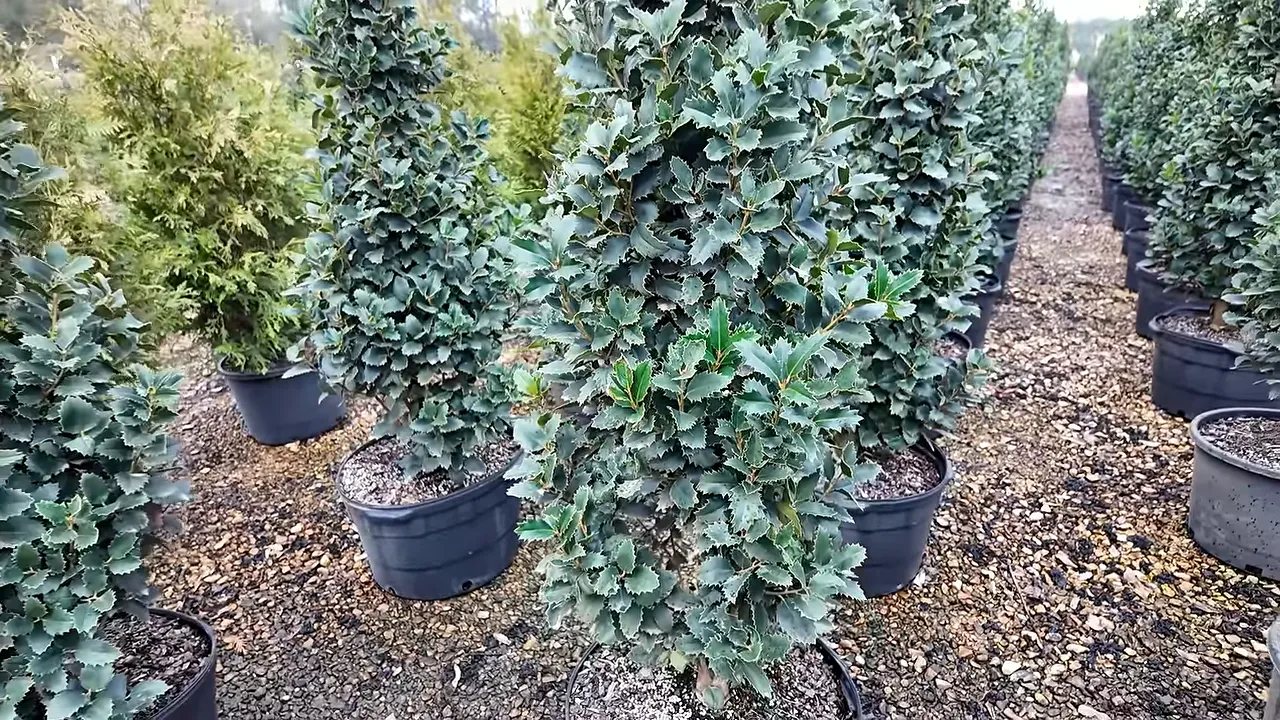
It is self-fruiting and especially interesting for spaces where a sidewalk, house, or other feature leaves very little room for a broad shrub.
Nellie R. Stevens Holly
Nellie R. Stevens is a familiar, dependable, fast-growing holly. It is easy to produce in a nursery and easy to grow in a garden. The catch is space.
A nursery plant may look very narrow because it has been sheared. Naturally, Nellie Stevens is more broadly pyramidal. Mature plants can reach roughly 25 to 30 feet tall and around 15 feet wide.
People do keep them at 8 to 10 feet tall and 3 to 4 feet wide, but that becomes an ongoing pruning job. Since they flower in spring and carry developing fruit into winter, pruning also means giving up some berries.
My preference is to put Nellie Stevens on the edge of a larger property and let it develop into the beautiful small ornamental tree it wants to become.
Whoa Nellie Holly
Whoa Nellie adds bright chartreuse new growth to the Nellie Stevens type. It is a little slower growing, but it is still a substantial plant that can eventually reach around 20 feet if allowed.
This one is a matter of personal taste. Some people love the bright foliage; others may think it looks like a holly that needs something. There is no question that it stands out.
Most of the strongest color is in the new growth. More shearing can encourage additional colorful flushes, but you sacrifice berries in the process. I would give it enough space to reach at least 15 feet tall and 8 to 10 feet wide rather than build the whole planting around constant size control.
Cherry Bomb Holly
Cherry Bomb combines Nellie Stevens and Ilex integra parentage. One of its most appealing features is the muted leaf point. If you want the toughness and vigorous growth of a large holly without so much prickliness, this is worth finding.
It has dark green foliage and very heavy fruiting. Left alone, it can become a large plant, roughly 30 feet tall and 15 feet wide.
It can certainly be size controlled, even quite severely, but that does not mean a tiny space is its best home. Repeated pruning interrupts berry production. If pruning is necessary, winter gives it an opportunity to grow back and flower, although some fruiting display may still be lost.
Dwarf Burford Holly
“Dwarf” has gotten this plant into a lot of trouble. We had a stock plant at the nursery that reached about 10 feet tall and 10 feet wide even though we regularly took cuttings from it.
This is a rounded, substantial shrub, not something I would put under a low window. It is much better in a mixed border screen, beside a broad blank wall, or somewhere it can occupy its natural space.
It is tough, handles heat well, produces red berries without requiring a separate male plant, and tends to slow down as it reaches that larger screening size. In the right place, it asks very little of you.
Needlepoint Holly
Needlepoint is the more upright alternative to Dwarf Burford. Both have that single point at the end of the leaf, but their shapes are quite different.
If you want a medium-size holly and cannot let it spread well out into the garden, Needlepoint is often closer to the plant you meant to buy. It has heavy fruiting, is self-fruiting, and works well in a narrower screening position or on a foundation corner.
It is a very workmanlike plant: flowers for pollinators, fruit for birds, and little maintenance when the location suits it.
Christmas Jewel Holly
Christmas Jewel has a manageable upright habit and a remarkable berry display. We kept ours in a container for three or four years before planting it in the garden.
The leaves are narrower than those of some broadleaf hollies, and their points are relatively muted. It can broaden with time, but it is not as aggressively upright as some other selections, making height and width control easier.
This is a good option for a mixed screen, a foundation corner, or a container. If your goal is to hold a holly around 6 feet tall, Christmas Jewel is one I would consider rather than immediately reaching for one of the giant-growing selections.
Foster Holly
Foster holly is an older plant that still deserves a place in gardens. I have grown and sold it throughout my nursery career, most often as Foster No. 2.
It has narrow foliage, relatively mild spines, an upright habit, and reliable red fruit. Female plants can produce berries without a separate male. Growth can be a little slow initially, then pick up speed.
It can reach 30 feet and can be trained into a small tree. Full sun gives the best berry production, although it tolerates some shade. New introductions are exciting, but they do not automatically make an older, useful plant obsolete.
Japanese Hollies for Smaller, Narrower Screens
Steeds Holly
Steeds is an upright Japanese holly, Ilex crenata, with a natural Christmas tree shape. It is quite different from rounded Compacta or low, domed selections such as Helleri and Soft Touch.
You can let it reach 10 to 12 feet, or maintain it much smaller. It is particularly useful for a 6- to 8-foot privacy planting beside a patio or seating area where ground space is limited.
Because the foliage is the main attraction, rather than a showy flower display, it can be shaped from spring into midsummer. It also makes a good container plant or outdoor Christmas tree.
Snowflake Holly
Snowflake has a similar upright habit to Steeds, but with conspicuous variegation. Some variegated hollies can look a little underfed from a distance. This one looks deliberately variegated.
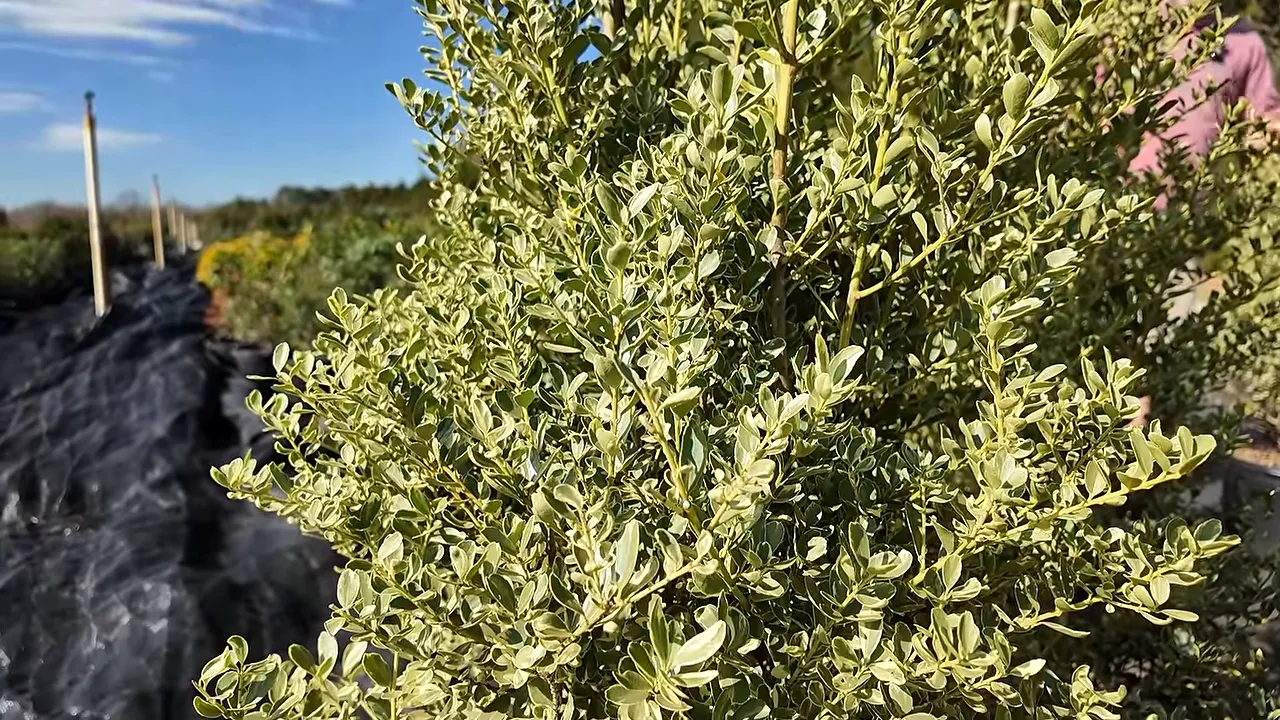
It is useful in containers, at foundation corners, or in narrow spaces beside a wall or fence.
The caution with Japanese hollies is drought. They are generally quite cold hardy, commonly grown in zones 6 through 9, with some use in protected zone 5 locations. But they are not the plants I would forget during an unusually dry stretch. Put them high on your list to check for water.
Shade-Friendly and Native-Species Options
Illicium and Florida Sunshine
For a shaded or partly shaded screen in the Southeast, illicium is an excellent place to start. Illicium parviflorum is native to the southeastern United States, rugged, and particularly useful where deer pressure makes a property-edge planting difficult.
The straight species provides green foliage, while Florida Sunshine brings bright foliage color into a shaded planting. The flowers are small rather than showy, but interesting up close.
I consider the green form one of the most useful plants for a shade garden. Its strong deer resistance is especially valuable along a boundary, which is often the first part of a garden deer encounter.
Compact Carolina Cherry Laurel
Carolina cherry laurel, Prunus caroliniana, grows wild in our neighborhood as a small understory tree. Compact selections make that native species more useful in managed landscapes.
Compacta can be maintained roughly between 6 and 10 or 12 feet tall. It has dense evergreen foliage, spring flowers that attract pollinators, and tends to be deer resistant.
It is also adaptable to different forms. I have seen it grown as cones, single-trunk small trees, and other shapes. ‘Bright ’N Tight’ is another selection we sold years ago that remains available.
Teddy Bear Magnolia
Teddy Bear is a narrower, more compact selection of our native Southern magnolia, Magnolia grandiflora. It is useful where the straight species would become far too large.
Compared with Little Gem, Teddy Bear has shorter, rounder leaves and, to my eye, particularly good contrast between the glossy green upper surface and the rich brown underside. Its habit is also naturally compact without requiring as much nursery shaping.
It still brings the fragrant white flowers you expect from a Southern magnolia. In a mixed screen, that foliage gives you a very different texture from a holly or juniper.
Other Broadleaf Choices for Narrow Spaces
Skip Laurel
Skip laurel, Prunus laurocerasus ‘Schipkaensis’, fits that useful middle range for screening: approximately 10 to 15 feet tall and 5 to 8 feet wide.
It grows in full sun into part shade and is hardy across a broad range, roughly zones 5b through 9. The dark, lustrous foliage stays attractive year-round, and most stems naturally head upward.
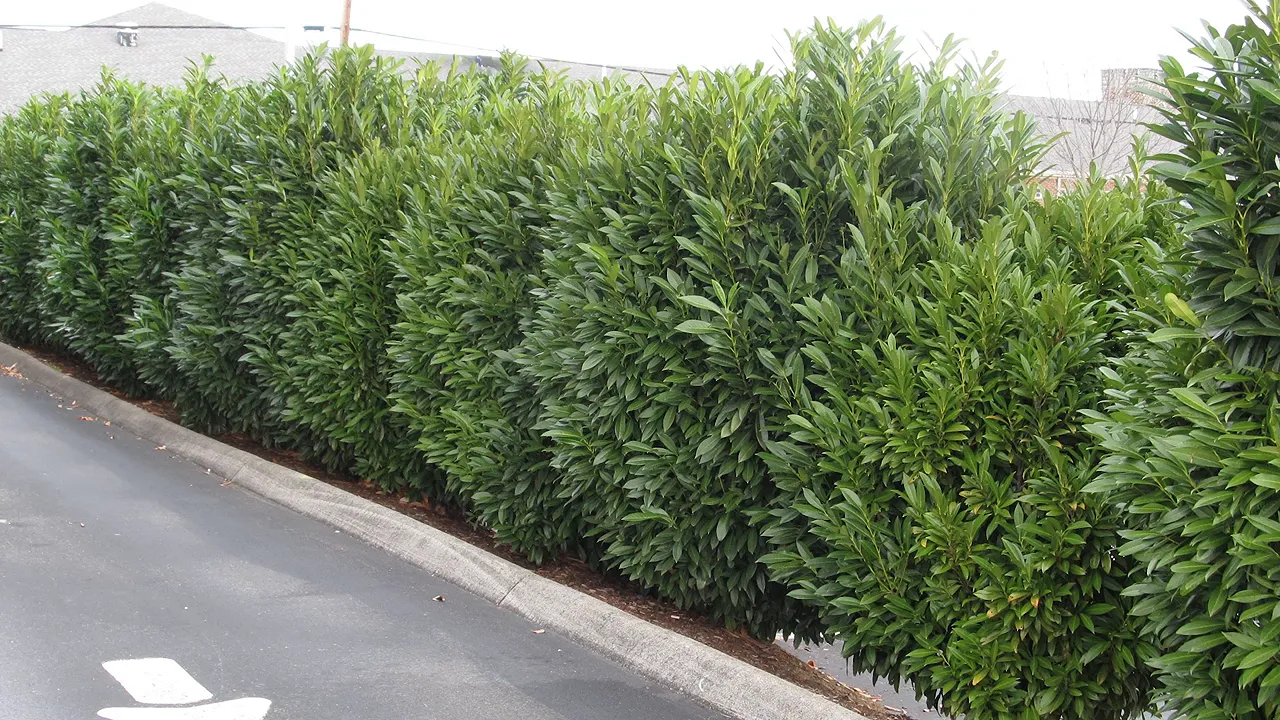
White spring flowers attract pollinators and are followed by dark fruit. If you need to control height, pruning after spring flowering is a sensible time. It can also encourage additional growth lower on the plant. An occasional wayward side branch is easy enough to remove.
Spring Festival Camellia
Spring Festival is an interesting hybrid camellia with a strongly upright, almost Christmas tree-like habit. For a small garden, that is a very appealing combination: narrow evergreen structure with flowers.
It produces light pink, rose-like, semi-double flowers, with buds carried down into older growth so the display can extend from top to bottom. In the Charlotte-area plants I examined, buds were beginning to show color in February, suggesting bloom later in February or early March, depending on weather.
It is hardy in approximately zones 7 through 9. This is the kind of plant I am always looking for along the edge of our own small landscape.
Maki Podocarpus
Maki podocarpus is a familiar screening plant in warm coastal gardens. Around Charleston, you can find garden after garden enclosed by it.
Its natural tendency is strongly upright, making it valuable between closely spaced houses. It tolerates heat, coastal conditions, sandy conditions, part shade, and plenty of sun.
The limitation is cold, not summer heat. This is not the conifer to choose for a very cold winter climate.
New growth is lighter than the older foliage, creating a pleasant contrast. Green forms grow much faster than the white-variegated Romeo selection we have at home.
Junipers for Sun, Heat, and Tough Conditions
In hot Southern landscapes, I often prefer upright junipers to Emerald arborvitae. Established junipers generally develop good drought tolerance and handle a range of challenging conditions, including coastal exposure and air pollution. Deer resistance is another advantage.
That does not mean you never check them for water. During a very dry period, I still check conifers and water when the top couple of inches of soil become dry.
Blue Point Juniper
Blue Point is one of my favorite upright junipers, and I grew it for years. It gives Southern gardens something we do not have in abundance: a useful blue-toned conifer.
It is not Colorado blue spruce blue, but the blue cast is definitely there. It is hardy in approximately zones 4 through 9, so its usefulness extends well beyond the South.
For a tough, sunny screen where water will not always be convenient, Blue Point is worth considering alongside the other upright junipers.
Spartan Juniper
Spartan is particularly good when you want a formal-looking group of three or five plants within a mixed screen. Its naturally uniform, rigidly upright habit creates that orderly effect without a tremendous amount of work.
Expect roughly 15 feet tall and 5 to 6 feet wide over time. It can be sheared narrower, but nursery plants may already have been shaped or grown closely together, so allow for some additional width in the landscape.
It tolerates full sun, heat, coastal conditions, and drought once established, and is hardy in approximately zones 4 through 9. The foliage is relatively soft for a juniper. In colder weather it may bronze or take on a purplish cast.
Taylor Juniper
Taylor is a selection of Eastern red cedar, Juniperus virginiana. The name comes from Taylor, Nebraska, rather than a person named Taylor, which is something I have had to retrain myself to say correctly.
It is an excellent narrow screening plant, reaching approximately 15 to 18 feet tall while remaining around 3 to 4 feet wide. The foliage has a soft, blue-toned appearance and a finer texture than typical Eastern red cedar.
Hardy in zones 4 through 9, Taylor is one I frequently recommend for narrow Southern screens where Emerald arborvitae may struggle with heat and extended dryness.
Hetzii Columnar Juniper
Hetzii Columnar is another practical choice for a sunny screen, reaching roughly 12 to 15 feet tall and about 5 feet wide.
It handles tough conditions and periods of drying between waterings, and is hardy in approximately zones 4 through 9. There is also a Glauca form with a bluer cast; the green form has a richer green appearance.
It can be sheared if necessary. Just do not dismiss a newly potted nursery crop because it looks a little open. Young plants need time to fill out.
Hollywood Juniper
Hollywood juniper, often sold as ‘Torulosa’, is for someone who wants a screen with character. Its branches twist, turn, and develop individual shapes rather than becoming exact copies of the plant beside them.
It is useful in coastal gardens and becomes much fuller with age than a young container plant might suggest. But it needs space. I have seen mature plants over 30 feet tall and around 20 feet wide.
This is not a plant I would choose for a spot that demands constant shearing. Let it develop its own form and it can become a remarkable ornamental part of a large screen.
Trautman Juniper
Trautman is worth considering if you like the look of Italian cypress but garden in a colder climate. It has blue-green foliage and a strongly upright habit, with hardiness in approximately zones 4 through 8.
It is not quite as rigidly columnar as Italian cypress, although it can be shaped toward that look. Individual plants also vary a little more, so do not expect ten perfectly identical columns.
I like that bit of character. It works as a specimen, a foundation-corner plant, or an upright element in a mixed border screen, and it is relatively soft to the touch.
Other Conifers for Color or Larger Screens
Golden Mop False Cypress
Golden Mop is far more flexible than people sometimes realize. You can maintain it as a soft, lacy shrub around 3 or 4 feet tall, use it as a larger specimen, or allow it to become part of a screen.
Given enough time and freedom, it can become a substantial plant, potentially approaching 20 feet rather than remaining a little nursery-sized mound forever.
More sun means stronger gold color. Nursery plants grown under a little shade may look muted, then brighten considerably when moved into more sun. I like it for the soft texture as much as the color.
Radicans Japanese Cedar
Cryptomeria japonica ‘Radicans’ is a large-screen option, not a substitute for a small hedge. It can reach approximately 30 to 50 feet tall.
That is still a better fit for many suburban screening situations than Yoshino cryptomeria, which can become enormous, around 75 feet tall and very wide. Radicans is generally narrower as well.
It grows quickly, has reasonably soft foliage, and may develop some amber coloration in winter, especially in colder locations. If you want Japanese cedar in a large mixed border, Radicans is a selection I would look for.
DeGroot’s Spire Arborvitae
DeGroot’s Spire is a narrow selection of Thuja occidentalis. I grew it for years and often found its slimmer habit more useful than Emerald arborvitae.
Plants may reach around 12 to 14 feet in ten years, with older examples growing taller. A plant around 15 feet tall and 4 feet wide is a reasonable way to picture its narrow form, and it can be sheared further.
It is particularly useful in colder climates such as zones 4, 5, and 6. In zones 7b and 8a, pay closer attention to water during hot, dry weather. A little interior thinning in fall is normal and is generally covered by fresh growth in spring.
Yellow Ribbon Arborvitae
Yellow Ribbon is another upright, narrow Thuja occidentalis, this time with bright chartreuse growth during the growing season.
I think of it primarily as a zones 3 through 7 plant. It can be grown in zone 8 with some afternoon shade and appropriate attention.
It can be maintained around 8 to 10 feet tall and 3 to 4 feet wide at the base, although it will continue growing over time. Conifers do not have an off switch. Its soft foliage and bright new growth make it useful where a cold-climate screen needs some color.
Two Colorful Options I Would Choose More Cautiously
Golden Euonymus
Golden euonymus looks terrific on a retail bench, especially in spring when the new gold variegation is brightest. It has an upright habit and can be maintained around 6 feet tall and 3 to 4 feet wide, although it can grow taller.
My hesitation comes from experience. I see enormous numbers sold, but far fewer impressive, established plants in gardens. Euonymus scale and powdery mildew are important concerns.
If you use it, give it good air movement rather than packing neighboring shrubs tightly against it. Remove any solid green shoots promptly, because those shoots can outgrow the variegated portions.
Silver King Euonymus
Silver King has creamy white variegation and a similar upright habit. It is commonly seen around 6 feet tall and 3 to 4 feet wide, with the potential to reach 8 feet if allowed. It is cold hardy into zone 6.
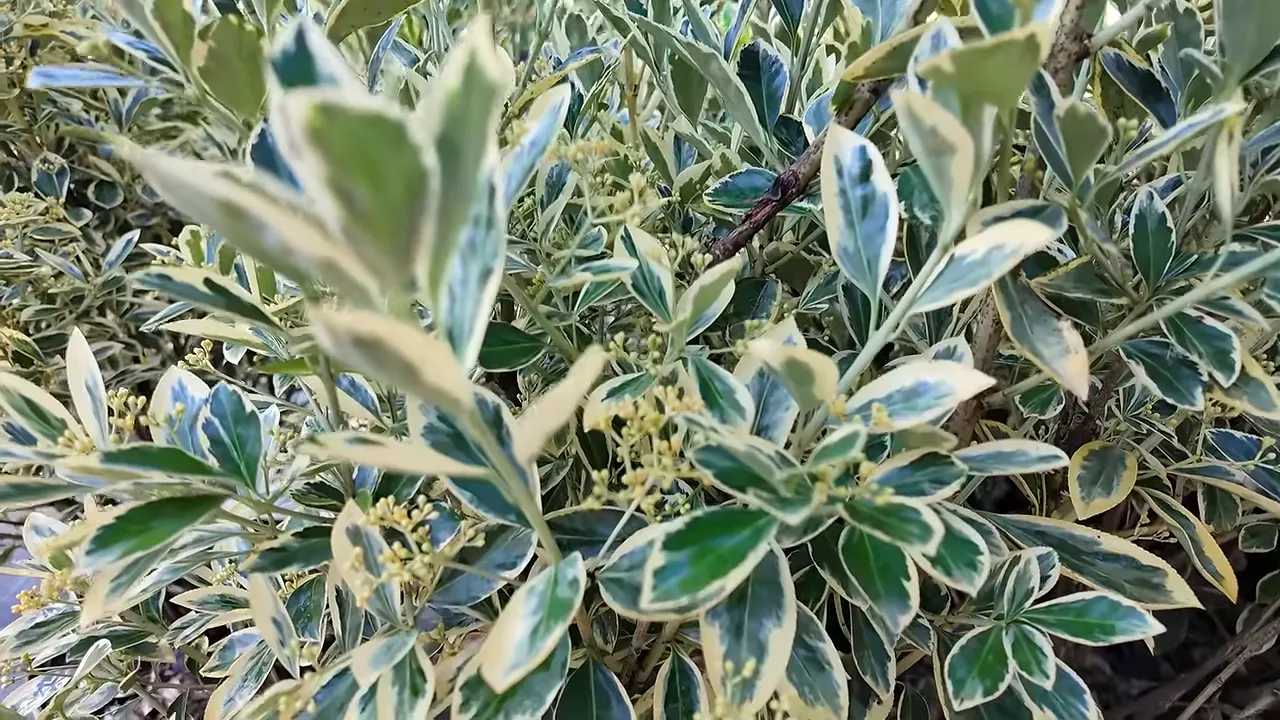
It can make an attractive narrow hedge or foundation-corner plant, but the same reservations apply. Stress can leave it vulnerable to scale, and powdery mildew can be troublesome. Watch for solid green reversions and remove them quickly.
Neither of these euonymus selections belongs beneath a low window just because it looks attractive in a pot. That placement can leave you pruning indefinitely. They are possible screening plants, but they are not my first choices for a low-maintenance boundary.
Prune for the Result You Want
There is a difference between keeping a plant full and spending its entire life fighting its natural size.
With hollies, you can encourage denser growth by pruning as winter ends. After a new flush hardens, removing about half of that growth can encourage another flush. Under suitable growing conditions, it is possible to get several flushes in one season.
That can help a young screening plant fill in, but more pruning usually means fewer berries. A holly flowers in spring, develops fruit through the growing season, and often carries that fruit through winter. There is no magic pruning date that preserves every part of that cycle.
For skip laurel, pruning after spring flowering is a useful approach. For foliage-focused plants such as Steeds holly, spring through midsummer offers more flexibility. With strongly individual plants such as Hollywood juniper, the better answer is usually to provide enough room in the first place.
What About Sunshine Ligustrum?
There is one ligustrum I would include in this discussion: Sunshine. It is a non-flowering selection of Chinese privet, so it does not create the seed-distribution problem associated with flowering forms.
It is fast growing, drought tolerant once established, and bright yellow year-round. That combination has made it very popular across the Southeast and into the Southwest.
It is not a replacement for every tall privacy screen, but it can provide a bright component in a mixed border without producing the flowers and seed of ordinary Chinese privet.
Build a Mixed Screen, Not Just a Green Wall
You do not have to replace one long row of ligustrum with one long row of something else. A few upright junipers, a fragrant osmanthus, a dense cleyera, and a well-chosen holly can each contribute something different, provided they suit the conditions where they are planted.
For shade, I would give illicium serious consideration. For a narrow, sunny Southern boundary, I would look closely at Taylor or Spartan juniper. For manageable broadleaf screening, cleyera and naturally upright hollies deserve attention. For a large property, plants such as Nellie Stevens, Hollywood juniper, or Radicans cryptomeria can have the room they need.
The best screening plant is not necessarily the fastest one. It is the one that gives you the height, width, density, and seasonal interest you want without requiring you to fight it forever.


