A garden needs a few plants that stay interesting without constantly needing something from you. Blush Pink™ nandina is one of those plants. It stays small, holds its foliage year-round, and changes color with the seasons, all with very little maintenance.
If your first reaction is, “No nandinas,” there is an important distinction here. Blush Pink is a non-flowering selection that does not produce berries. It belongs to the compact, well-behaved group familiar to gardeners who have grown Firepower nandina, but it adds another season of color with its pink new growth.
For a low evergreen shrub under windows, beside a pathway, or in a small mixed border, that combination is pretty useful.
Key Takeaways
- Blush Pink nandina combines pink new growth, green summer foliage, and brilliant red winter color.
- Full sun to part shade supports growth, but winter sunlight is important for strong red foliage.
- Its compact size makes it useful beneath low windows and alongside pathways.
- This non-flowering selection produces no berries and needs little care once established in well-drained soil.
What Makes Blush Pink Nandina Different?
Firepower nandina has been around a long time, and there is a reason gardeners keep planting it. It is compact, drought tolerant once established, and easy to maintain. Its foliage is green during summer and turns bright red in winter.
Blush Pink takes that same basic ornamental role and adds something extra: fresh growth emerges blush pink whenever the plant is actively growing. Instead of simply moving from summer green to winter red, you get a third color phase.
This is a foliage plant, not a flowering shrub. That is exactly how I use it. In a garden with close to a thousand different plants, most of which bloom at some point, there is room for conifers and leafy evergreens that provide structure and interest between the flowers.
Blush Pink nandina, from the Southern Living Plant Collection, earns its space by changing through the year without becoming another ongoing chore.
How the Foliage Changes Through the Seasons
Spring: a flush of pink
As temperatures warm and growth begins, the plant can become absolutely covered in pink foliage. That fresh growth is the feature that separates Blush Pink from the familiar green-and-red pattern of Firepower.
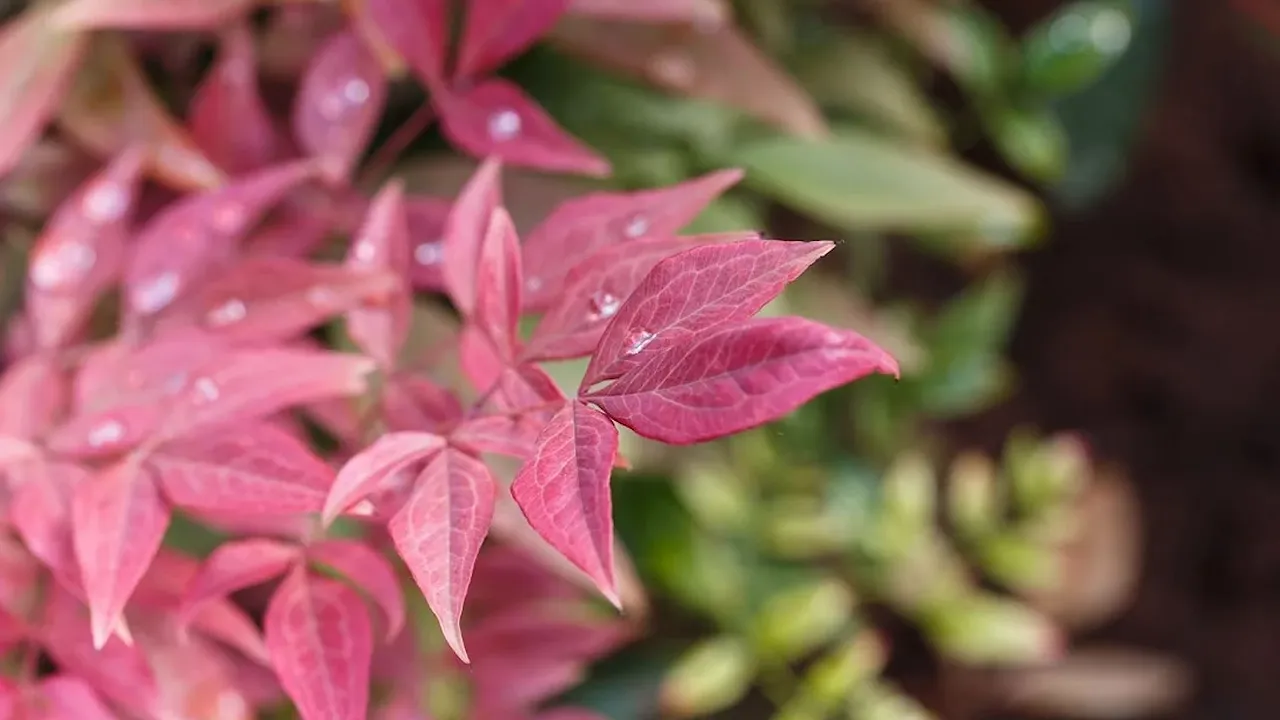
Summer: green with occasional pink growth
By midsummer, much of the foliage settles into green. That does not mean the pink is finished for the year. Whenever another flush of growth appears, those new leaves bring the pink back.
The timing depends on when the plant is growing. My plant still had pink new growth in October, which was a little unexpected because I would not normally count on much fresh growth that late in the season. Think of pink as the color of active growth, rather than something confined strictly to spring.
Fall and winter: bright red foliage
As nights cool in fall, the established leaves begin changing again. The transition can start with just a few red spots on an otherwise green leaf. Over the following weeks, that leaf can become completely red.
With enough sunlight, the whole shrub can turn a really bright, fire-engine red in winter. That is a lot of color from a plant that never needs a flower to make itself useful.
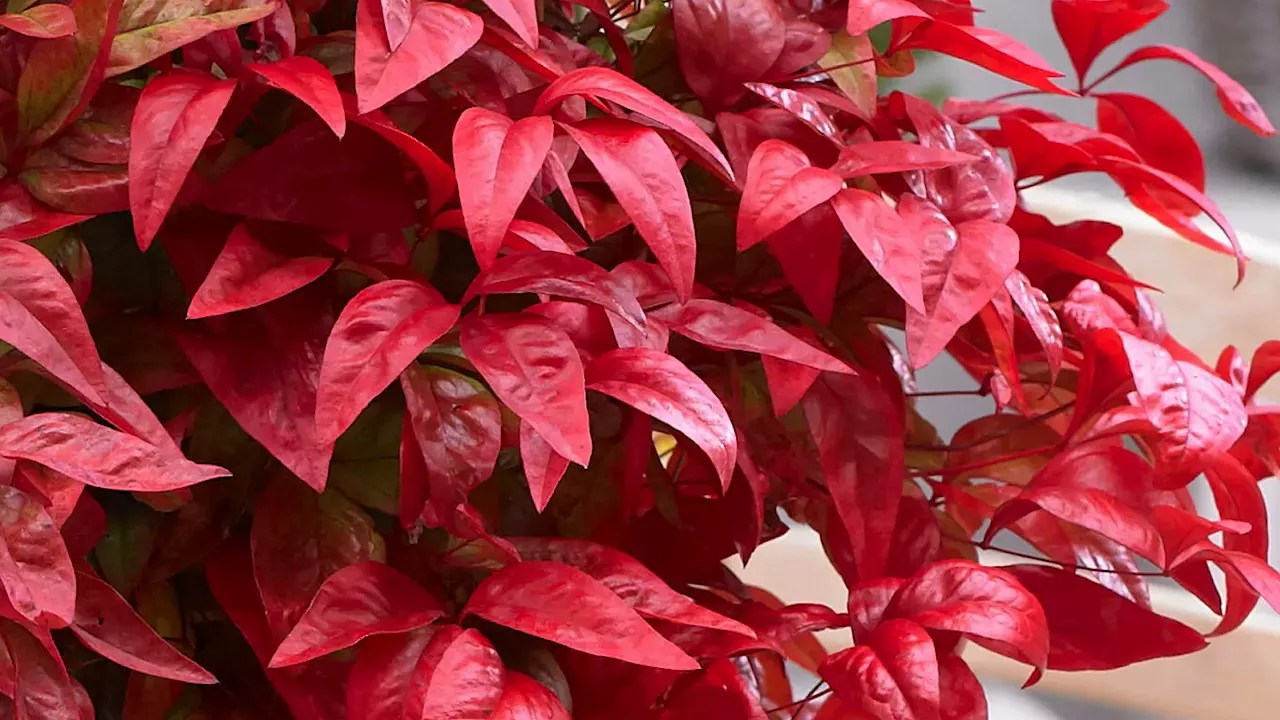
The appeal is the progression. You are not getting pink and red on every leaf all year. You are getting an evergreen shrub that keeps evolving as new growth matures and temperatures change.
Mature Size, Hardiness, and Sun Requirements
Blush Pink stays naturally small and compact. In time, expect approximately:
- Height: 2 to 2½ feet.
- Width: 2½ to 3 feet.
- Hardiness: USDA Zones 6 through 10.
- Best exposure: Full sun to part shade, with winter sun for strong red color.
If you are unsure of your growing zone, the USDA Plant Hardiness Zone Map is a useful starting point.
At the colder end of its range, particularly Zone 6a, I would give it a protected location. A somewhat sheltered corner makes sense, but there is a balance to strike: it still needs sunlight to develop its best foliage color.
Growing in shade and coloring well in shade are two different things. These compact nandinas will grow in shade, part shade, or sun, but they need sun to put on the full seasonal display.
I have one of this type in a shadier part of the back garden, and it does not become as red as I would like. If that vivid winter color is the reason you are planting Blush Pink, pay attention to how much sun the spot receives during winter, not just during summer.
Where to Use Blush Pink Nandina in the Landscape
Under low windows
Finding genuinely low-growing evergreen foundation plants is harder than it sounds. This is especially true around newer houses built on slabs, where windows may begin only 2½ or 3 feet above the ground.
You need something leafy and permanent, but you do not want to spend every year cutting it back below the glass. Blush Pink is a good fit because its natural mature height is already close to what that space requires.
Its compact habit lets it do the job without turning foundation planting into a regular pruning assignment.
Along sidewalks and pathways
This is also useful anywhere you need a tame, compact evergreen beside a walking route. Allow for its mature width, but you are starting with a shrub that stays manageable rather than one that constantly wants to take over the space.
Small garden beds and mixed borders benefit from that same predictability. It provides a steady leafy presence while nearby flowering plants come and go.
Hot, exposed planting areas
Nandinas are capable of handling some pretty extreme heat situations. Blush Pink is worth considering for the planting strip between a sidewalk and the street, where nearby asphalt adds heat.
Reflected heat can be another challenge. I have seen sunny white picket fences reflect enough light and heat to burn more sensitive plants nearby. A tough shrub like this can be a useful choice for that kind of location, provided the soil drains well and the plant receives the water it needs while establishing.
Soil, Drainage, and Watering
Moist, well-drained soil is ideal. I could say that about an awful lot of garden plants, but the drainage part matters here. Slightly acidic soil is probably the best fit, though Blush Pink is otherwise quite adaptable.
Our soil is clay based, so I plant things slightly high to help keep the root area from sitting too wet. This is a tough shrub, but I would not put it in a low spot where the planting hole fills with water.
Heat tolerance and drought tolerance do not mean tolerance of waterlogged soil. Give it drainage first.
During its first year in the ground, it needs adequate moisture from rainfall or supplemental watering. Once established, it is very drought tolerant. In an area with fairly regular rainfall, there may be very little ongoing watering to do.
One thing that has surprised me when digging these compact nandinas is their root system. Considering how well they tolerate heat and drought, you might expect an enormous root mass anchoring them deep into the ground. In my experience, they have been much easier to lift than that. The plant in this bed had been growing for about a year and a half, and I would not expect it to be difficult to dig.
That relatively contained root system is another useful quality when working in restricted planting spaces.
How Much Maintenance Does It Really Need?
Very little. We fertilize this garden once a year with an organic fertilizer, but this shrub does not seem to ask much of me at all. Keeping the bed mulched has been a big part of its simple care here.
- Water during establishment: Make sure the plant gets adequate moisture during its first year.
- Maintain mulch: Keep the surrounding bed mulched as part of routine garden care.
- Keep feeding simple: My garden receives one annual application of organic fertilizer, without a separate feeding program for this plant.
- Let its natural size work for you: Choose a spot that accommodates its mature dimensions rather than relying on regular cutting back.
Deer and rabbits have also left these plants alone in my experience. Combined with their heat and drought tolerance, that makes them useful where a more demanding shrub might struggle.
The other important maintenance distinction is the lack of flowers and berries. Concerns about nandina often center on berries and seed dispersal. Blush Pink is a non-flowering selection, so it does not produce berries or the resulting seedlings. That is why the particular selection matters rather than treating every nandina as the same plant.
There should be a few things in the landscape that do not need constant attention. Give Blush Pink nandina a well-drained spot, enough room for its compact mature size, and sufficient sunlight for good color. Then enjoy the pink growth, the summer green, and that bright red winter finish.


