Fall gardening ought to be about paying attention to conditions, not just turning a page on the calendar. If the soil is still warm, bulbs can wait. If the garden is dry, the hose may still need to come out. And if a newly planted shrub needs help getting established, water is usually a lot more important than fertilizer.
A trip to Green Things in Tucson, Arizona, brought that into focus. Steph and I happened upon this roughly 13- to 14-acre growing operation and garden center, and it is an incredible place. There are citrus trees, desert plants, greenhouses, pottery, and art, with landscapers collecting plants alongside retail customers. It is also a good reminder that what makes sense in my Raleigh garden is not automatically the right answer in the desert.
These are the fall gardening questions I keep coming back to, from when to plant bulbs and move trees to how to protect the soil you have worked so hard to improve.
Key Takeaways
- Base fall planting and watering decisions on soil conditions rather than calendar dates.
- I wait until warming spring soil makes organic fertilizer more useful in my landscape.
- Keep soil covered through winter to reduce erosion and protect soil organisms.
- Match plants and soil amendments to local drainage, climate, and mature plant size.
Table of Contents
- Should You Fertilize in Fall?
- Fall Watering: Do Not Assume Cooler Weather Means Wet Soil
- When to Plant Fall Bulbs and Garlic
- Protect Your Soil Through Winter
- Improving Drainage, Compacted Soil, and Sandy Soil
- Choosing Camellias and Moving a Redbud
- Seeds, Leftover Roots, and Variegated Plants
- Desert Gardening Lessons from Green Things in Tucson
- Check the Gardening Advice, Not Just the Picture
Should You Fertilize in Fall?
I do not routinely fall-fertilize my landscape. I use organic fertilizer, and much of its usefulness depends on soil organisms breaking it down into forms plants can take up. As soil temperatures fall, those fungi and bacteria become less active.
For my approach, applying fertilizer then offers little immediate benefit. Some nutrients may not become available until spring, and leaving an application out through winter creates an opportunity for losses during heavy rain. I would rather wait until the soil starts warming on the other side of winter and microbial activity picks up again.
That is the sweet spot I am aiming for. Sometimes I do my spring application two or three weeks earlier than I otherwise would to demonstrate the job, but the principle is the same: match the application to warming soil rather than a fixed date.
What about fertilizer already in a nursery container?
One gardener had planted 28 large, 25-gallon Ligustrum recurvifolium and wanted to know whether to fertilize immediately or wait until spring. There was already some fertilizer in the containers.
My answer is still to wait. I do not want to encourage a flush of growth going into winter, particularly when the plants may also be dealing with dry soil.
The little fertilizer beads, or prills, in a nursery pot do not tell you much by themselves. Nurseries select controlled-release fertilizers for their production conditions, including warm containers, frequent irrigation, and the length of time they expect to hold a crop. A crop taking six months to finish might receive a fertilizer selected for roughly that production window.
Once that plant goes into the landscape, conditions change. Remaining fertilizer may release differently, or the prills may already be spent. You cannot tell how much fertilizer remains simply by seeing the beads. They are not a reliable indicator of what the plant needs next.
For those newly installed ligustrums, I would focus on watering and revisit fertilizing as winter ends. A dry root ball is a much more immediate problem than the lack of a fall feeding.
Fall Watering: Do Not Assume Cooler Weather Means Wet Soil
We have needed more fall watering in Raleigh than I would ever want. During our trip, the garden was dry enough that we had Steph’s son water the entire garden. That is not something I normally expect to arrange in the middle or latter part of October.
We had also needed unusual supplemental watering in March and April. The point is not that those months always require irrigation. It is that the season alone does not tell you whether your garden has enough water.
Dry conditions can also change the timing of a project. Fall is a useful planting season, but substantial planting into an unusually dry landscape means taking on the responsibility of watering it. I would much rather have some meaningful rain supporting that work.
For large new shrubs and trees, pay particular attention to the soil where the roots actually are. Digging a hole for a 25-gallon plant often reveals just how dry the ground is below the surface. Fertilizer is not going to solve that.
When to Plant Fall Bulbs and Garlic
Use soil temperature to time spring-flowering bulbs
A gardener in Columbus, Ohio, asked whether it was still too warm to plant bulbs. That is a good question because soil temperature matters, even when the calendar says it is time.
For fall-planted spring-flowering bulbs, I generally look for soil temperatures around 60°F, within roughly a 55°F to 65°F range. A soil thermometer is useful, and online soil-temperature resources can give you a general sense of local conditions.
If afternoons are still reaching the mid-80s and nights are only dropping into the upper 50s, the soil may not have cooled enough yet. Bulbs that have already received chilling can potentially start growing when placed into warm soil, so there is a reason not to rush.
- In Raleigh: We typically plant our bulbs around the beginning of December.
- For the Columbus question: The second week of November was a reasonable estimate, but actual soil temperature should make the decision.
This is the same general lesson we learn with warm-season vegetables in spring, just in the opposite direction. Tomatoes and peppers put into soil that is too cold can stall, while plants installed a couple of weeks later in warmer soil may race ahead. Earlier is not always better.
Garlic can fit into the edges of beds
We have grown garlic successfully, although we do not plant it every year. We tucked cloves into the edges of our beds, and it was an easy crop for us overall.
Fall is the planting season I have used, with cooling soil part of the timing consideration. You do not necessarily need to devote a large, separate vegetable bed to trying it.
Protect Your Soil Through Winter
Are cover crops worth using?
Yes, especially if the alternative is leaving bare soil all winter. One gardener had planted winter rye, and keeping that soil covered is the part I particularly like.
Erosion is one of our biggest gardening enemies because it can happen so gradually that we barely notice. You lose a little topsoil in one rain, a little more in the next, and over time some of your soil-building work disappears.
I sometimes see lawns with lots of little stones showing at the surface, especially where the grass has been kept short for years. Those stones did not necessarily arrive recently. Soil may have washed away from around them while the heavier material stayed put.
If a project will not begin until spring, winter rye can put roots into otherwise bare ground and help hold it together. In our relatively flat vegetable garden, I am more likely to put down a thin covering of wood chips after the last crops come out.
Cover crops and mulch are different tools serving an important shared purpose: keeping the ground protected. Cover also helps shield the living things in the soil from exposure to sun and cold. On a slope, that protection becomes especially important.
Which mulch is best?
There is not one answer for every climate. Around Tucson, stone is a common landscape covering. In the East, where rainfall helps organic materials decompose, I like taking advantage of mulch that can also contribute to soil improvement.
Here is how I use different materials in my garden:
- Wood chips: My choice for paths and for starting new garden areas.
- Double- or triple-shredded hardwood mulch: What we use in our main beds. The mix of particle sizes helps it knit together and stay put.
- Pine bark: Useful to me as a soil amendment and in containers, rather than as my preferred surface mulch.
- Pine straw: A useful option when it is readily available, even though it contributes to soil building differently from hardwood mulch.
- Stone: A material that belongs in the conversation, especially in dry-region landscapes.
Wood chips in the paths and hardwood mulch in the beds also give us a two-tone appearance that I like.
My objection to pine bark as a top dressing is mostly practical: it can move around in heavy rain. I prefer a surface mulch that stays locked together.
At our previous house, I occasionally alternated pine straw with hardwood mulch. If several inches of hardwood mulch remained but I wanted to freshen the appearance, pine straw let me do that while giving the existing hardwood more time to break down. There is no need to keep piling on the same material without noticing what is already there.
Improving Drainage, Compacted Soil, and Sandy Soil
Mix expanded shale into the soil, not beneath it
If I am using expanded shale to improve drainage for a perennial, I mix it with the planting soil and use that mixture as backfill. I do not put a separate layer of rock in the bottom of the hole.
The amount depends on the plant and how sharply drained its root zone needs to be. For something needing moderately sharper drainage, I might use approximately equal parts soil and expanded shale, mixing one shovel of each. For a cactus in my wetter conditions, I would lean much more heavily toward the mineral material.
Those are examples of how I adjust a mix, not a universal recipe for every perennial. The important distinction is mixing the material through the root zone rather than creating a coarse layer underneath finer soil. An abrupt change in texture can interfere with water movement and leave soil wetter above the layer, exactly the opposite of what you intended.
Repairing soil compacted by construction equipment
Our native garden began in an alley that had been driven on, parked on, and walked through for years. It had even been a road and contained gravel. Wood chips have made an amazing difference there.
The idea is to protect and support earthworms and other soil organisms that can gradually work into the compacted ground. For a future planting bed, where I have time, that is the approach I like.
A new lawn is a different situation. You cannot cover a future turf area with eight inches of wood chips and expect to install grass immediately. For a project that needs to move faster, I would consider mechanical loosening, as we sometimes did on new landscape jobs, working roughly 8 to 10 inches deep where appropriate.
Locate buried utilities before doing that work. Electric, gas, and other lines need to be accounted for before deep soil disturbance. In the United States, 811 utility-location information is a useful starting point.
Mushroom compost and soil conditioner on sandy soil
A gardener with sandy soil asked about using bulk mushroom compost with soil conditioner. Yes, those materials can be used together, including mixing them, to help improve that soil.
With sand, the goal is to slow the passage of water and nutrients enough that plants have more opportunity to use them. We are not trying to stop drainage. We are trying to give moisture and nutrients a little more time in the root zone.
If you are applying finer compost with a chunkier material over it, that arrangement makes sense to me. I would not deliberately reverse the order and bury a coarse layer beneath finer compost. Again, be thoughtful about abrupt changes in texture and how water moves through them.
Choosing Camellias and Moving a Redbud
Cold-hardy camellias for New Jersey Zone 7a
For a gardener in New Jersey’s Zone 7a, I would start by looking at camellia selections sold as hardy into Zone 6, particularly the Ice and April groups. April Remembered and April Dawn are examples worth investigating.
I would be thinking particularly about the Zone 6b-and-warmer range rather than assuming every plant labeled Zone 6 will perform equally well everywhere within it. Hardiness labels also need a little care when maps change. An older plant description was not necessarily reevaluated when a location received a new zone designation.
You can check your location on the USDA Plant Hardiness Zone Map, then confirm the requirements of the specific cultivar you are buying.
For exposure, part sun is my starting answer for camellias. A New Jersey site may allow a bit more sun than I would choose in Raleigh, but I would still match the plant to the actual location.
Are there small Camellia japonica varieties?
There are not nearly as many compact Camellia japonica choices as people hope. More dwarfing work has been done with Camellia sasanqua, and many selections in Bobby Green’s October Magic series stay smaller.
On the japonica side, Tama Bambino is one I would investigate if you can find it. I like the Tama group, but availability may be a challenge.
Most japonicas eventually become substantial plants. They are slow-growing, so that process takes time, but slow-growing and small are not the same thing. A very large japonica has generally been there for many years.
When should you transplant a dwarf redbud?
A gardener in Tennessee’s Zone 7b had a five-foot Emerald redbud that needed moving. Our own tree in that dwarf group reached at least eight feet in just two growing seasons, so I can understand how a supposedly small tree might outgrow its assigned space.
I would wait until it is dormant, then choose an appropriate opportunity between dormancy and early spring. If the tree and surrounding soil are already unusually dry, I might wait until late winter rather than add transplanting stress right away.
The useful lesson is to consider both dormancy and moisture conditions. A dwarf label does not remove the need to give a tree enough room.
Seeds, Leftover Roots, and Variegated Plants
How do you know whether perennial seeds need special treatment?
There is no single perennial-seed method. The plants we combine in gardens come from all over the world, and their seeds have developed different ways to avoid germinating at the wrong time.
- Stratification: Some seeds need a period of cold conditions before they will germinate.
- Scarification: Some need treatment of the seed coat to help germination.
- Soaking: Some benefit from soaking before sowing.
- Straightforward sowing: Others are easy to start without much preparation.
Those requirements reflect the conditions where the plant originated. A seed may need a winter signal, or enough moisture to indicate that conditions are suitable. That protects the plant in nature, but it can certainly confuse us when we are holding a packet of seed.
Start with the seed supplier’s packet and website, then verify instructions for that particular species. Most annuals Steph and I grow are fairly straightforward: sow, water, and provide light. There are exceptions even there, and perennials need to be researched individually.
Will roots left behind after shrub removal grow back?
They can. A gardener removed a large straight-species ninebark, could not get all the roots, and planted a dogwood in the same area.
I would expect some suckering from the remaining ninebark roots. As shoots appear, you may be able to trace them back and remove additional root material.
This is not limited to ninebark or even to native shrubs. A variety of shrubs can try to regrow from roots left in place. The practical response is to expect that possibility and deal with the regrowth as it reveals where those roots remain.
Solid-green shoots on a variegated shrub
If a variegated shrub suddenly produces vigorous, completely green branches, I would suspect reversion rather than simply too little light. With reduced light, I would generally expect at least some variegation to remain.
Do not just clip off the obvious green tip. Trace the shoot as far back into the plant as you can and remove it near its origin.
Once a plant starts reverting, it may continue to produce those shoots, so this can become an ongoing maintenance task. Cutting back to the source is more useful than repeatedly trimming the visible end.
Desert Gardening Lessons from Green Things in Tucson
Talking with Tory at Green Things was a good opportunity to step outside my own growing conditions. The nursery grows much of its smaller annual material locally, which helps avoid the adjustment plants can face when they arrive from a milder production climate.
Tory also described an increasing interest in xeriscaping as people become more conscious of landscape water use. On repeated trips through the Southwest, I have noticed less turf in places such as Tucson, Phoenix, and Las Vegas. Gardeners are working more with the climate instead of constantly fighting it.
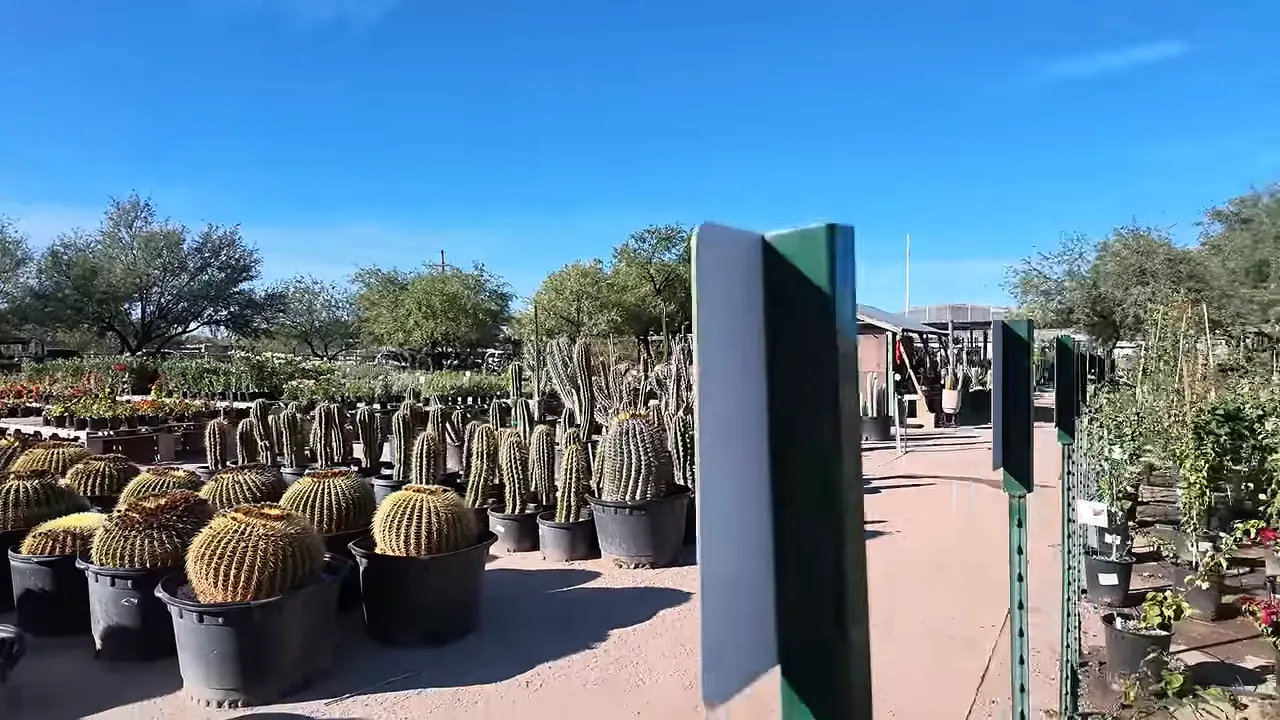
Rainfall is part of that adjustment. Tucson’s summer monsoon season generally runs from around mid-June through September, with variable storms that can also bring flooding. There may be some late-fall rain, but it is not the dependable spring-rain pattern many gardeners elsewhere expect.
Here are four plants Tory highlighted for the local landscape.
Cassia for early yellow flowers
The cassia she selected is a small shrub or tree reaching roughly 5 to 6 feet tall, with beautiful yellow flowers in early spring and very low water needs. It is a good example of getting seasonal color from a plant suited to the region.
Texas sage for flowers after rain
Texas sage can cover itself in blooms after rainfall. Green Things carries several varieties, and it is a plant you see throughout Tucson.
It needs well-drained soil and very little water once established in that climate. We can grow suitable selections in Raleigh too, but our challenge is providing extremely sharp drainage. A plant that thrives with desert rainfall is not automatically happy in a wet eastern root zone.
Arizona hopseed for a fast screen
Arizona hopseed is a native, low-water screening option that Tory described as growing very quickly. It can reach about 10 to 12 feet tall and 6 to 8 feet wide, with dense growth that can be maintained as a hedge.
It is used between properties and along roadways where people want screening. That is a much more useful local conversation than assuming the same familiar screening shrubs belong in every region.
Red bird of paradise for tough landscape sites
The red-flowering bird of paradise discussed at the nursery is familiar from local medians, where its red and yellow flowers bring color to demanding sites. Tory described it as particularly well suited to Tucson’s climate.
Her local maintenance approach is to cut it back to around 6 inches in spring, followed by very rapid regrowth. Common names for bird of paradise plants can overlap, so confirm which plant you are buying rather than relying on the common name alone.
Check the Gardening Advice, Not Just the Picture
Good-looking information is not necessarily good gardening information. I see AI-generated landscape designs that look beautifully arranged but put plants in unsuitable conditions or show them at completely unrealistic sizes. A plant pictured flowering at 18 inches might actually reach four feet.
Screening recommendations can also default to familiar names such as Leyland cypress and Nellie Stevens holly without enough attention to whether they fit the particular site. A convincing picture does not replace knowing the plant.
I have used Photoshop’s AI-assisted tools for thumbnail titles, but that is a different task from relying on AI for plant advice. The copying and repackaging of gardening content, paired with increasingly exaggerated imagery, makes me even more concerned about separating useful knowledge from something designed simply to attract attention.
The same skepticism applies to quick search answers about seed germination. Read them if you like, but confirm the details with a dependable source.
I also needed to correct my understanding of copper spikes promoted for gardens. I initially thought the question concerned adding copper to the soil. The claim was actually about an electromagnetic effect supposedly making plants grow faster. That changed which claim I was evaluating, but it did not make it a practice I would recommend. I regard those electroculture claims as unsupported, not as a substitute for sound plant care.
That brings all these questions back to a few very ordinary things: protect the soil, pay attention to water, understand the plant, and time the work to actual conditions. None of that needs a spectacular picture to be useful.


