We have several fragrant tea olives in our Raleigh garden, but Osmanthus fragrans ‘Fudingzhu’ is easily the most generous bloomer of the bunch. It has the wonderful fragrance you expect from an osmanthus, with creamy white flower clusters that are much easier to see.
That combination makes it special. You get a large evergreen shrub with handsome foliage all year, then a garden full of fragrance at a time when many other flowering plants are winding down. Give it the right spot and enough room, and it is a fantastic plant for a Southern garden.
Key Takeaways
- Fudingzhu produces larger, more visible flower clusters than typical fragrant tea olives, with its heaviest bloom in fall.
- Allow roughly 12 feet of height and 6 to 8 feet of width for this evergreen shrub.
- Choose a protected site with ample sun, afternoon shade, and moist, well-drained soil.
- Do substantial size-control pruning in late winter or early spring rather than during fall flowering.
Table of Contents
- What Makes Fudingzhu Different From Other Tea Olives?
- Bloom Time and That Wonderful Fragrance
- Evergreen Foliage and Mature Size
- Cold Hardiness: Think Southern Garden
- The Best Sun Exposure for Fudingzhu Osmanthus
- Soil, Drainage, and Watering
- Where to Use It in the Landscape
- How and When to Prune Fudingzhu
- Resistance, Availability, and Why It Is Worth Finding
What Makes Fudingzhu Different From Other Tea Olives?
On a typical Osmanthus fragrans, the flowers tend to sit in small clusters along the stems, tucked back among the leaves. They are not especially noticeable, but you certainly know when they are flowering. All of ours have that incredible fragrance.
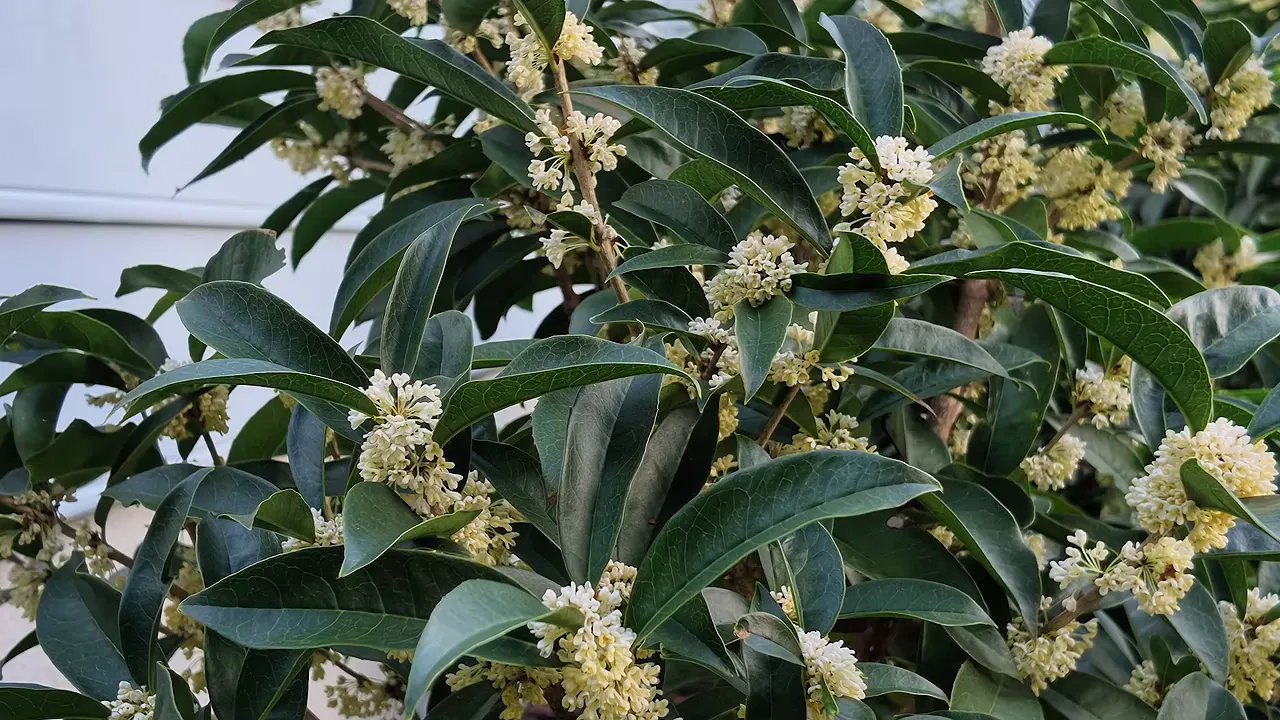
‘Fudingzhu’ takes the floral display a step further. The clusters are larger and more abundant, wrapping around the branches and appearing farther out toward the ends. Instead of having to look into the shrub to find the flowers, you can actually appreciate them from a little distance.
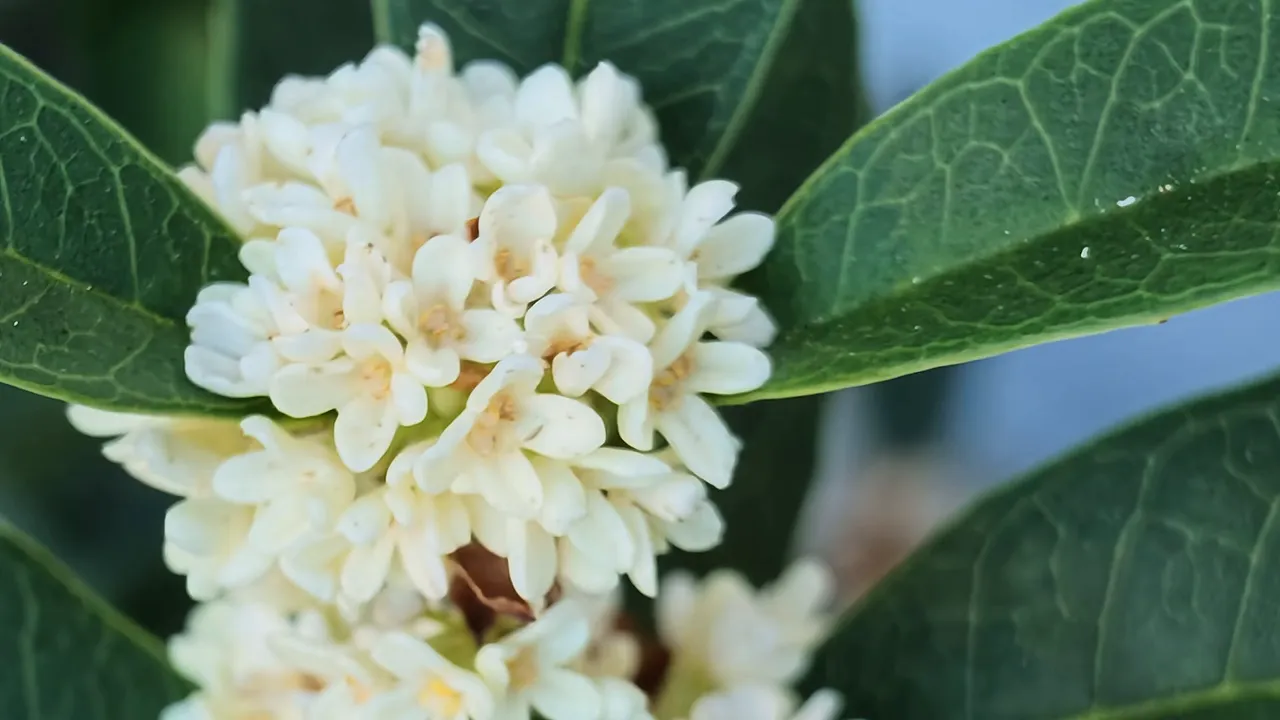
The name is commonly translated as “pearls on Buddha’s head,” which is a pretty good description of those rounded bunches of flowers.
Now, when I call this showy, I mean showy for an osmanthus. It is not going to give you the same kind of solid color display as an azalea. What it does offer is a much more visible flower display than the usual tea olive, along with all that fragrance.
There are plenty of other selections of Osmanthus fragrans, including orange-flowered forms that we also grow. Among the fragrant tea olives, though, ‘Fudingzhu’ has a reputation for being one of the showiest, and our experience certainly supports that.
Bloom Time and That Wonderful Fragrance
A handy way to think about fragrant tea olive bloom time here is the months with an “r” in their names. Once we start getting cooler nights, flowering can begin, and it may repeat intermittently through the cooler part of the year.
In our Raleigh garden, this plant started flowering around the middle of September. By early October, it was already a little past its first peak, with some flowers on the ground. It can continue flowering on and off all the way through April, although the heaviest flowering here is definitely in fall.
The fragrance is a big part of why I like this plant so much. I do not particularly care for intensely perfumey flowers. This has more of an orangey, citrusy fragrance that is just right for me.
I almost want to call it subtle, but that is not quite the right word. It can fill the entire garden. It is the character of the fragrance that feels softer, not the amount of it. We often notice it carrying through the garden in the evening.
We have plenty of fragrant flowering plants during the regular growing season. Having something kick in during fall and the cooler months, when there is much less fragrance around, adds a lot.
Evergreen Foliage and Mature Size
Even without flowers, this is a good-looking shrub. The foliage goes through a nice progression as it develops:
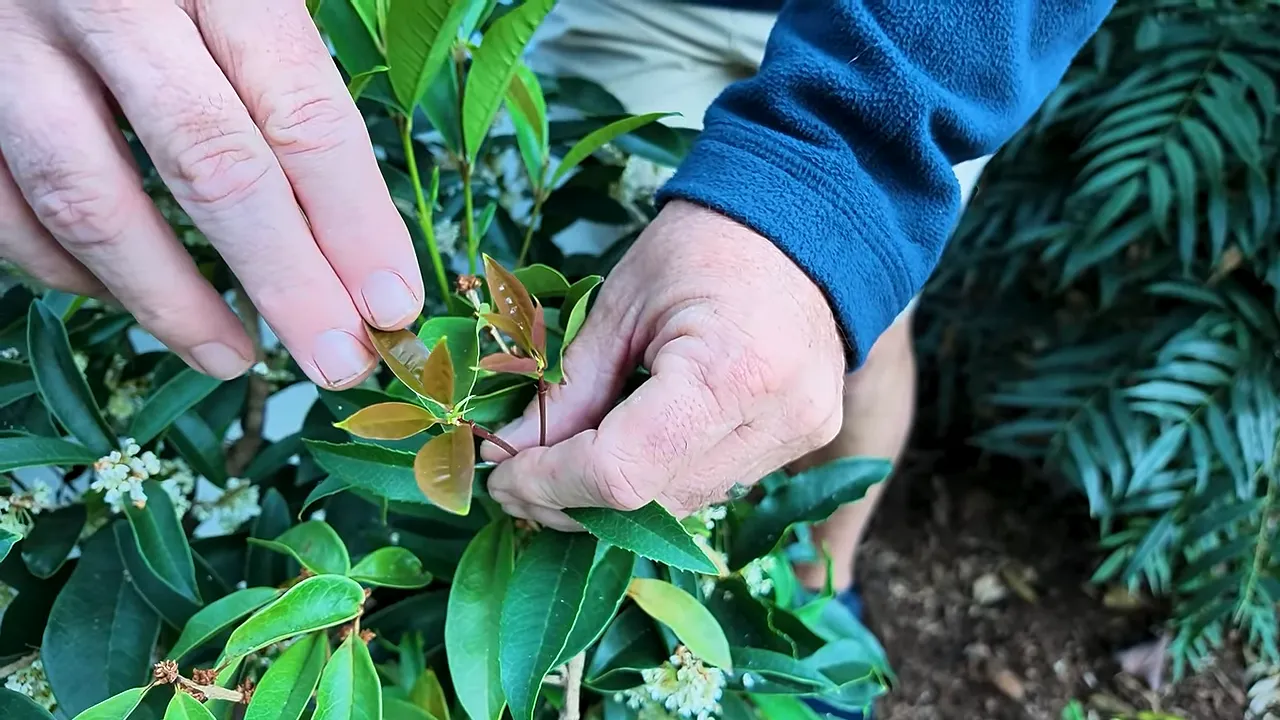
- New growth: Young leaves emerge with reddish coloration.
- Developing foliage: The leaves transition to a lighter green.
- Mature foliage: They settle into a glossy, dark green.
That reddish new growth is especially noticeable in spring, when the plant can be covered with it. You may also see it whenever the shrub is actively putting on new growth.
Fudingzhu belongs to the olive family, Oleaceae. It has a relatively compact, upright habit, but do not confuse compact with small. Plan for a shrub around 12 feet tall and 6 to 8 feet wide.
Our plant is a little too close to the house. It moved around the garden about three times, spent time in a container, and eventually landed where we happened to have available space. That is not exactly a planting plan, and I know it will eventually overcrowd that spot.
We can manage it with pruning for years, but it is a good reminder to leave room for the mature plant rather than planting for the size you bring home from the nursery.
Cold Hardiness: Think Southern Garden
Osmanthus fragrans is generally listed for USDA Zones 8 through 10, sometimes through Zone 11. Zone 7b can be a possibility, and a very protected location elsewhere in Zone 7 may work, but this is primarily a Southern plant.
If you are unsure of your zone, the USDA Plant Hardiness Zone Map is a useful starting point. With this shrub, though, the exact location within your garden matters quite a bit.
Even in Zones 8 or 9, I would not put it out in an exposed area where it takes the full force of the north wind. A sudden temperature drop in November or December can cause damage, especially when warm conditions give way abruptly to temperatures around 20°F.
A protected site is a better choice than an exposed northern edge of the property. That is particularly important if you are thinking about using it as a screen.
There are other osmanthus species that are more cold hardy, including options that can grow into Zone 6. If fragrant tea olive is not suitable for your climate, it is worth looking beyond Osmanthus fragrans rather than assuming the entire genus is off the list.
The Best Sun Exposure for Fudingzhu Osmanthus
I would describe this as a full sun to part shade shrub. If I could choose the ideal exposure, though, I would give it lots of sun early in the day and some shade later in the afternoon.
The corner of our house provides almost exactly that. The plant receives hours of direct sun from morning onward, then the house shades it sometime around 2:00 to 3:00 in the afternoon.
That is close to perfect in our garden. The problem with our planting is the distance from the wall, not the light.
We also have a couple of fragrant tea olives in the back garden that are in more shade than I would prefer. They can become thinner in those conditions. Occasional tip pruning helps encourage branching, but I would still choose a brighter location when planting a new one.
Soil, Drainage, and Watering
Moist, well-drained soil is the goal. I could say that about nearly every ornamental shrub, but drainage really does matter here. You want moisture available without the roots sitting in overly wet soil.
Our soil is clay based, so I mound plants up slightly when planting rather than setting them into a low spot that holds water. The soil in this bed drains readily, and the osmanthus has been happy.
This particular plant sits beneath the edge of a roof without gutters, so it receives plenty of water when it rains. That works here because the water drains away. The important point is the combination of moisture and drainage, not simply how much rain reaches the plant.
Once established, fragrant tea olive becomes quite drought tolerant. After it has been rooted into the ground for a year or more, a plant in an area with regular rainfall may need very little ongoing supplemental watering.
Ours has also been forgiving of the less-than-ideal treatment it received while we were moving it around. It took a while to grow out of that, but this season it finally settled in enough to really show what it can do.
Where to Use It in the Landscape
This is a large, leafy evergreen shrub, so its best uses are places where that size and year-round presence are an advantage:
- Screening: Use it in a protected location rather than as the first line of defense against cold north winds.
- Mixed borders: Combine it with other shrubs to create an evergreen screen with seasonal interest.
- Corner foundation planting: Give it enough clearance from walls and room to broaden as it matures.
- Specimen planting: Let the foliage, upright habit, and flowers stand out in a bed.
- Hedging: Use it where a substantial evergreen hedge fits the space.
In our back garden, we use an orange-flowered selection and several regular fragrant tea olives as part of a mixed border screen. Fudingzhu can serve that same structural role while giving you a more noticeable flower display.
How and When to Prune Fudingzhu
There are two different pruning jobs I might do on this plant: light pruning to encourage fullness and harder pruning to control its overall size.
Tip Pruning for a Fuller Shrub
Lightly shortening the growing tips encourages dormant buds farther down the stems to grow. That can help a plant branch more and stay fuller toward the bottom, especially if it has become a little open in shade.
Our plant is somewhat thin at the base after all the moving around it went through. I plan to take a little height out of it in spring to encourage new growth and let the lower portion catch up.
Harder Pruning for Size Control
For a more substantial size reduction, late winter or early spring is the time I would choose. Fragrant tea olive can tolerate a fairly hard pruning at that point, much like other evergreen shrubs we cut back to reset their size.
I would not do that work in fall. That is the biggest flowering season here, and you would be cutting off the very thing you planted it to enjoy.
Pruning gives us a way to keep our plant near the house for a long time, but adequate planting space is still the better starting point.
Resistance, Availability, and Why It Is Worth Finding
Fudingzhu has several other qualities we want in an ornamental shrub: it is generally pest resistant, deer resistant, and rabbit resistant. Overall, it has been an easy plant once settled into a suitable spot.
Finding the named selection may take a little looking. Nurseries Caroliniana has sometimes carried it online, although availability changes, and we occasionally encounter it from other growers.
Most nurseries are more likely to have regular Osmanthus fragrans, which is also a fantastic plant. In our experience so far, the regular forms may grow a little faster than Fudingzhu.
But if you can find ‘Fudingzhu’ and have a protected place with enough room, it is well worth considering. Glossy evergreen foliage, reddish new growth, abundant little flower clusters, and a citrusy fragrance that fills the garden in fall make a pretty strong case for it.


