Zinnias are one of our main go-to plants for summer color and pollinators. They grow readily from seed, fit into all sorts of garden spaces, and put on a tremendous show without requiring a whole lot of work.
We use the smaller ones to soften bed edges and garden paths, and the larger ones to send big, colorful flowers up above our perennial borders. Butterflies, bees, and hummingbirds visit them through the growing season. For the amount of effort we put into them, they are among the most rewarding annual flowers in the garden.
The important thing is to choose the right kind for the space, give them full sun and good air movement, and understand that the tall varieties and compact varieties may need slightly different treatment during summer.
Table of Contents
- Key Takeaways
- Getting to Know Zinnias
- Where to Plant Zinnias for the Best Performance
- How We Start Zinnias From Seed
- Prepare the Soil, Then Keep Improving It
- Choosing Zinnia Varieties: Tall Flowers or Compact Color?
- Summer Zinnia Care: Water and Fertilizer
- Pinching and Pruning for Fuller Plants
- What to Do When Tall Zinnias Fade
- A Lot of Flower Power for a Little Attention
Key Takeaways
- Give zinnias full sun and good air movement for stronger performance and fewer fungal problems.
- Start seeds indoors about four weeks before your average last frost, then acclimate seedlings before planting.
- Pinch tall zinnias for low branching and trim compact varieties by about one-third in midsummer.
- Plan replacement plantings for tall zinnias that fade during long, hot, humid summers.
Getting to Know Zinnias
Zinnias come from grassland habitats in the Americas. The garden zinnias we grow are annuals: they grow, flower, and produce seed in one season, then come out at the end of that season. You can collect seed from them, but you are not planting them with the expectation that the same plants will return as perennials.
They belong to the Asteraceae, or aster family, one of the largest plant families on Earth. What looks like one zinnia flower is actually a composite flower head made up of many small flowers. Those individual flowers can be pollinated and produce seeds, which helps explain why zinnias are such good seed producers.
There is quite a range to choose from:
- Height: From roughly 6 inches for the smallest selections to about 48 inches for tall varieties.
- Single flowers: An outer ring of petals surrounding an exposed center.
- Semidouble and double flowers: Additional layers of petals, including very full, formal-looking blooms.
- Spidery flower forms: Narrower, more unusual petals that give the flowers a completely different texture.
That variety makes it possible to use zinnias throughout a garden without having every planting look the same. For an additional botanical reference, the NC State Extension profile of Zinnia elegans is a useful companion when choosing a planting site.
Where to Plant Zinnias for the Best Performance
Full sun and good air movement are the two things I pay the most attention to. Zinnias can do reasonably well in partial shade, but in our garden those conditions tend to bring more fungal problems. A bright, open location gives them a better chance of staying attractive.
Think about their mature size when deciding where they belong.
- Along bed edges: Compact varieties soften the line between a planting bed and the lawn.
- Beside paths and sidewalks: Low-growing zinnias can spill out a little and soften hard, angular edges.
- Behind perennials: Tall zinnias lift their flowers above neighboring plants, while the plants in front help conceal less attractive lower foliage.
- In containers: Zinnias provide summer flowers in spaces where an in-ground bed is not available.
- In sunny gaps: Small varieties are handy for filling bare spots with inexpensive, seed-grown color.
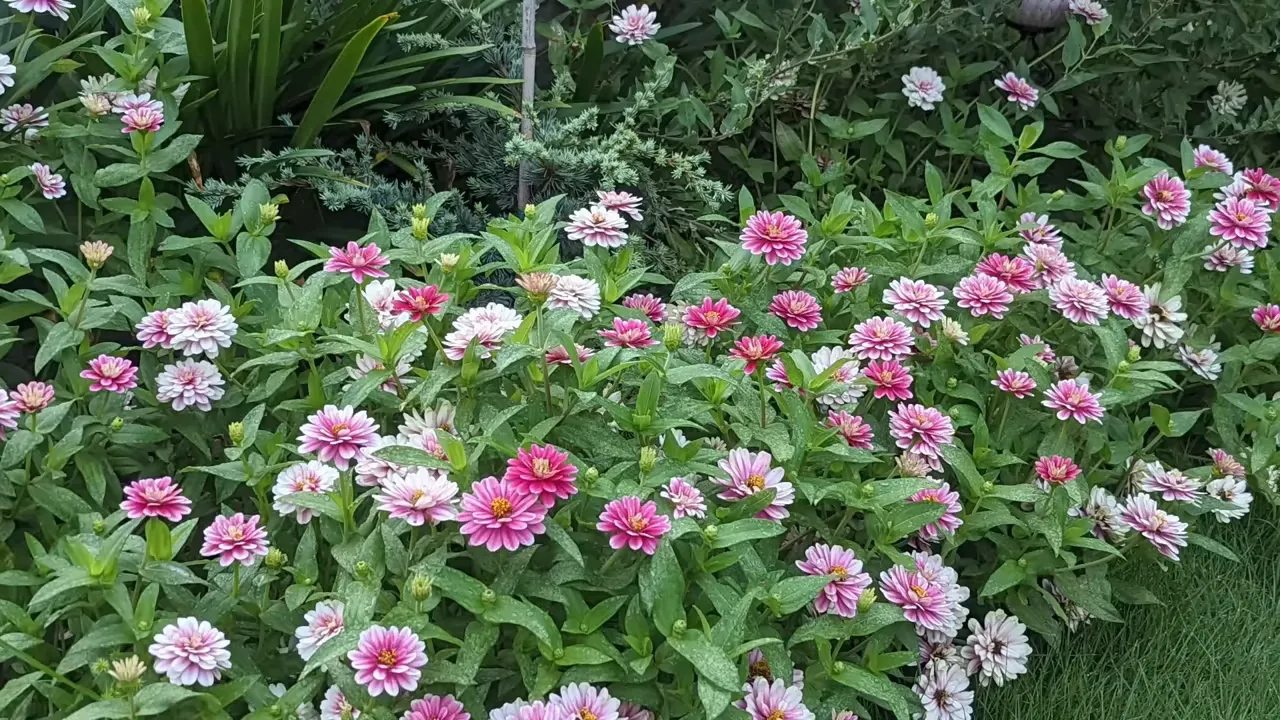
We also place them where we can enjoy the activity around them. Rather than tucking all our pollinator flowers against the house, we put them out in the garden where they are visible from the screened porch or front stoop. The flowers are attractive on their own, but the pollinators are a big part of the reason we grow them.
How We Start Zinnias From Seed
Zinnias are a good entry point if you are new to seed starting. They germinate readily, usually in about three to seven days, so you find out fairly quickly whether your seed is viable. If an older packet fails, there is often still time to start again.
We get our best results by starting them indoors about four weeks before our average last frost date. Here, that date is around April 15, so we start our seeds around March 20. Your dates will depend on your own climate.
Our Indoor Seed-Starting Schedule
- Start about four weeks before the average last frost. We use a 50-cell tray filled with seed-starting mix and place it under a grow light.
- Allow roughly a week for germination. Many seedlings appear sooner, but three to seven days is a useful expectation.
- Keep the seedlings under bright light for about two more weeks. Good light is important from the beginning.
- Acclimate them to outdoor sun. Before planting, we gradually increase their time outside.
- Plant only when frost is out of the forecast. The average last frost date is a guide, not a guarantee.
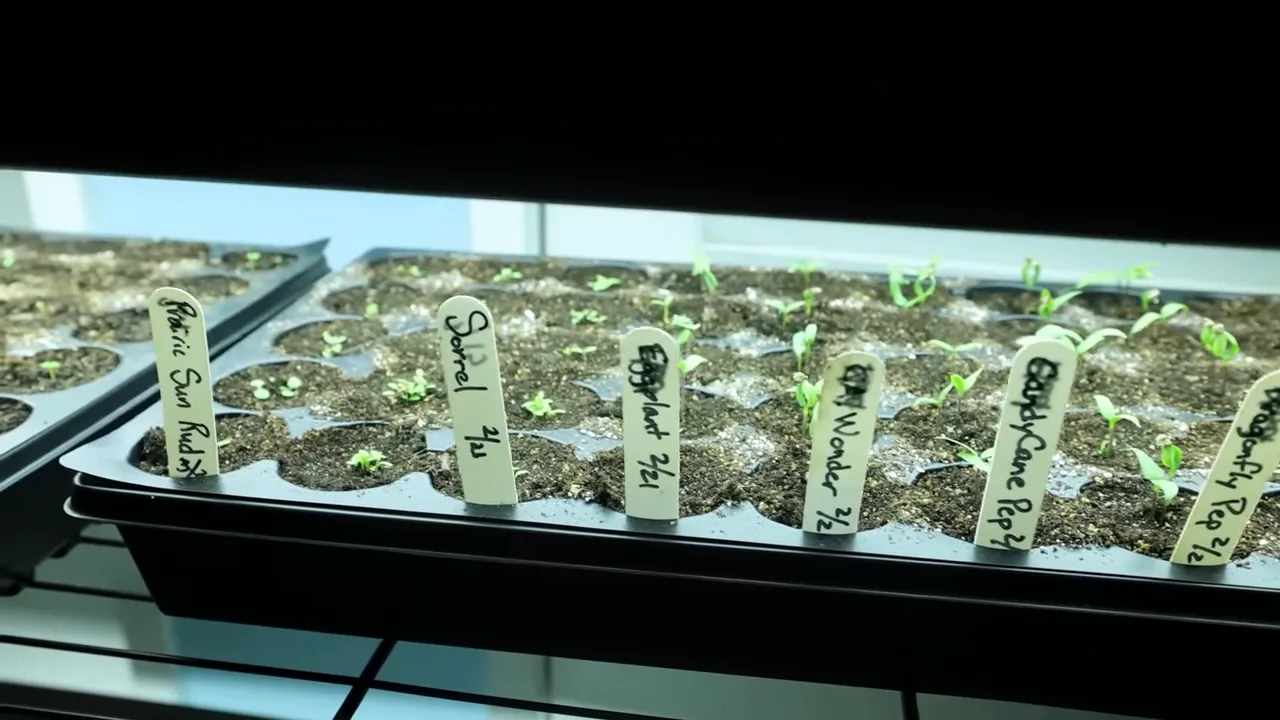
You do not have to use our exact equipment. Zinnias can be started using other seed-starting methods, including outdoor milk-jug methods, or they can be direct sown into prepared garden beds after frost danger has passed. We simply find that starting them indoors gives us the most reliable performance in our garden.
Do Not Skip the Move From Grow Lights to Sunshine
Even a bright indoor light rack is not the same as full sun outdoors. Our seedlings spend about three weeks inside before we begin acclimating them.
We initially give them about three hours in the sun, then increase that to around five hours, then eight hours, before planting. The point is to make that transition gradually rather than moving plants straight from the house into a full day of outdoor sun.
Before planting, we also check the 10-day forecast. Zinnias do not tolerate frost, so there is no reason to rush them into the ground just because the calendar has reached the average frost date.
Prepare the Soil, Then Keep Improving It
Our annual beds are in clay-based soil, and we add compost when we prepare them for planting. Over several years, those repeated additions have made a noticeable difference in how well the beds perform.
If you are creating a new annual bed, adding compost is a good start, but do not assume the first season will be the best that bed ever produces. Soil improvement is an ongoing process. Our beds became better and better as we continued adding organic matter over the course of several planting seasons.
That preparation also affects how much feeding the plants need later. A well-prepared bed does a lot of the work for you.
Choosing Zinnia Varieties: Tall Flowers or Compact Color?
For practical purposes, I think about the zinnias we grow in two groups: the tall, showy Zinnia elegans varieties and the compact hybrid series we use around bed edges.
Tall Zinnias: Zinnia elegans
These are the big showstoppers. Many of the selections we grow reach 36 to 48 inches tall and produce large, beautiful flowers above the surrounding planting.
The trade-off, especially here in the Southeast, is that they can develop powdery mildew or leaf spotting as summer goes along. They may not stay attractive as long as our compact zinnias, but the show they give us makes them worth growing.
Some of the selections we start include:
- Giant Double Violet Queen: A choice for full, formal double flowers.
- Benary’s Giant series: Bred with disease resistance in mind, although we still see blight on them in our conditions.
- Park’s Pink Lilac: A beautiful light lavender-purple double that we enjoyed in the garden.
- Giant Double Flowered Lavender: Another option for large lavender blooms.
- Pink Senorita: One of the specialty selections we grow from Baker Creek.
- Queen series: Including Queen Lime Red, Queen Lime, and Queen Lime Blush for more unusual flower colors.
The Queen selections are particularly interesting. Queen Lime gives us a large lime-colored flower on a stalk around 36 inches tall, and pollinators were all over those plants in our garden. We even found pollinators sleeping on them.
Queen Lime Blush may not be the boldest flower from a distance, but it is one of the more interesting up close. A single seed packet can give you a range of slightly different blush-colored flowers. That variation is part of the appeal.
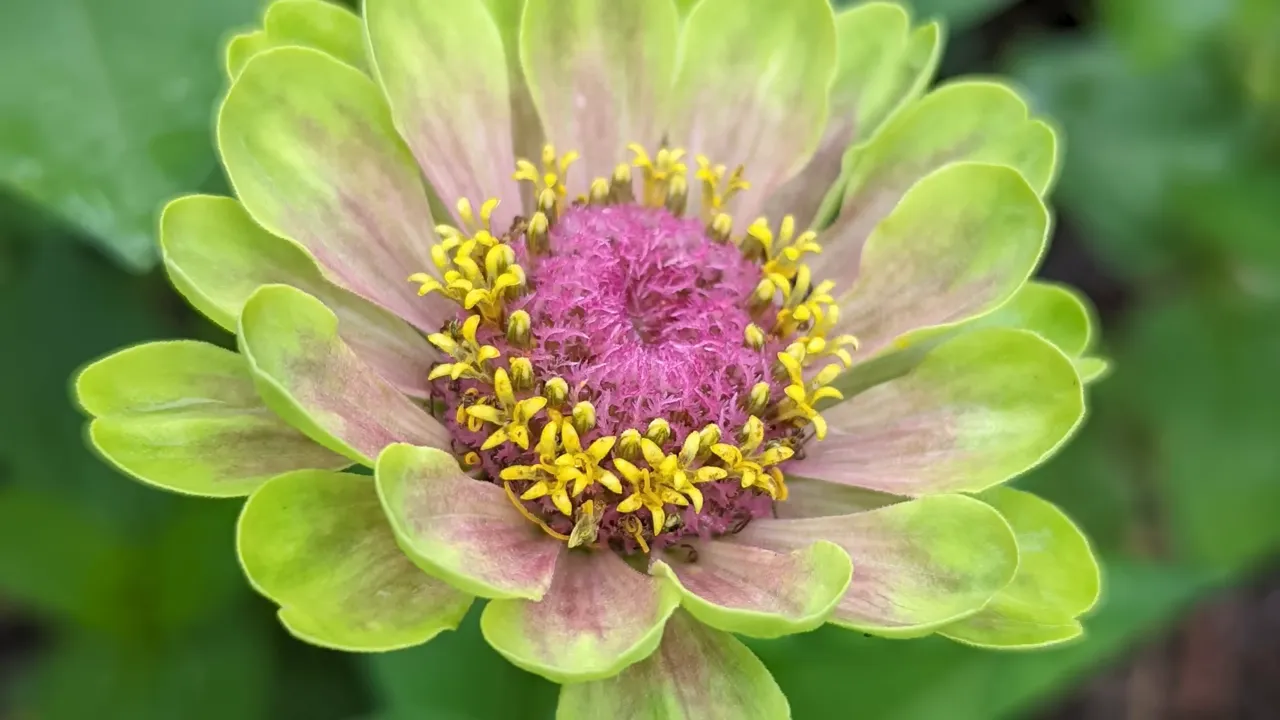
I would not rely on a disease-resistance label alone. We still get leaf spotting on some selections bred for resistance. Choosing a location with good air movement has been an important part of reducing powdery mildew for us.
Compact Zinnias: Profusion and Zahara
Plant breeders combined the showier flowers of Zinnia elegans with the compact habit and disease resistance of narrowleaf zinnia, Zinnia angustifolia. Two series we use regularly are Profusion and Zahara.
Pretty much every selection we have tried from these series has been a good garden performer. The shortest types fill the low, roughly 6- to 8-inch role in our plantings, and we use compact zinnias wherever we have a sunny gap or an edge that needs softening. Choose the individual selection with its mature size in mind.
Our Profusion choices include:
- Double Deep Salmon
- Double Hot Cherry
- Apricot
- Fire
One of our favorite Zahara selections is Double Raspberry Ripple. It is a fantastic little flower, and its appearance changes through the season. Early flowers can be a hotter pink with a little white. Later in summer, the planting can look much whiter with smaller amounts of pink.
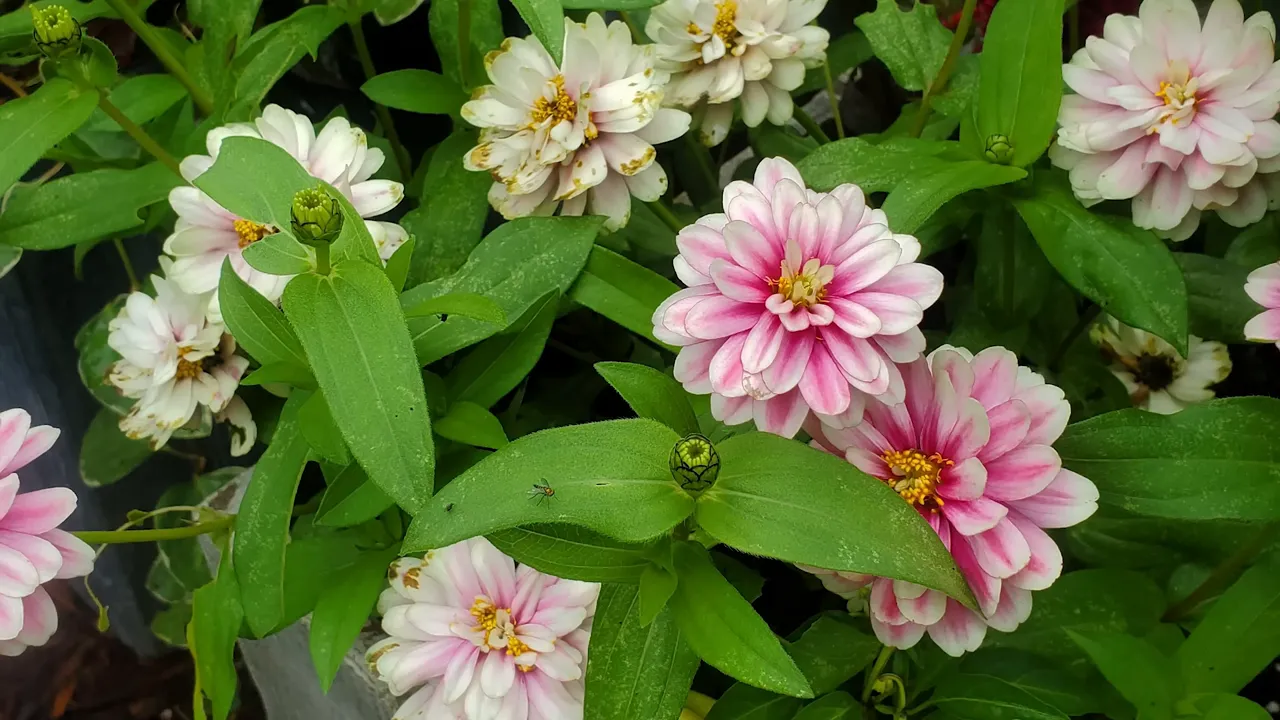
That changing mix of pink and white makes it one of the flowers people ask about most often in our summer garden.
Summer Zinnia Care: Water and Fertilizer
Drought Tolerant Does Not Mean Best Without Water
I consider zinnias fairly drought tolerant, but there is a difference between a plant surviving and a plant performing at its best.
A zinnia may continue growing and produce some flowers without much help. To get a full plant with good foliage and lots of blooms, though, we keep an eye on moisture and water occasionally when conditions get dry.
Container-grown zinnias generally need more frequent attention to watering than plants growing in our beds.
Start With Compost and a Modest Feeding
At planting time, our annual borders receive compost and an organic fertilizer intended for flowering plants, such as Flower-tone. After that, we do not automatically keep feeding them on a schedule.
If the plants are underperforming in June, July, or August, I first try to figure out why:
- Check the water. Not getting enough moisture may be the main issue.
- Consider whether additional fertilizer is needed. A little supplemental feeding may help if nutrition is the problem.
- Avoid continually pushing the plants. Good bed preparation often reduces the need for repeated feeding.
In our established annual borders, we had gone two years without additional fertilizer beyond the initial application at planting. That is not a rule for every garden, but it shows how much difference compost and bed preparation can make.
Pinching and Pruning for Fuller Plants
Pinch Tall Zinnias After They Begin Establishing
With our tall Zinnia elegans, we let the transplants settle into the ground and begin making a little new growth, then pinch out the growing tips.
Pinching encourages branching lower on the plant, creating a fuller shape. Without it, I tend to get a main stalk that grows about 24 inches before branching and flowering. By midsummer, that can leave a very bare-looking base.
Give Compact Varieties a Midsummer Haircut
Our Profusion and Zahara zinnias get a different treatment. Around the middle of summer, we use hedge shears to trim off roughly the top third of the plants. That helps keep them full and encourages another strong flush of flowers.
We do not cut back every annual in the garden on the same day. We might trim the front garden first and wait about a week before doing the back garden.
That way, there are still flowers available somewhere for bees, butterflies, hummingbirds, and the other visitors using the garden. A little staggered maintenance lets us refresh the planting without removing all the blooms at once.
What to Do When Tall Zinnias Fade
Our summer growing season is long, running from around the second half of April into late October. That is a lot to ask of one planting of tall zinnias.
By midsummer, we may begin seeing powdery mildew or the leaf spotting we refer to as zinnia blight. The plants can become tired-looking even though they gave us an excellent display earlier.
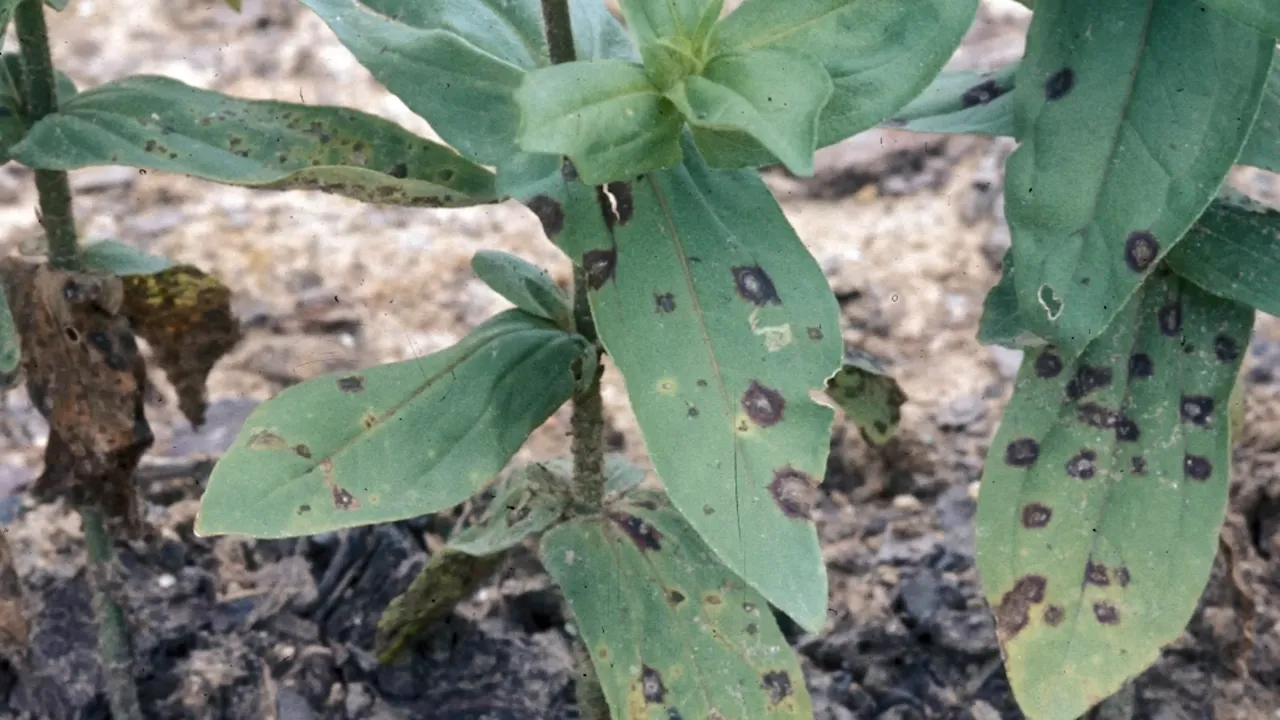
There are a few ways to plan for that.
Underplant With Something That Gets Going Later
We grow lantana beneath our giant zinnias. The lantana takes longer to get moving each year and is usually growing and flowering well by the middle of June.
By then, the zinnias are already tall and in full flower. As the zinnias decline toward the end of summer, we remove them and allow the lantana to carry the planting forward. That succession works well for us.
Start a Second Round of Zinnias
Another option is to sow a replacement crop. After starting the first batch in mid-March, we could start another batch in mid-June and use those younger plants to replace the ones that are fading.
This is particularly useful in a long growing season, when there is still plenty of time left for a fresh planting to contribute.
Recognize That Climate Makes a Difference
In northern gardens with shorter summers, less heat, or lower humidity, giant zinnias may last through the whole summer without much trouble.
Here, we can try cutting tired plants back by about half to rejuvenate them, but I generally prefer having replacement zinnias or another planting ready underneath. It is simply a more satisfying way to keep those spaces looking good in our conditions.
A Lot of Flower Power for a Little Attention
Our zinnia routine is pretty straightforward: prepare the beds well, plant after frost danger has passed, provide sun and air movement, water when needed, and do a little pinching or pruning to keep the plants full.
The compact varieties give us dependable edging and summer color. The tall varieties provide those big flowers above the rest of the garden. Planning for their different habits, and for the way they age during the season, makes both groups easier to enjoy.
They do not need constant feeding or fussing. A little timely attention gives us months of flowers and a garden full of pollinator activity. That is why zinnias earn their place here every summer.


