Hydrangea pruning gets confusing because we use one common name for plants that don't all grow and flower the same way. Some make their flower buds on fresh spring growth. Others carry next season's flower buds through the winter on stems they grew the previous year.
That difference determines whether you can cut a hydrangea back hard in late winter or should simply neaten it up.
But here's the easy way out: if a hydrangea needs shaping and you're unsure when to do it, prune shortly after it flowers. That takes most of the confusion out of the job. And if it doesn't need pruning, you don't have to prune it at all.
I do like late winter pruning on certain hydrangeas, though. It lets me encourage branching, keep the plants fuller, and put the flowers at roughly the height I want them. The trick is knowing which plants can take that treatment.
Key Takeaways
- Established panicle and smooth hydrangeas tolerate hard pruning before spring growth because they bloom on new wood.
- Preserve overwintering buds when tidying bigleaf, mountain, and oakleaf hydrangeas in late winter.
- If you're unsure which hydrangea you have, do necessary shaping shortly after flowering.
- Remove diseased leaves and prunings rather than leaving them beneath hydrangeas with leaf spot problems.
Table of Contents
- Start With Old Wood Versus New Wood
- How to Prune Panicle Hydrangeas
- How to Prune Smooth Hydrangeas
- How to Prune Bigleaf and Mophead Hydrangeas
- How to Prune Mountain Hydrangeas
- How to Prune Oakleaf Hydrangeas
- Climbing Hydrangeas Usually Need Very Little Pruning
- Clean Up Prunings According to Plant Health
- Match the Plant to the Light, Too
- The Simple Hydrangea Pruning Rule to Remember
Start With Old Wood Versus New Wood
The hydrangea genus includes more than 25 species, several of which have become familiar landscape plants. For pruning purposes, the ones discussed here fall into two main groups.
- New wood bloomers: Panicle hydrangeas, Hydrangea paniculata, and smooth hydrangeas, Hydrangea arborescens. These leaf out, grow, set flower buds, and bloom during the same growing season.
- Old wood bloomers: Traditional bigleaf hydrangeas, Hydrangea macrophylla, mountain hydrangeas, Hydrangea serrata, and oakleaf hydrangeas, Hydrangea quercifolia. These carry flower buds on growth made the previous year.
Some newer bigleaf hydrangeas bloom on both old and new wood. That gives them a second opportunity to flower if winter damages the buds they were carrying, but it isn't a reason to cut off their early flowers unnecessarily.
For another reference on identifying these pruning groups, the University of Minnesota Extension has a useful guide to pruning hydrangeas.
How to Prune Panicle Hydrangeas
Hydrangea paniculata includes Limelight, Little Lime, White Wedding, and Moon Dance. These are forgiving plants to prune because their summer flowers haven't been formed yet when you're working on them in late winter.
An established panicle hydrangea can recover from very hard pruning and still bloom that season. That doesn't mean every plant needs to be cut nearly to the ground. I choose the amount to remove based on its growth, shape, and where I want the flowers.
Work backward from flowering height
My White Wedding grew about three feet before it flowered the previous season. If I want it to bloom at about the same height again, I need to take roughly three feet off. That's pretty straightforward math.
A larger-growing variety such as Limelight may recover four feet before flowering in a vigorous growing situation. Use what your own plant did last year rather than treating three or four feet as a rule for every hydrangea.
This also matters when a plant is stretching. My back-garden panicle hydrangeas get a little more shade than they'd prefer, and their stems lengthen as a result. If I keep allowing that growth to build on itself, the plants are likely to become floppy. Cutting them back helps keep that structure under control.
Make a clean cut above a bud
- Decide how much height you need to remove based on the plant's previous growth.
- Find a bud along a stem near your intended pruning height.
- Use sharp pruners to cut just above the bud, leaving a little space without cutting into it.
- Continue around the plant, removing awkward or excessively wide branches as needed.
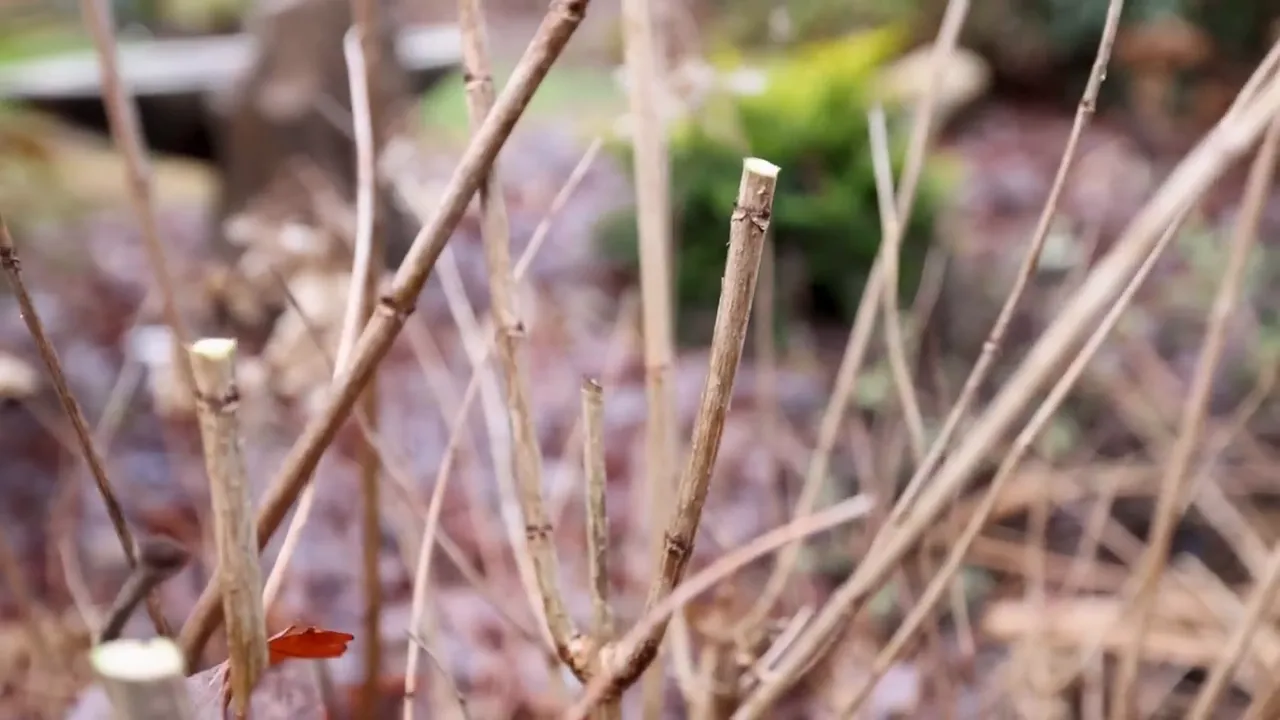
I'll be honest: I don't always have the patience to make every cut perfectly. I've cut panicle hydrangeas back quickly and had them branch and grow just fine. They are forgiving.
Still, the more precise approach is to cut above a bud rather than leave a long piece of stem above it. That leftover stub can die back and potentially provide an entry point for disease. Sharp pruners also matter. You want a clean cut, not a crushed or ragged stem.
Pruning encourages additional branching, and those new branches typically give panicle hydrangeas more places to flower. That's one reason I like doing this before spring growth begins.
Variety makes a difference
Older panicle hydrangeas can become substantial plants. We grew PeeGee and other large selections at my nursery that could reach 20 to 25 feet. Limelight can get quite tall, too. Newer compact cultivars give us more choices for smaller landscapes.
White Wedding has impressed me with its thick stems. They develop enough strength before flowering to hold the large flower heads upright, even after those flowers dry to their papery winter form.
Moon Dance has also been excellent in my garden. In its second year in the ground, it was compact and vigorous, with sturdy stems that kept the dried flower heads upright through winter rain and wind. Pruning helps with structure, but choosing a plant with a suitable mature size and strong stems helps, too.
How to Prune Smooth Hydrangeas
Hydrangea arborescens, or smooth hydrangea, is the other group that can take hard late winter pruning. It's a native hydrangea found across much of the southeastern United States and beyond.
Annabelle is the classic example. I grew it throughout the time I owned my nursery. Incrediball is another familiar selection, and breeding has expanded the choices from traditional white flower heads to pink and ruby-colored forms.
Like panicle hydrangeas, smooth hydrangeas make their flowers on new growth. They leaf out in spring, grow quickly, form buds, and bloom.
At the nursery, we cut established Annabelle plants in containers down to about four or five inches tall each year, before they started waking up. They recovered quickly. Wait until a newly planted hydrangea's second year before beginning hard pruning.
Use the season, not just a calendar date
The timing I aim for is late winter or very early spring, before active growth begins. In my Raleigh garden, that's typically around the first of March. Early February is earlier than I'd normally do this work.
Your climate will determine the date. The useful thing to remember is the growth stage, not my calendar.
Panicle and smooth hydrangeas are particularly useful in cold climates because their flowers don't depend on buds surviving above ground all winter. Panicle hydrangeas are generally hardy into USDA Zone 4, and smooth hydrangeas into Zone 3, depending on the selection. Losing upper growth doesn't automatically mean losing the year's flowers.
How to Prune Bigleaf and Mophead Hydrangeas
Hydrangea macrophylla is the familiar bigleaf or French hydrangea, often with large mophead flower clusters. Many have blue, pink, or purple flowers influenced by soil pH and aluminum availability. There are white-flowered selections as well.
Traditional varieties set their flower buds in late summer or fall and carry them through winter. In spring, those buds open and produce growth that reveals the flowers fairly quickly.
This is not a plant to shear back hard in winter if you want to preserve its early flowers. But that doesn't mean you can't touch it. There's a big difference between cutting the whole shrub down and carefully removing last year's dried flower heads.
Remove spent flowers without removing the buds below
- Start at a dried flower head and follow its stem downward.
- Look for the first healthy-looking bud or pair of buds below it.
- Cut above those buds, leaving roughly half an inch rather than clipping right against them.
- If the upper bud looks dried out or damaged, inspect farther down for a viable bud before choosing the cut.
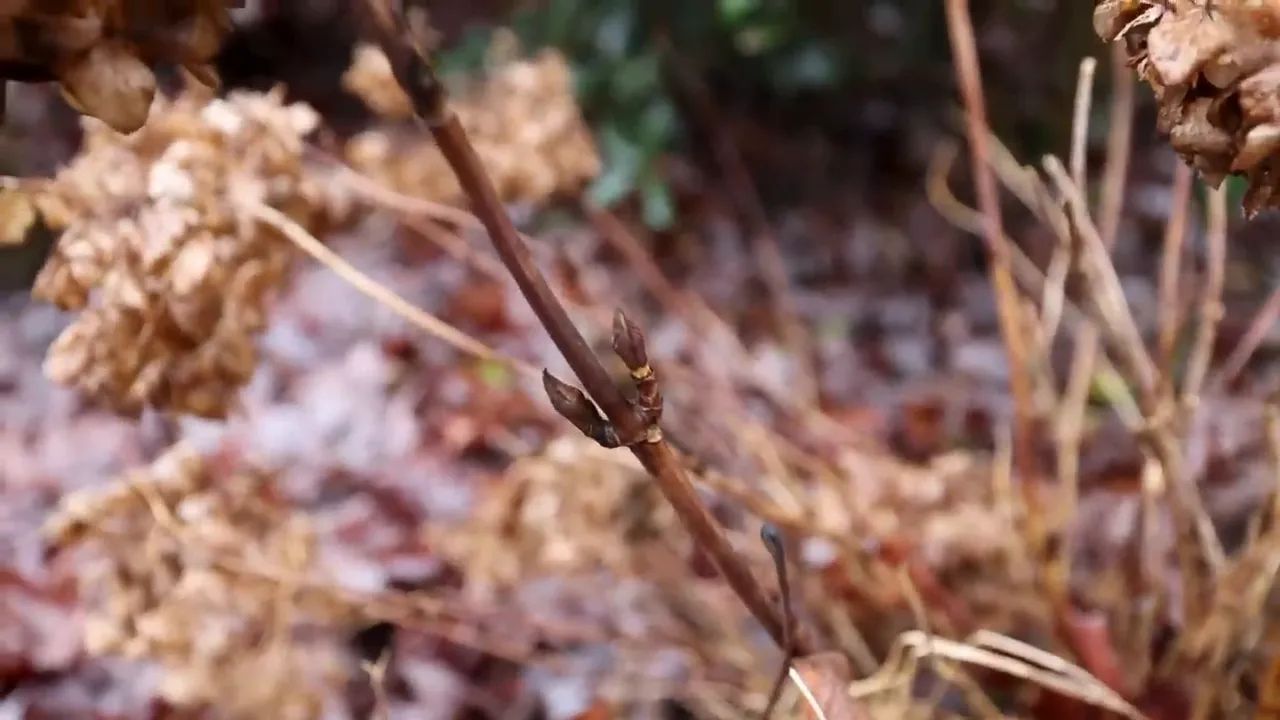
You're not trying to reshape the entire shrub during this cleanup. You're taking away the old flower head and the short section of stem above the buds you want to keep.
You can see these buds. They aren't invisible. Once you slow down and look along the stems, the difference between a careful cleanup and a flower-removing haircut becomes much easier to understand.
If a branch is lying along the ground or taking the plant much farther outward than you want, you can remove that branch entirely. Just recognize that any flower buds on that branch go with it. There's no point keeping a badly placed limb forever simply because it might flower.
Reblooming varieties provide a second chance
Dear Dolores, one of the bigleaf hydrangeas in my garden, is a reblooming, or remontant, variety. It can flower on both old and new wood.
If cold damages its overwintering buds, or those buds get cut off, it can still produce flowers later in the growing season. It may take longer into summer because the plant has to grow and form new flower buds first.
An older, non-reblooming bigleaf hydrangea doesn't have that same backup. The flower buds it carries through winter are the flowers available for the coming season. That's why protecting them matters so much.
How to Prune Mountain Hydrangeas
Mountain hydrangeas, Hydrangea serrata, get the same cautious winter treatment as bigleaf hydrangeas. Preserve the buds along the existing stems and remove only the dried flower heads above them if the plant needs tidying.
There are newer selections such as Tiny Tuff Stuff, along with attractive variegated forms. My variegated mountain hydrangea is still small enough that pruning would accomplish very little. Over time, I expect it to reach roughly three to four feet tall and wide.
That's an important part of pruning, too: sometimes the right amount is none. A young, well-shaped plant doesn't need a cleanup simply because you have the pruners out.
How to Prune Oakleaf Hydrangeas
Oakleaf hydrangea, Hydrangea quercifolia, is another native species, and it blooms on old wood. Treat it as a light cleanup job in winter, not a hard cutback.
Follow the stem down from an old flower head, identify the buds below it, and make the cut just above them.
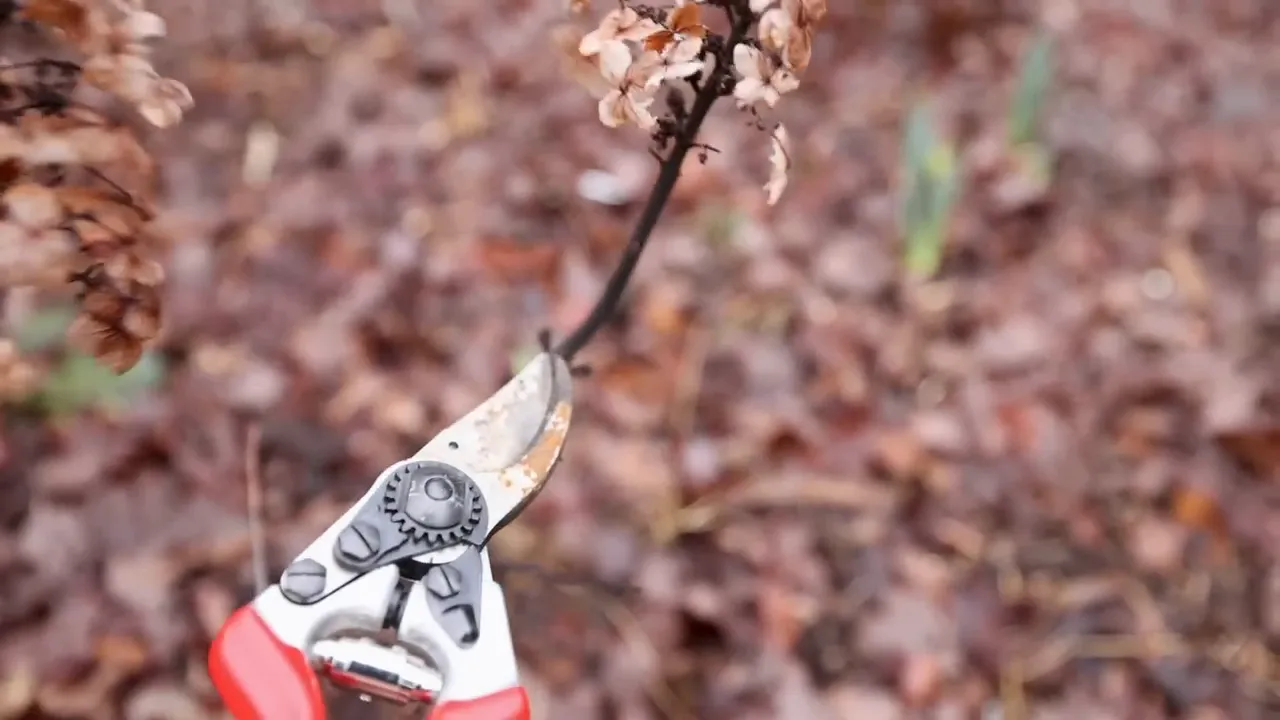
My Ruby Slippers oakleaf hydrangea opens white, ages to reddish pink, and eventually takes on that familiar papery winter appearance. Removing the dried flower head can make the plant look neater without requiring a major reduction in its stems.
Choose the cultivar carefully before planting. A dwarf oakleaf hydrangea may fit a space around three feet tall and wide with some maintenance, while larger forms can exceed 15 feet in height. Buying the right-sized plant is a whole lot easier than continually trying to shrink a large one.
Cold damage can affect flowers even when the shrub survives
A sudden December temperature drop left me questioning the condition of some buds on both my bigleaf and oakleaf hydrangeas. Some looked dehydrated or damaged, while others were plump and already beginning to swell.
A hydrangea can be cold hardy as a plant and still suffer flower-bud damage during a sharp temperature change. My young oakleaf appeared to have some damage even though oakleaf hydrangeas are generally quite cold hardy.
Careful pruning can't restore a dead flower bud. It can, however, avoid removing the healthy ones that remain.
Climbing Hydrangeas Usually Need Very Little Pruning
The common climbing hydrangea, often called Hydrangea petiolaris, generally doesn't need routine pruning. Look for dead branches and decide whether any growth is getting beyond the space you have available.
You can selectively shorten growth for control in late winter or early spring, but you'll remove some flowers along with those stems. I wouldn't give a climbing hydrangea a general winter haircut. Keep it to necessary cleanup and size control, or wait until after flowering for shaping.
Clean Up Prunings According to Plant Health
What I do with the cut material depends on how healthy the plant was.
With a clean panicle hydrangea, I'll often snip the thin branches into smaller pieces, leave them in the bed, and mulch over them along with the leaves already there. That material can break down right where it grew.
Bigleaf and mountain hydrangeas tend to have more leaf spot problems in my garden. With those, I remove fallen leaves and the pieces I've cut off rather than leaving everything around the base.
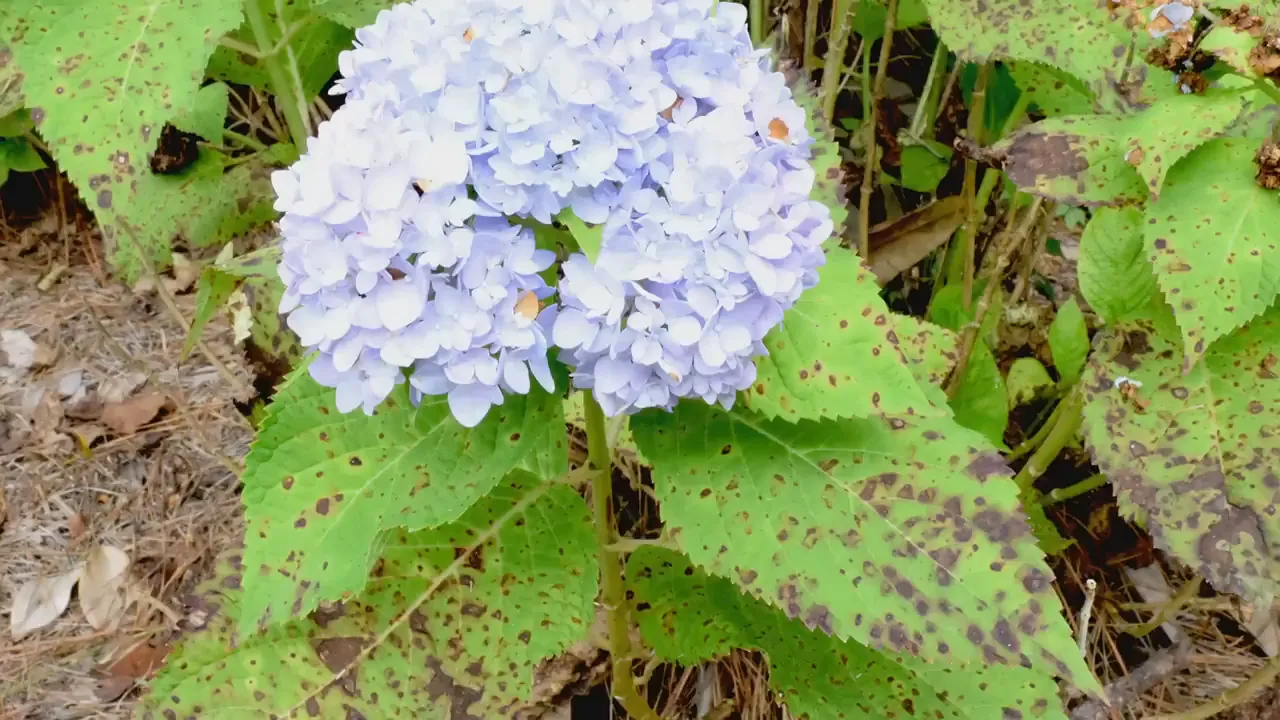
The goal is to reduce the diseased material around the plant and limit how much of that problem carries back onto new growth.
Match the Plant to the Light, Too
Pruning isn't the only thing affecting a hydrangea's shape. Panicle hydrangeas generally handle full sun well. Most of the other hydrangeas discussed here prefer at least some shade.
The farther north you garden, the more sun those plants can usually take. Farther south, shade becomes more important. If a panicle hydrangea is stretching in too much shade, pruning can help manage its size, but the growing conditions are still part of the picture.
The Simple Hydrangea Pruning Rule to Remember
For late winter work, remember two names: paniculata and arborescens. Those are the hydrangeas you can prune hard once established because they flower on new growth.
For bigleaf, mountain, and oakleaf hydrangeas, winter pruning is mostly about neatening up. Preserve the buds, remove spent flower heads carefully, and leave a plant alone if it doesn't need anything.
And if sorting out the species still sounds like more work than you want, keep it simple. Do any necessary shaping shortly after flowering. You don't have to make hydrangea pruning more complicated than it needs to be.


