There has never been this much interesting plant breeding coming along this quickly in the seven or eight years I’ve worked with the folks at Plant Development Services Incorporated. Usually, we’re talking about four or five introductions here, another new azalea there. This feels like a whole wave of great genetics.
Steph and I visited their space in Loxley, Alabama, while it was being prepared for a grower meeting. These are the growers who produce plants for garden centers, wholesale yards, and larger retailers, so having everything gathered together made it a wonderful opportunity to compare plants side by side.
PDSI’s brands include Butterfly Candy butterfly bushes, Encore Azaleas, the Southern Living Plant Collection, Better Boxwood, Groundbreaker Hydrangeas, and the Sunset Plant Collection. Some of the plants here are brand-new introductions. Others have been around long enough that we’ve had a chance to grow them ourselves.
The emphasis here is on plants for sunnier parts of the garden, with one especially exciting camellia that I would still favor for part shade. One other important detail: this visit took place in November, and many of these plants were being held in a greenhouse. The flowers were impressive, but they are not a promise that every garden will look this way in late fall.
Key Takeaways
- Groundbreaker Hydrangeas combine a low-growing habit with distinct flower colors as blooms mature.
- Early Surprise brings summer and fall flowering to camellias suited to Zones 7 to 9.
- Evergreen selections offer different natural shapes, making plant habit an important part of choosing.
- Dayscape daylilies pair repeat flowering with breeding focused on rust resistance and cleaner foliage.
Table of Contents
- Butterfly Candy Butterfly Bushes: Two New Colors in a Favorite Series
- Groundbreaker Hydrangeas: Panicle Hydrangeas With a Groundcover Habit
- Early Surprise Camellia: Flowers in Summer and Fall
- Compact Evergreen Shrubs for Everyday Garden Jobs
- Better Boxwood: Four Varieties for Different Garden Roles
- Golden Foliage and Soft-Textured Conifers
- Upright Evergreens for Screening
- Summertime Agastache: Perennials That Finish the Season Well
- Dayscape Daylilies: Repeat Flowers and Cleaner Foliage
- More New Plants Are Still on the Way
Butterfly Candy Butterfly Bushes: Two New Colors in a Favorite Series
I started with the Butterfly Candy display on purpose. These dwarf butterfly bushes looked terrific, and Lil’ Raspberry has been one of our absolute favorites in our own garden.
There are two additions to look for: Lil’ Cerise and Lil’ Magenta. Lil’ Magenta was represented in the display, and its flowers have a rich, dark plum-purple color. I checked that description with Steph, and she agreed. Sometimes purple is a difficult color to pin down, but plum-purple fits this one nicely.
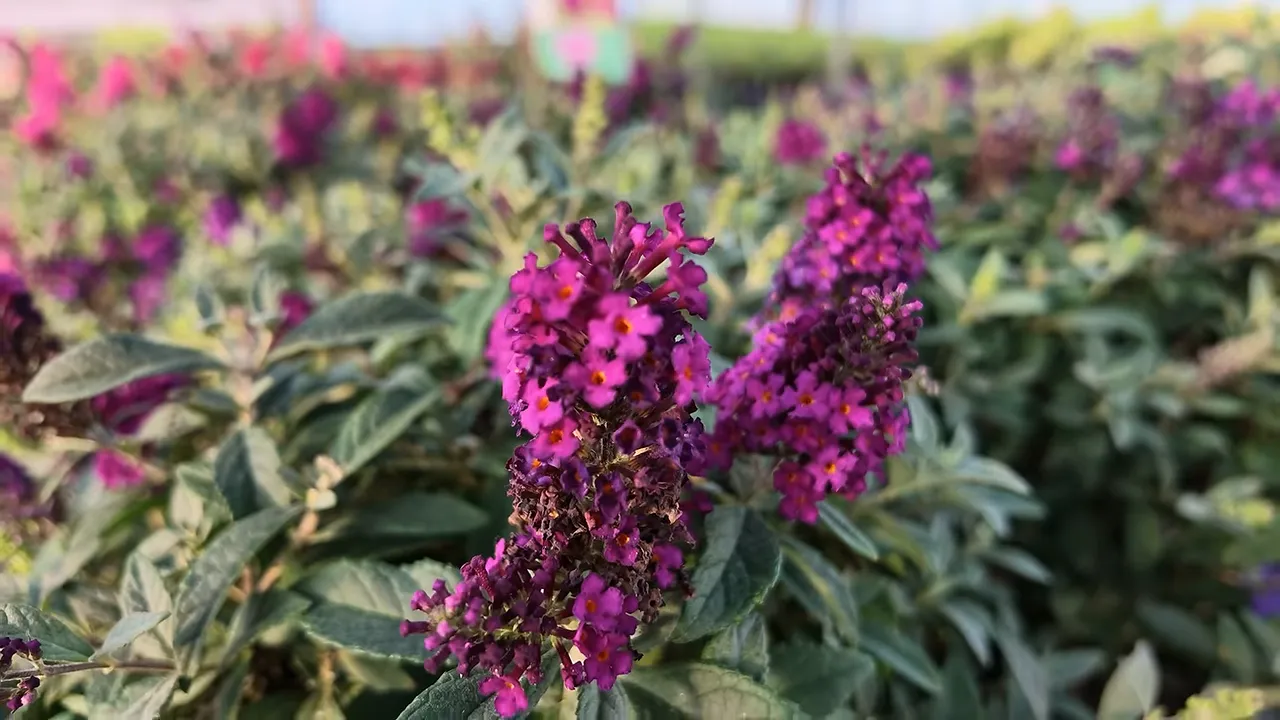
The broader group includes:
- Lil’ Raspberry, a standout in our garden.
- Lil’ Magenta, one of the new additions.
- Lil’ Cerise, the other new addition discussed at the event.
- Lil’ Lavender, Lil’ Taffy, and Lil’ Grape, additional color choices in the series.
- Lil’ Coconut, the white-flowering selection.
The display containers were color-coordinated with the flowers, which made the range easy to understand at a glance. We already have several of these in the garden, but had not planted Magenta or Cerise at the time of this visit. Both are on our list to try.
We also had the opportunity to see the breeding work behind this series in the Netherlands. That is part of what makes these introductions fun for us. We’re not just seeing a new name on a tag. We’ve had a chance to see some of the work that goes into getting these compact plants to market.
Groundbreaker Hydrangeas: Panicle Hydrangeas With a Groundcover Habit
The first time we saw Groundbreaker Hydrangeas in the Netherlands, the thing that struck us was their habit. These are Hydrangea paniculata selections that bring panicle hydrangeas down toward groundcover scale. That is a pretty remarkable change from the size many gardeners associate with this group.
Three selections at the event showed how flower color can develop differently as the blooms age:
- Greeny keeps that green character in its flowers.
- Ruby develops red tones as its flowers mature into fall.
- Blush develops a softer pink hue as the flowers fade.
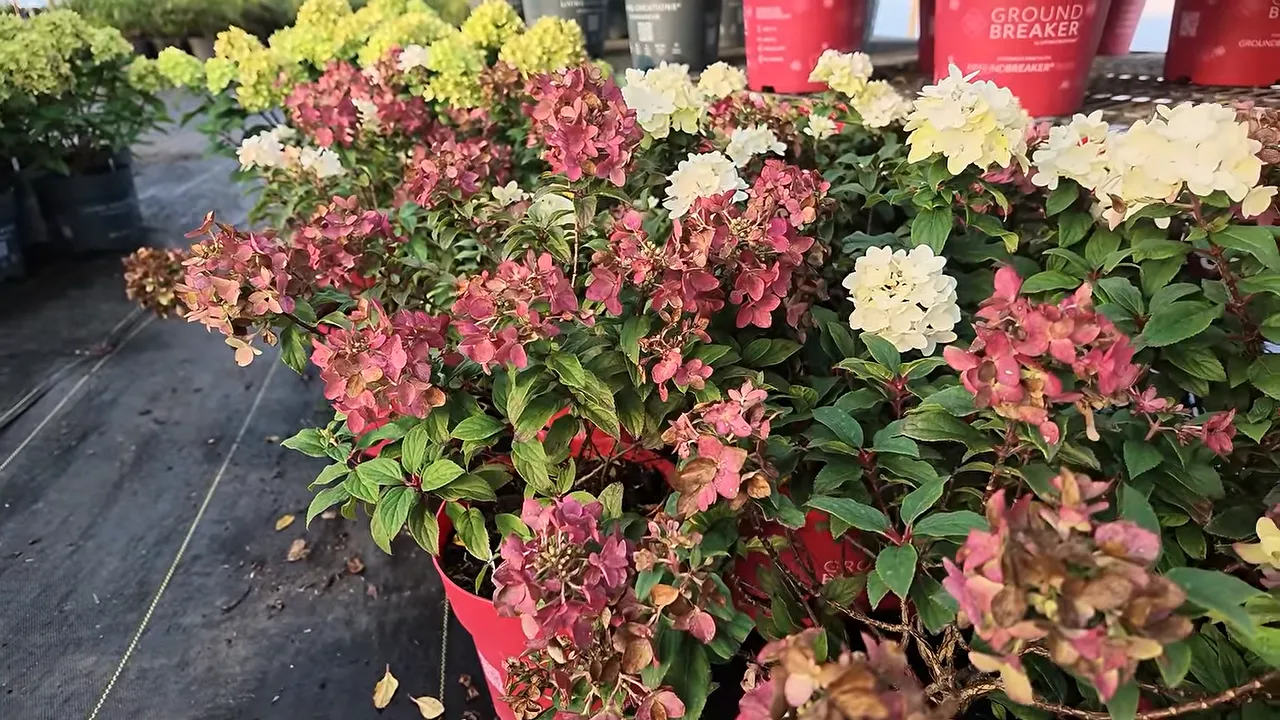
On Ruby, the flowers can begin green, become bright white, and then move toward red. Blush follows with pink tones instead. So the selection is not only about the color of a newly opened flower. It is also about the color the plant carries later in the season.
There is more hydrangea breeding coming from this program, too. What we saw in the Netherlands was enough to make both of us very excited about where this group is headed. A low-growing habit paired with that kind of flower display opens up a different way to use panicle hydrangeas in a garden.
Early Surprise Camellia: Flowers in Summer and Fall
This was one of the most exciting plants in the whole greenhouse.
Early Surprise is a camellia hybrid with summer-blooming genetics from Camellia azalea. Despite that species name, it is a camellia, not an azalea. The breeding work combines that species with familiar camellia groups, including C. japonica, C. reticulata, and C. sasanqua.
The unusual trait is the bloom season. We saw these flowering at Cultivate in Columbus, Ohio, in July. Then we came to Alabama in November, and they were flowering again. Having camellias that can flower in August and September is a major change from the usual sequence of fall-flowering sasanquas followed by japonicas.
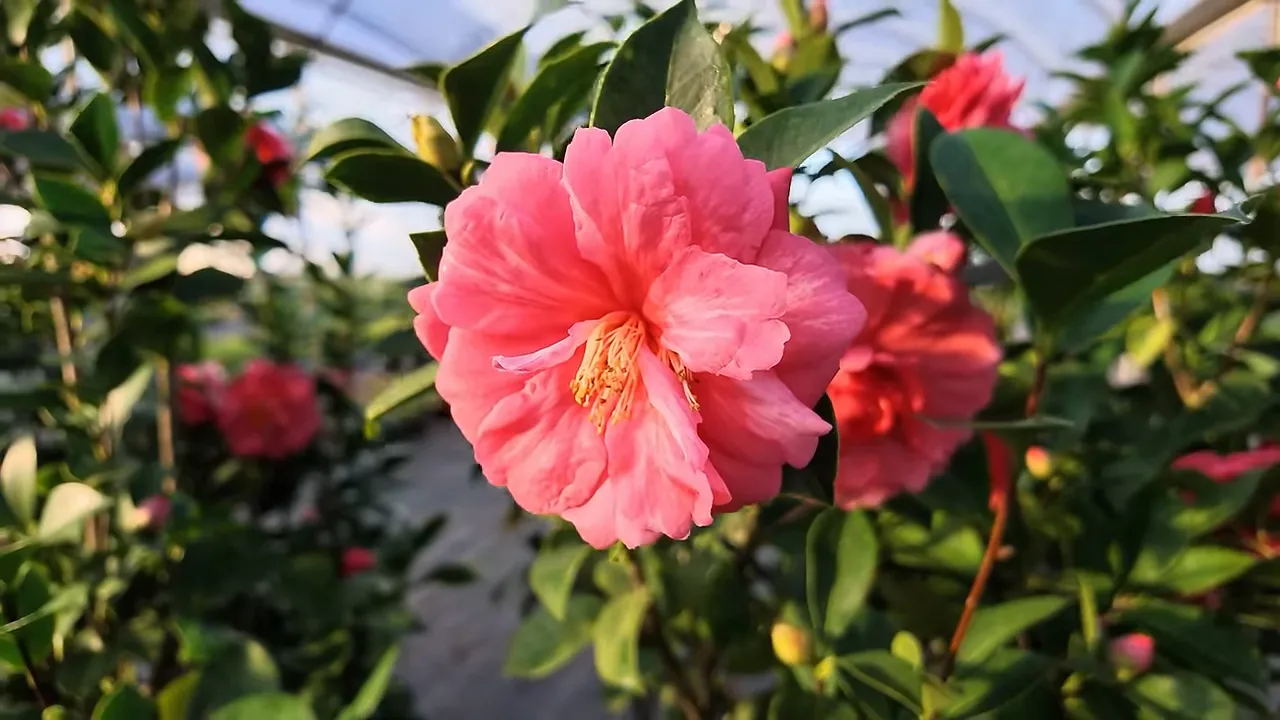
The flowers begin a strong red and soften toward pink with age and exposure to light. Parts of a flower that have been less exposed can remain darker, creating an almost two-toned effect.
We have a young one planted at home, but ours was only about a foot tall at the time of the visit. The larger container plants had grown quickly enough to make me wish I could bring home one of those taller specimens, too.
- Hardiness: USDA Zones 7 to 9.
- Light: I would favor part shade overall.
- Main attraction: An unusually early flowering season that extends camellia interest into summer and fall.
If you need to confirm your location before shopping, the USDA Plant Hardiness Zone Map is a useful reference. Early Surprise is the first release discussed from this work, and I expect we’ll be hearing more about these camellia hybrids over time.
Compact Evergreen Shrubs for Everyday Garden Jobs
Not every exciting introduction has to change an entire flowering season. Sometimes the useful improvement is a smaller plant, a better natural shape, or foliage that keeps doing its job with very little attention.
Mini Touch Holly
Mini Touch is a Buddy Lee introduction that takes the familiar idea of Soft Touch holly and makes it more compact, with slightly smaller leaves.
Soft Touch is sold in enormous numbers, but a smaller version has an obvious place in gardens. Mini Touch looks like the sort of shrub you could maintain around 2 feet tall and 2 feet wide for a very long time without much work. That is the appeal: a small evergreen that does not immediately start trying to outgrow its assignment.
Blush Pink, Lemon Lime, and Obsession Nandinas
These three nandinas are what I think of as workhorse garden plants. They provide dependable foliage color, and an important distinction is that these selections do not flower, so they do not produce berries for birds to carry elsewhere.
Blush Pink still looked good in the greenhouse, although it had not developed the stronger red color that cooler outdoor conditions bring. By the time we returned home, I expected ours in the ground to be considerably redder.
Lemon Lime supplies that bright chartreuse foliage Steph and I love, while Obsession adds another foliage-color option to the group. These are plants worth considering for their leaves, not for a short-lived flower display.
Gardenias With Different Shapes
Three gardenias in the Southern Living Plant Collection offered a useful reminder to pay attention to plant habit, even when the flowers may be the first thing that attracts you.
- Jubilation is one of the more rounded choices, in roughly the 3 to 4 foot size range.
- Diamond Spire does something different, with an upright, narrow habit.
- ScentAmazing has been a flowering machine in our garden.
Our ScentAmazing was about 3 feet tall and wide after roughly five years, despite being in a tough spot. It gets more shade than I would prefer and competes with a lot of established roots. That is an observation from our garden, not a recommendation to give it the same difficult conditions, but its performance has been impressive.
Purple Charm and Purple Daydream Loropetalums
Purple Charm is a newer, very compact loropetalum that can be kept quite small. Purple Daydream is another compact option, but placing the two side by side makes their differences easier to appreciate.
To my eye, Purple Charm has just a little more purple in the foliage. Purple Daydream has a somewhat more weeping habit, and there are subtle leaf-size differences as well.
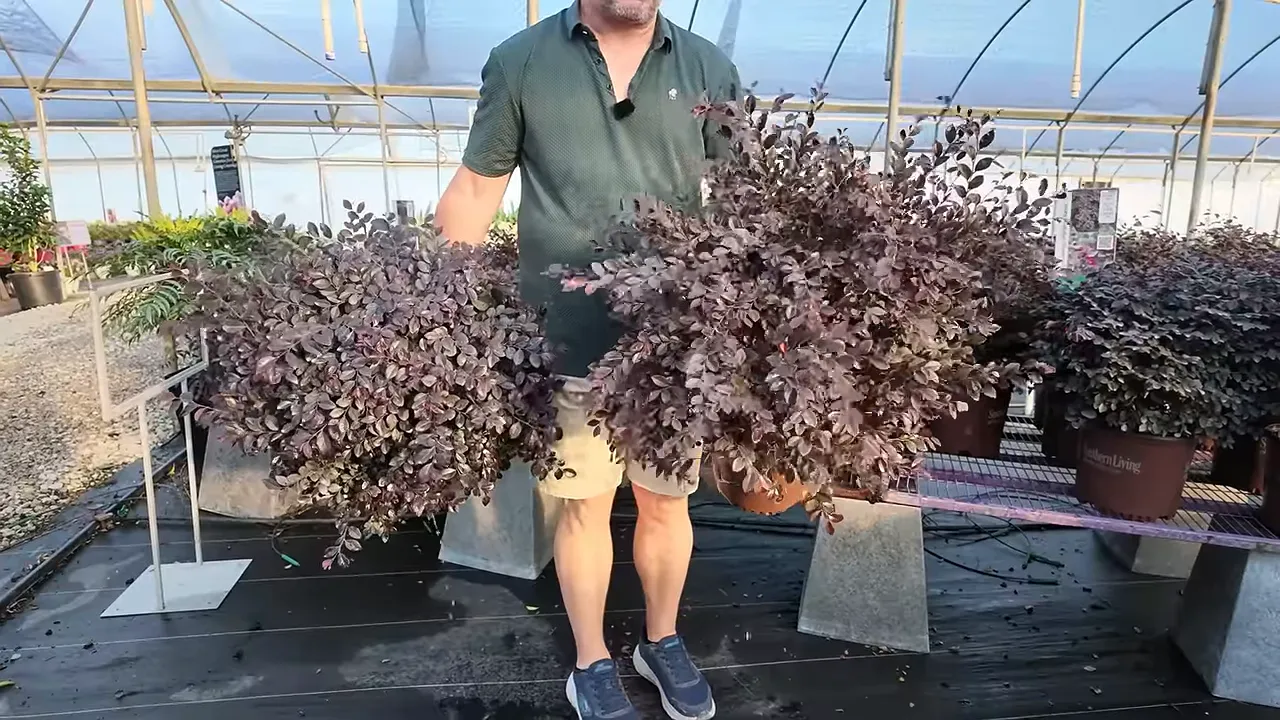
Neither needs to be treated as interchangeable simply because both are small, purple-leaved loropetalums. The shape you want in the finished planting is a good reason to look closely at each.
Better Boxwood: Four Varieties for Different Garden Roles
Better Boxwood is another breeding program that really impressed us when we visited Europe. The disease resistance, particularly the boxwood blight resistance, is a big part of the story. But the different growth habits matter just as much when you are deciding which one belongs in your garden.
There were four varieties in the brand at the time of this visit.
Skylight
Skylight is the one I think of for shaping. If you want flexibility in how you train and maintain a boxwood, this is a useful place to start.
We have two Skylights in our garden, and we do not have two of very many things. The one out by the road has been beautiful.
Heritage
Heritage fills the more familiar rounded-boxwood role. If your mental picture is a rounded evergreen around 4 feet tall, this is the sort of selection I would consider.
It may be the strongest overall performer of the group in our own garden. Our front-garden plant has done very well, even though, like many plants at our house, it has some competition around it.
Babylon Beauty
Babylon Beauty is lower and more spreading. It grows wider than tall, making it a good candidate when you want a lower hedge or a broad, mounding evergreen rather than an upright rounded shrub.
Renaissance
Renaissance is the one I expect people to use for knot gardens and more detailed formal work. The European garden examples showed the kinds of intricate shapes and traditional patterns that suit this selection.
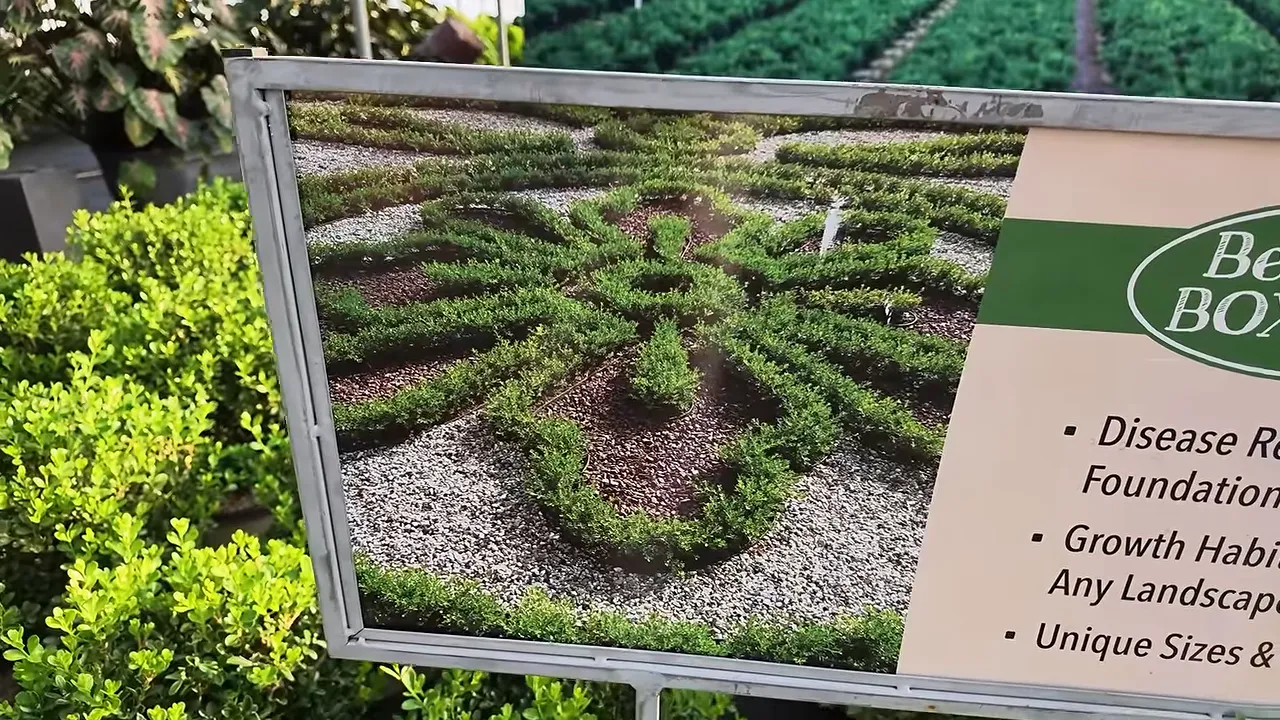
Choose the habit first, then think about pruning. A naturally low, spreading boxwood and a boxwood intended for detailed shaping may both be excellent plants, but they are solving different problems.
Golden Foliage and Soft-Textured Conifers
One grouping brought together chartreuse foliage, variegation, and soft-textured evergreens. That is a combination Steph and I are always drawn to, and several of these are plants we already enjoy at home.
Golden Oakland Holly
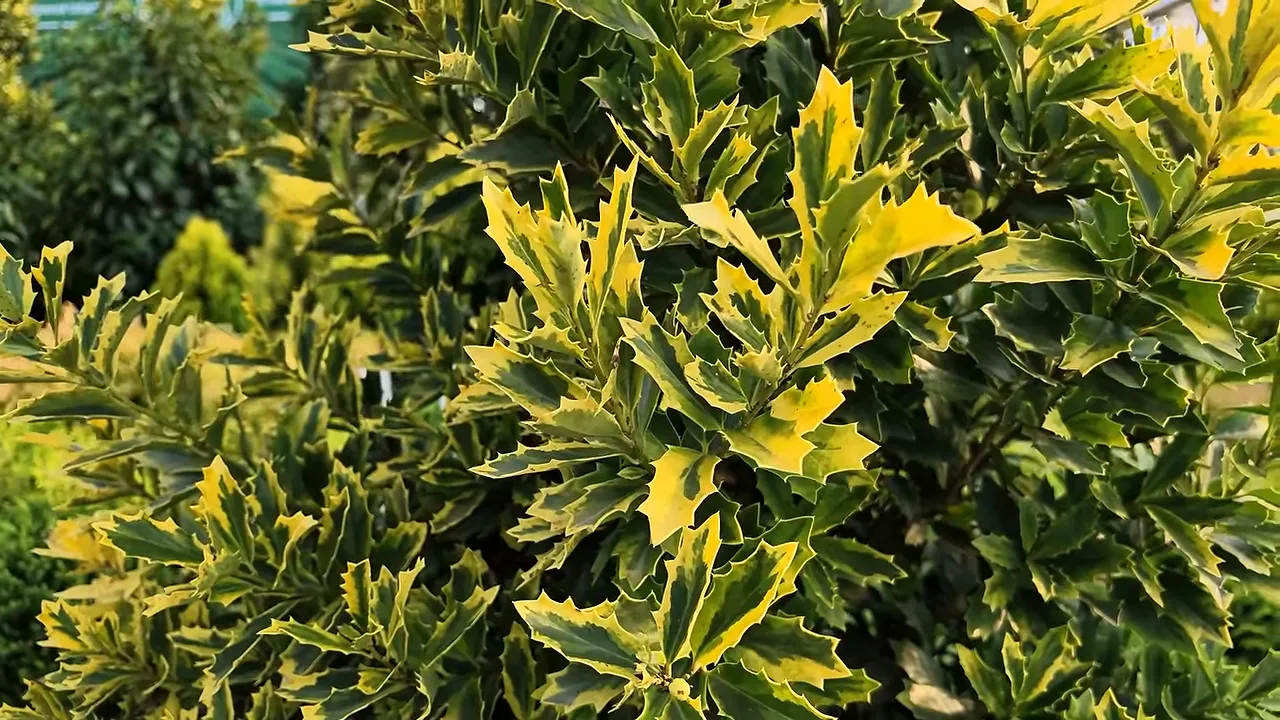
Golden Oakland holly is hardy in Zones 6 to 9 and becomes a tall plant. Its variegation was especially bright in the greenhouse area without shade cloth.
Ours at home gets more shade than it should, so it is not as vivid. This was a good side-by-side lesson, even across two different locations: more sun brings out that brighter golden effect.
Dragon Prince Cryptomeria
Dragon Prince is a wonderfully soft-textured conifer. We have one in front of our shed, and it has looked good with essentially no maintenance from us. It is a great example of how much interest an evergreen can contribute through texture alone.
Night Light Chamaecyparis
Night Light offers another soft texture, paired with brighter foliage. The one on our foundation had reached approximately 4 feet tall and wide after about four years. That is our plant’s progress, rather than a fixed size promise, but it gives some sense of how it has developed for us.
Fire Chief Arborvitae
Fire Chief adds a seasonal color change. As nighttime temperatures drop, the foliage picks up rusty tones for winter. It is another soft-textured conifer, but with a different contribution from the brighter upright selections behind it.
Highlights and Forever Goldy Arborvitaes
Highlights is an incredibly striking upright, chartreuse-colored conifer. Ours on the front foundation had reached about 5 feet tall.
Forever Goldy offers a similar bright, upright presence, but grows somewhat faster. We have one along our driveway. Both make a strong impression without needing flowers to carry the planting.
Roman Candle Podocarpus
Roman Candle seems to be everyone’s favorite whenever I point it out. The variegated foliage is certainly eye-catching.
Availability has been more limited, and its growth rate helps explain why. Nurseries are used to podocarpus such as Maki that can be propagated and finished relatively quickly. Roman Candle grows more slowly, so it takes longer to produce a saleable plant.
That is worth remembering when an interesting plant is hard to find. Sometimes the limitation is simply the time it takes a grower to build a crop.
Upright Evergreens for Screening
Screening plants need to provide height, but the amount of ground they occupy matters, too. Several plants in this group offered useful combinations of evergreen foliage and upright growth.
Oakland Holly
The regular green Oakland holly is hardy in Zones 6 to 9 and naturally grows tall and narrow. You do not have to keep cutting it to force that basic shape.
The display specimens were roughly 6 to 7 feet tall in large nursery containers. Their form made the point very clearly: a naturally upright plant can do a lot of the shaping work for you.
Stellar Ruby Magnolia
Stellar Ruby is a leafy evergreen magnolia with wonderfully fragrant flowers. There were flower buds on the plants during our November visit.
Our plant had grown to around 12 feet tall. I am capable of overestimating plant heights, so I would keep that as an approximate garden observation, but it has certainly become a substantial evergreen presence.
Nellie R. Stevens Holly
Nellie R. Stevens is a newer holly that deserves a careful distinction from familiar Nellie Stevens. I would not call it a dwarf. It is still intended to become a substantial screening plant.
The improvement is a somewhat narrower, more upright habit, rather than the broader growth many gardeners know from the older plant. That can make it easier to fit into a landscape without occupying quite so much ground.
There is also a grower’s perspective here. I grew Nellie Stevens hollies, and getting a whole crop to look uniform required a tremendous amount of repeated pruning. You could grow hundreds in 3-gallon containers and struggle to find two that looked alike.
On Nellie R. Stevens, the new growth was visibly vertical. That more orderly habit should be useful both in production and in the home landscape. The holly market is crowded, but an improved form of a plant people already understand has a very practical place.
Summertime Agastache: Perennials That Finish the Season Well
Three agastaches rounded out the perennial display:
- Summertime Lemon
- Summertime Lilac
- Summertime Magenta
Again, these were greenhouse plants in November, with shorter days making it difficult to keep everything looking like midsummer. Even with that seasonal context, they were worth a close look.
Agastache is one of my favorite answers for attracting pollinators while generally avoiding the rabbit and deer damage that can make other perennials frustrating.
It is also a plant that often answers a very useful question: What still looks good at the end of the season?
On an October 1 nursery visit near Cleveland, our group marked favorite plants in a trial garden with flags. Many other perennials had slowed down. By the time we finished, the agastaches were collecting all the attention. They had simply held up that well through summer.
That staying power matters. A plant does not have to be at peak bloom every day to be valuable, but finishing the season in good condition makes a real difference in a perennial border.
Dayscape Daylilies: Repeat Flowers and Cleaner Foliage
Dayscape is a daylily series coming into the Southern Living Plant Collection. I first saw these in Chicago a few years before this visit, where they were being compared with older daylily selections.
Repeat flowering is part of the appeal. Gardeners familiar with Stella de Oro and other long-flowering daylilies have come to expect more than one short flower show.
But the feature that really caught my attention was rust resistance and the resulting foliage quality.
Daylily rust can leave foliage with the rusty-looking symptoms that give the disease its name. Some daylilies start the season looking fine, flower well, and then become increasingly tired-looking as the season progresses.
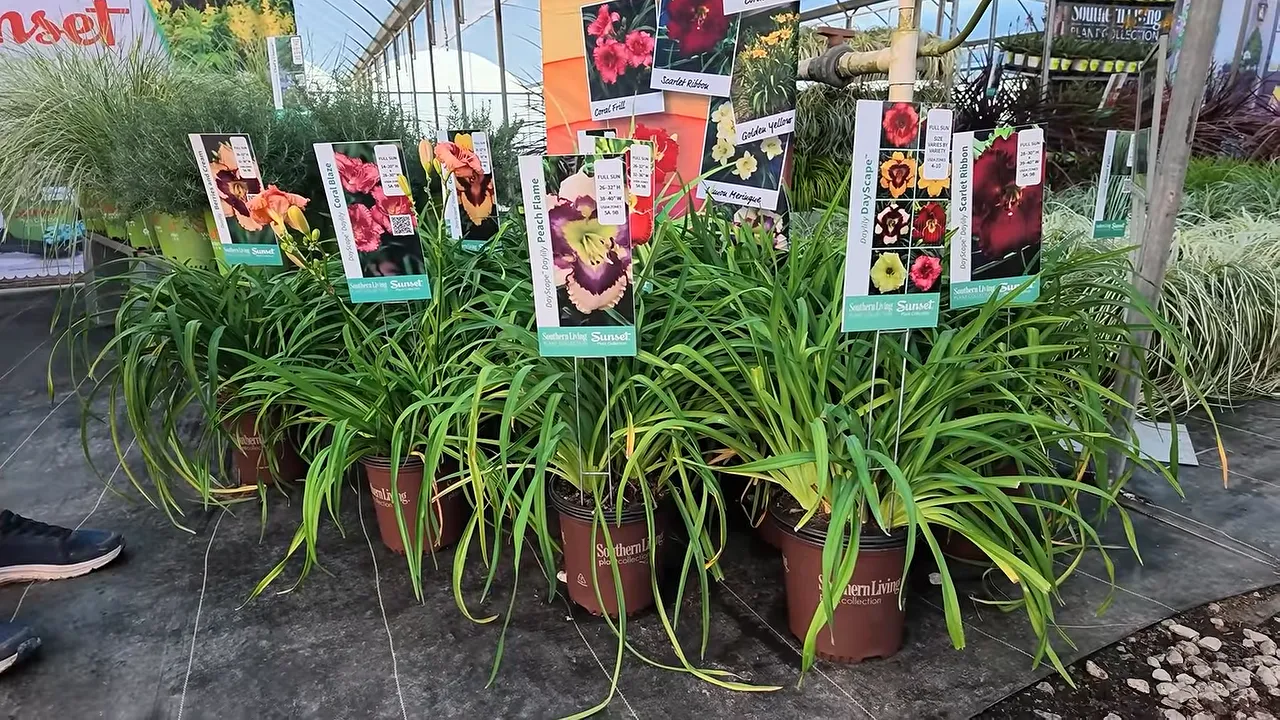
These plants still had remarkably clean foliage in south Alabama in November, not long before seasonal dormancy. Even without a lot of flowers, they made good-looking plants.
In the earlier comparison planting, the difference from other daylilies was obvious. They had also been placed under rust pressure, alongside affected plants, and their resistance was impressive. That does not mean I would describe them as immune, but resistance was clearly a major breeding goal.
The series offers a broad range of flower colors paired with repeat bloom. For me, the cleaner leaves are what make the whole package especially interesting. Steph and I had an area in mind at home where we hoped to try one of each.
More New Plants Are Still on the Way
The introductions do not stop with these groups. More hydrangeas are coming from the breeding work behind Groundbreaker, additional perennials are entering the collections, and there were two future Encore Azaleas being discussed: a dwarf white selection and a small, intensely hot-pink one.
Those azaleas were still well out in the future at the time of the event, with possible releases discussed around 2027 or 2028. That is a preview, not an availability promise.
There were also separate groups of shade plants and plants especially suited to western conditions. Some of those western selections can work in the Southeast, too, but sharp drainage is important. A plant that does well in a drier region may not appreciate sitting wet in a southeastern garden.
What excites me most about all this breeding is that the improvements are useful. A hydrangea with a much lower habit. A camellia that flowers in summer. A screening holly that naturally stays narrower. A daylily that still has attractive foliage late in the season.
Those are the kinds of changes that make a difference after the plant comes home. New flower colors are fun, and we certainly enjoy them, but better habits, longer interest, and healthier foliage are what turn an interesting introduction into a plant you are glad you put in the garden.


