In a garden with about a thousand different plants, it takes something special to stand out. Silver Caress™ Mahonia has done exactly that. Stephanie and I keep coming back to the three we planted together along our foundation, and it really comes down to the foliage.
The blue-green color, soft texture, and full, compact habit bring something different to a shady space. The yellow flowers are a wonderful bonus, especially when bees find them on warm winter days, but this is a shrub I would grow for its leaves alone.
Silver Caress is part of the Southern Living Plant Collection. We received our plants ahead of wider availability, and I expect more growers to be producing it toward late 2026 and into 2027. It is one worth keeping an eye out for if your shade garden needs a little contrast.
Key Takeaways
- Silver Caress Mahonia adds soft, blue-green evergreen foliage to shade gardens in Zones 7 through 9.
- Moist, well-drained soil supports establishment, while established plants can tolerate considerable dryness.
- Yellow flowers provide seasonal interest and attract bees on warmer days from fall into winter.
- Prune overgrown canes at the base after flowering rather than trimming the shrub across the top.
Silver Caress Mahonia at a Glance
- Plant type: Broadleaf evergreen shrub
- Botanical name: Mahonia eurybracteata
- Mature size: About 3 to 4 feet tall and wide
- Hardiness: USDA Zones 7 through 9
- Light: Part shade to shade, with some morning sun tolerated
- Soil: Moist, well-drained conditions
- Flowers: Vivid yellow, appearing from mid to late fall and intermittently through winter
- Maintenance: Low, with occasional selective pruning
- Animal resistance: Deer and rabbit resistant
This is not quite as cold hardy as some other mahonias. There are mahonias that grow in Zone 6, but I would treat Silver Caress as a Zone 7 through 9 plant. If you are unsure of your zone, the USDA Plant Hardiness Zone Map is a useful starting point.
Soft Foliage That Adds Year-Round Interest
Silver Caress makes multiple stems from the base, which helps create a very full plant. Our grouping of three has filled in beautifully without much help from us.
If you know Soft Caress Mahonia, that gives you a good point of comparison. Silver Caress has slightly broader leaflets, so its texture is not quite as fine as Soft Caress. It still has that soft-textured appearance that works so well among larger-leaved shade plants.
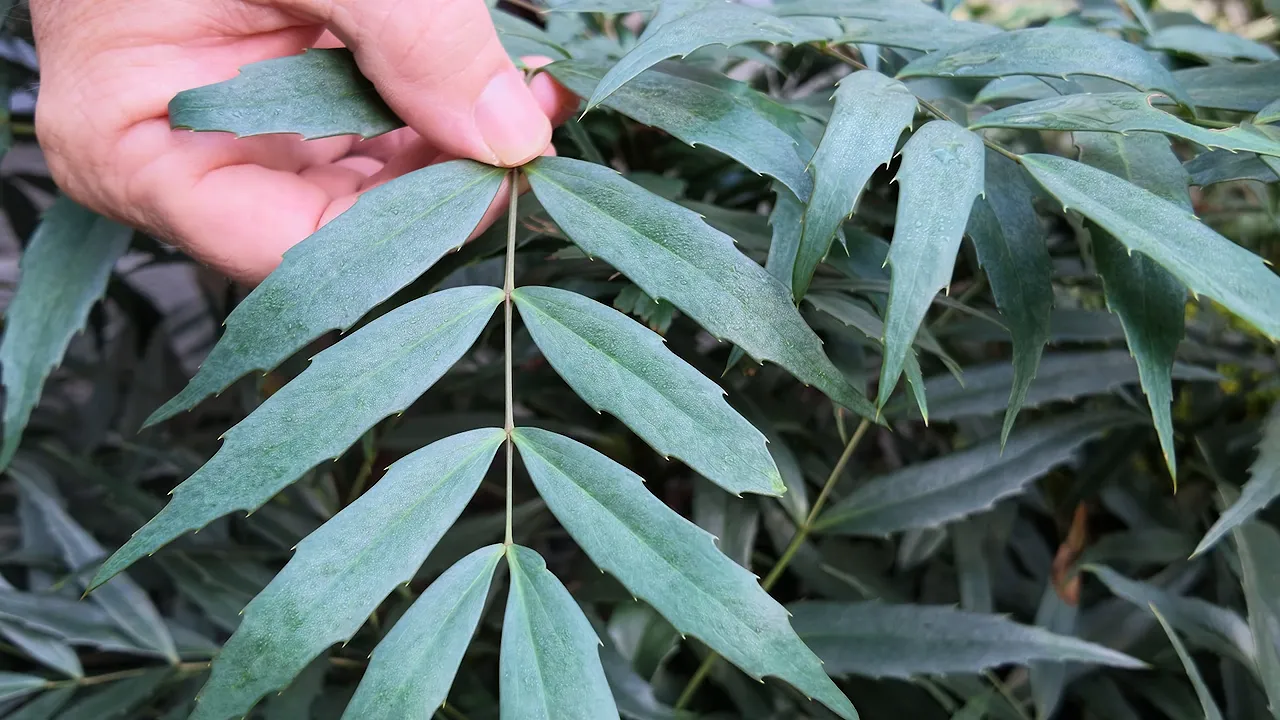
The foliage stays blue-green through the growing season, with a bit of silvery color on the undersides. In winter, it can pick up a purple tinge depending on how cold it gets. That gives you some seasonal change without losing the evergreen structure.
A lot of plants we use in shade have fairly large leaves. Those are useful, but when everything has a similar texture, individual plants can disappear into one another. Silver Caress gives you a finer-textured evergreen to break that up.
Yellow Flowers From Fall Into Winter
Although the foliage is the main attraction for me, Silver Caress is also a very good flowering shrub. Expect flower buds around mid to late fall, followed by yellow flowers that open on and off through winter.
At the beginning of October in our garden, the plants already had buds all over them. Most were right at the ends of the shoots, which is where you would normally expect them.
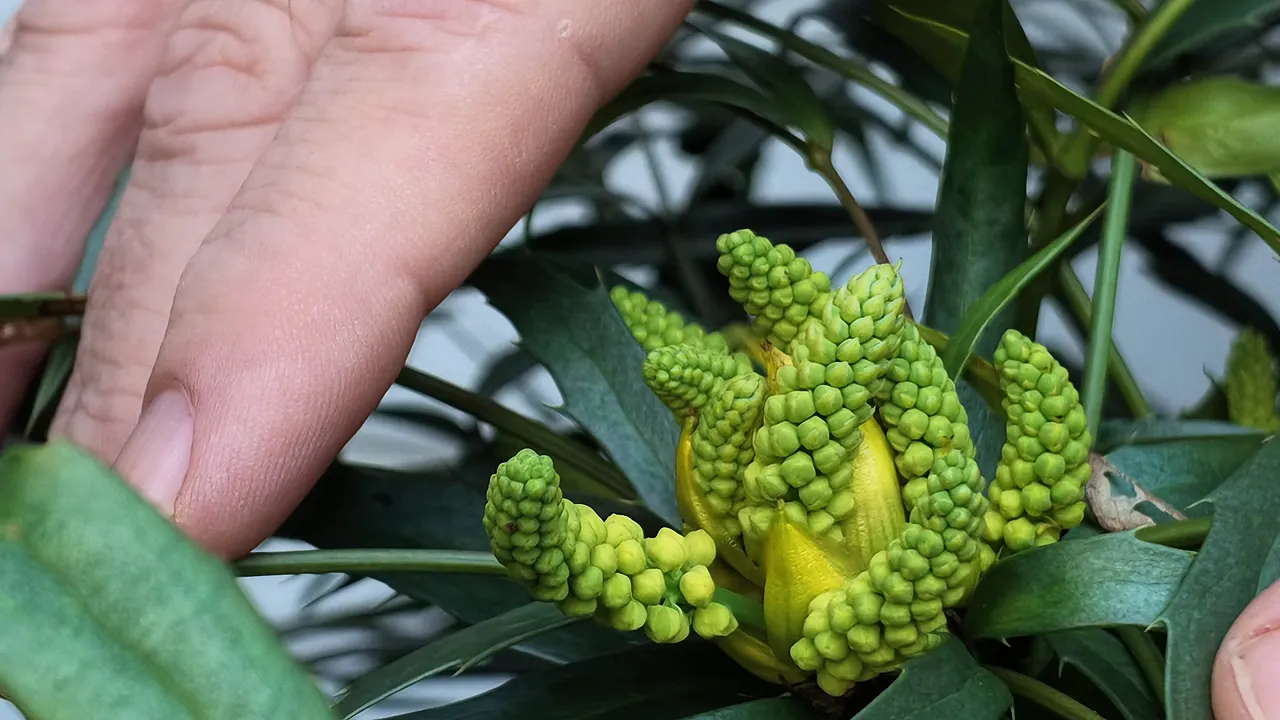
That year, rain encouraged another flush of growth after some buds had formed. A few shoots grew a little above the flower clusters, partially hiding them. That is simply something you may notice when the plant gets an opportunity to grow again. A small piece of foliage could be removed to expose a hidden cluster, but most flowers remain easy to see at the shoot tips.
The winter bloom period is particularly useful. We do not have an abundance of flowering plants for that season, and on warmer days, bees turn up to take advantage of those vivid yellow flowers. It is a nice extra benefit from a shrub that is already earning its place with the foliage.
Where to Plant Silver Caress Mahonia
Morning Sun and Afternoon Shade
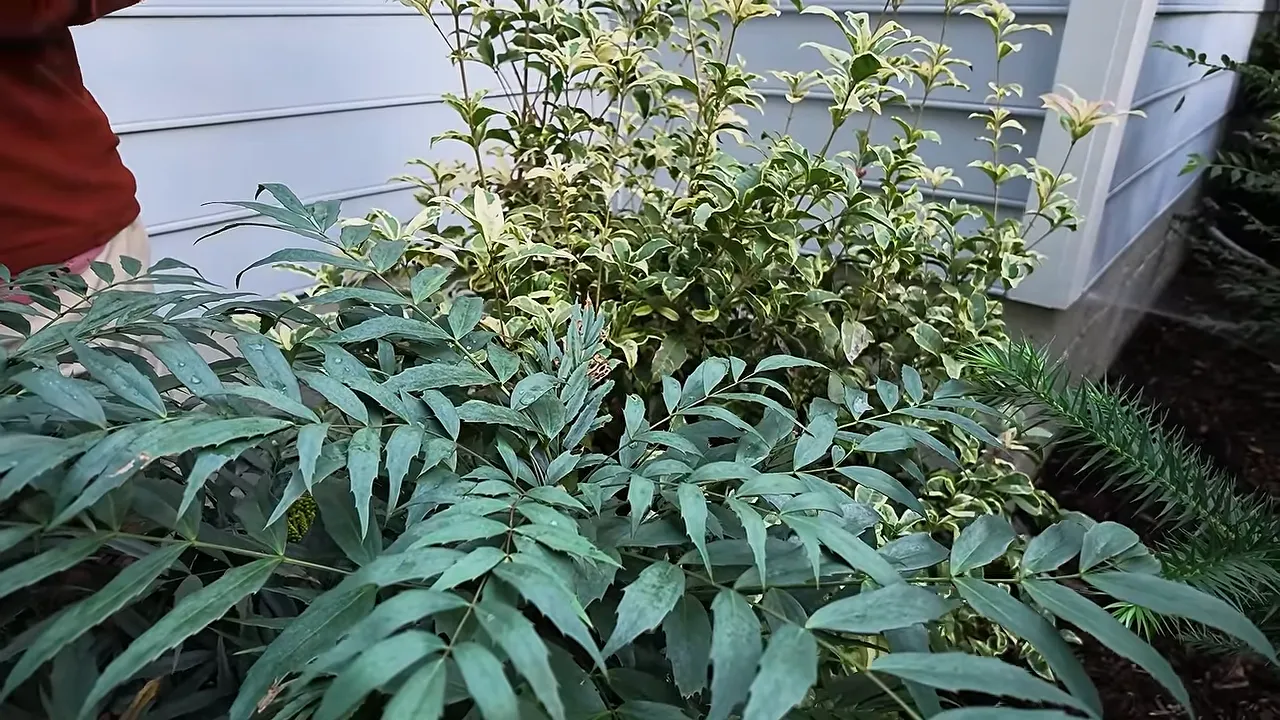
Our three plants receive roughly three to four hours of direct morning sun. After that, the house puts them in shade. That has been a very good arrangement, giving them enough light to stay full and compact without exposing them to the strongest sun.
An east-facing foundation is an especially good place to consider. Silver Caress can handle some morning sun and potentially some late afternoon sun, but I would avoid a location with a lot of direct midday sun.
It is a part-shade to shade shrub, not something I would choose for a hot, exposed planting bed.
Shade Gardens and Contrasting Companions
Beyond foundation plantings, Silver Caress fits nicely into Asian-style gardens and mixed shade borders. Its biggest design contribution is the difference in texture and color.
Think about using it with:
- Hostas, cast iron plants, and fatsia: Their larger leaves make the mahonia’s finer texture more noticeable.
- Hellebores: Another opportunity to mix leaf shapes in a shady bed.
- Heuchera and variegated hostas: The blue-green foliage provides a contrasting backdrop for different foliage colors.
- White-flowering shade plants: The evergreen foliage helps those lighter flowers stand out.
Containers in Warmer Zones
Silver Caress is also an option for containers in Zones 8 and 9. We have grown Soft Caress, which has similar cold hardiness, in a container in our Zone 8 back garden with good results.
I would be more cautious about a container in Zone 7. Even though Silver Caress is hardy in the ground there, it may struggle in that situation. Container use is a better bet toward the warmer end of its range.
Soil, Drainage, and Watering
“Moist but well-drained” describes what a great many shrubs want, and Silver Caress is no exception. It likes access to water, but it does not want to sit in water.
We have clay-based soil, so we planted ours slightly mounded above the surrounding grade. That matters in this particular foundation bed because the house does not have gutters. Water rolls off the roof, and the area can become fairly wet at times. Raising the planting slightly helps keep the plants from sitting in that water.
If a location stays wet between rains or waterings, I would either avoid it or address the drainage and planting elevation. This is an easy plant, but that does not make a persistently soggy site a good choice.
On the other hand, Silver Caress can become quite drought tolerant once established. The important part is getting it established first.
Keep a closer eye on new plants in dry shade. When the shade comes from large trees, those trees’ roots can make establishment slower. Do not assume a newly planted shrub is ready to manage on its own just because it will eventually tolerate drier conditions.
How to Prune Silver Caress Mahonia
Our plants have needed almost nothing from us in roughly two years. A few canes have stretched above the main body of the planting, but that does not call for shearing the whole shrub.
The pruning window I would use is after flowering finishes, usually around January or February here, through about the middle of spring. Pruning may only be necessary every other year.
- Identify the individual canes growing well above the rest of the plant.
- Follow those canes down to the base.
- Remove them close to ground level rather than cutting them level with the surrounding foliage.
- Leave the shorter stems to fill in as the plant produces replacement growth.
Cutting a tall cane off at the height of the rest of the shrub encourages it to branch near that cut. Then, instead of one tall piece, you can end up with two or three vigorous pieces in the same spot.
Removing the entire cane at the base works better for maintaining the natural, full habit. You are selectively taking out the pieces that have gotten ahead of everything else, not repeatedly trimming the top.
A Low-Maintenance Evergreen That Offers Something Different
Silver Caress has not needed a special fertilizer program in our garden. We give the garden a light application of organic fertilizer in late winter or early spring, but this shrub has not called for additional feeding beyond that.
Add deer and rabbit resistance to the modest pruning needs, and it is a genuinely low-maintenance plant in the right location.
What keeps impressing me, though, is how much it contributes without demanding much attention. You get evergreen foliage, a compact habit, soft texture, blue-green color, and flowers during a season when flowers are less common. If a shady bed has plenty of plants but still needs something that looks different, Silver Caress Mahonia is a very good candidate.


