Gardening in Fredericksburg, Texas, means taking the heat seriously. This is a landscape that sits somewhere between the Southeast and the desert Southwest, with enough rain to grow a surprising range of plants and enough dry weather to make choosing the right ones absolutely essential.
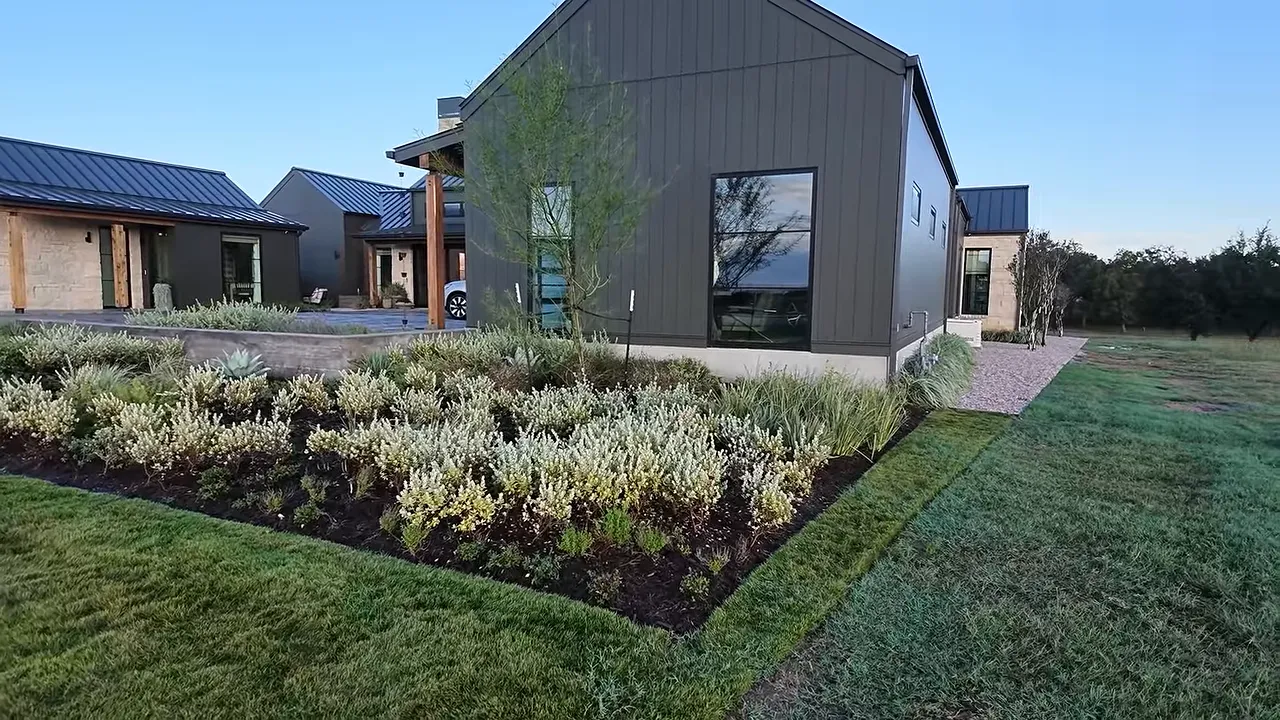
The Southern Living Idea House does a good job of working with those conditions. Agaves, Texas sage, ornamental grasses, rosemary, and strappy foliage plants create a garden with plenty of interest without depending entirely on flowers. Behind the house, outdoor rooms, water features, and a view into the surrounding oaks make the landscape feel like a place to live, not just something to maintain.
Steph and I visited at the beginning of November, which was a very pleasant time to be there. August would be a different conversation. That Texas sun can feel like it is trying to get right inside your skin.
Key Takeaways
- Use mature plant sizes rather than copying the close spacing of a display garden.
- Group plants by watering needs, especially when combining agaves with plants needing regular irrigation.
- Contrast broad leaves, fine grasses, and small foliage to create interest within a restrained color palette.
- Combine selective screening, varied seating areas, and water sound to create comfortable outdoor rooms.
Table of Contents
- Borrow the Design, Not Necessarily the Plant Spacing
- The Front Garden: Strong Shapes and Soft Texture
- Texas Sage and Palo Verde Fit the Climate
- A Supporting Cast of Tough Perennials and Foliage Plants
- Design With Texture, Then Match the Watering
- The Courtyard: Privacy, Rosemary, and Water Sound
- Mulch and Containers Help Shape the Garden
- The Back Garden Connects Outdoor Rooms to the Oaks
- One Ongoing Battle: Bermuda Grass in the Zoysia
- The Best Lesson Is to Work With the Site
Borrow the Design, Not Necessarily the Plant Spacing
There are two things to understand before borrowing ideas from this garden.
First, an Idea House needs to look finished when it opens. That means plants go in closer together than most of us would plant them at home. The groups of autumn sage are dense, and there are places where several shrubs occupy a space that one mature plant could eventually fill.
One group of Texas sage contains roughly nine plants. Depending on the selection, a single plant could fill that space over time. The same thing happens with the Emerald Snow loropetalum, where a group of four provides immediate impact.
A display garden is showing you a finished effect, not necessarily a long-term spacing plan. Take the combination home, but check the mature size of the particular plants you buy.
Second, some areas appeared to be getting a little too much irrigation. That is easy to do when a system is set up and left to run. The plant choices are mostly very appropriate, but even the right plant can struggle if its roots stay wetter than it wants.
The Front Garden: Strong Shapes and Soft Texture
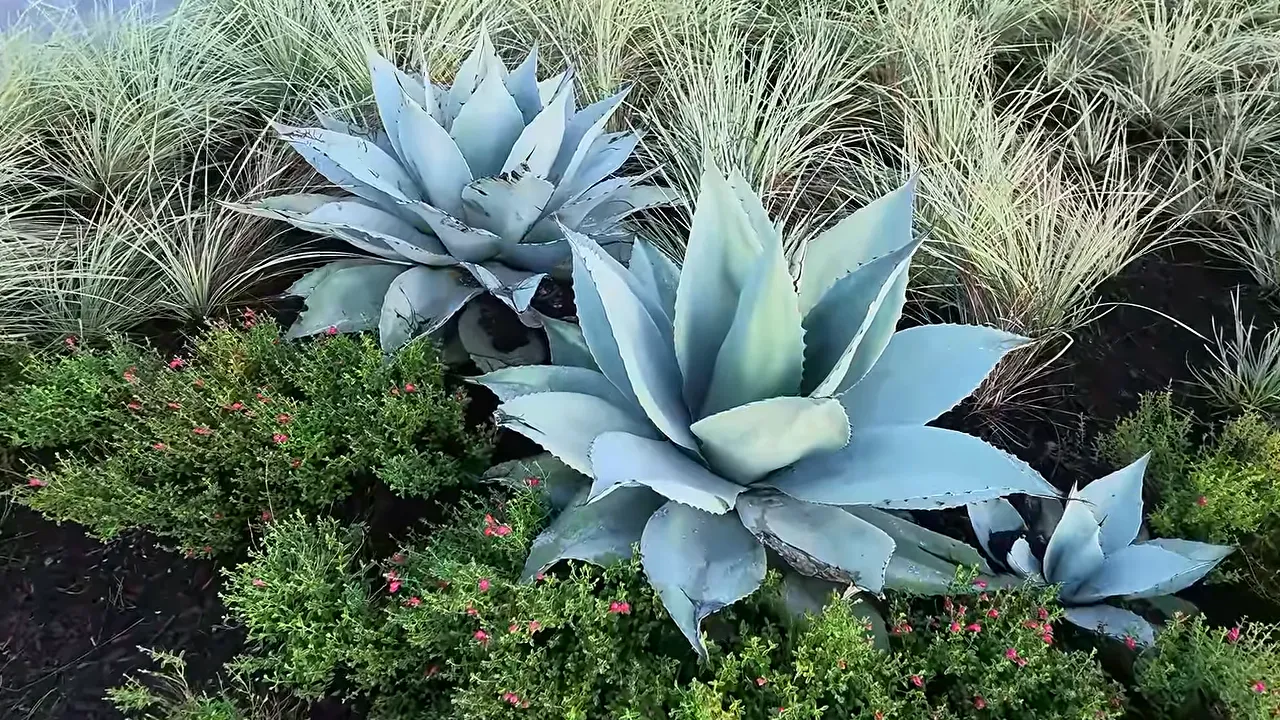
The front beds establish the main design idea immediately: broad, blue agave leaves surrounded by fine, soft foliage. That contrast carries through much of the landscape.
Autumn sage brings the flowers
The Salvia greggii, commonly called autumn sage, was returning to flower during our early November visit. These salvias tend to have strong spring and fall flowering periods, and this planting looked ready to put on considerably more color over the following weeks.
There are lots of selections of Salvia greggii. I would not try to identify the exact variety here, but the role is clear: a low, leafy planting with seasonal flowers around the more architectural plants.
Whale’s tongue agave supplies structure
The whale’s tongue agaves are excellent focal points. Their broad leaves give you something substantial to look at among all the fine blades and small leaves.
They also make the watering issue especially important. These are not plants that need frequent irrigation once established in a suitable location. In a place that receives seasonal rain, drainage and avoiding unnecessary supplemental water matter a great deal.
Platinum Beauty lomandra is a favorite for dry conditions
Platinum Beauty lomandra is one of my favorite plants in this palette. It handles tough sun and dry conditions, and its fine, variegated foliage softens the heavier shapes around it.
Steph and I have used it in containers in Raleigh, where our rainfall makes growing it in the ground a different proposition. It has come through several winters for us, although we lost one after a cold night when we should have protected it. We replaced it, and we will be a little more cautious about winter protection.
For an in-ground planting, I want sharp drainage and a location that can dry out. As a container plant, it is a very useful option for someone who does not want to be tied to a watering can every day. It is the sort of plant I think of when somebody wants to water before a week at the beach and water again after getting home, with the usual attention to pot size, exposure, and weather.
Mexican feather grass adds movement
Mexican feather grass provides an entirely different texture. It is exceptionally soft-looking, moves in the breeze, and holds up in exposed, difficult spaces. It is a plant we can use in Zone 8, and I have seen it doing well in those tough strips between a sidewalk and the street.
Here, it helps keep the agaves from looking too stiff. The agave stays put visually while the grass moves around it. That is a simple combination, but a really good one.
Texas Sage and Palo Verde Fit the Climate
Texas sage, or Leucophyllum, is one of the standouts in this garden. We had been traveling through western Oklahoma, Arizona, and Texas, and it was impressive to see how often this plant looked good in difficult conditions.
The blue-gray foliage is attractive even without flowers. Add those bright blooms, including the fall display we encountered, and it becomes quite a show-off.
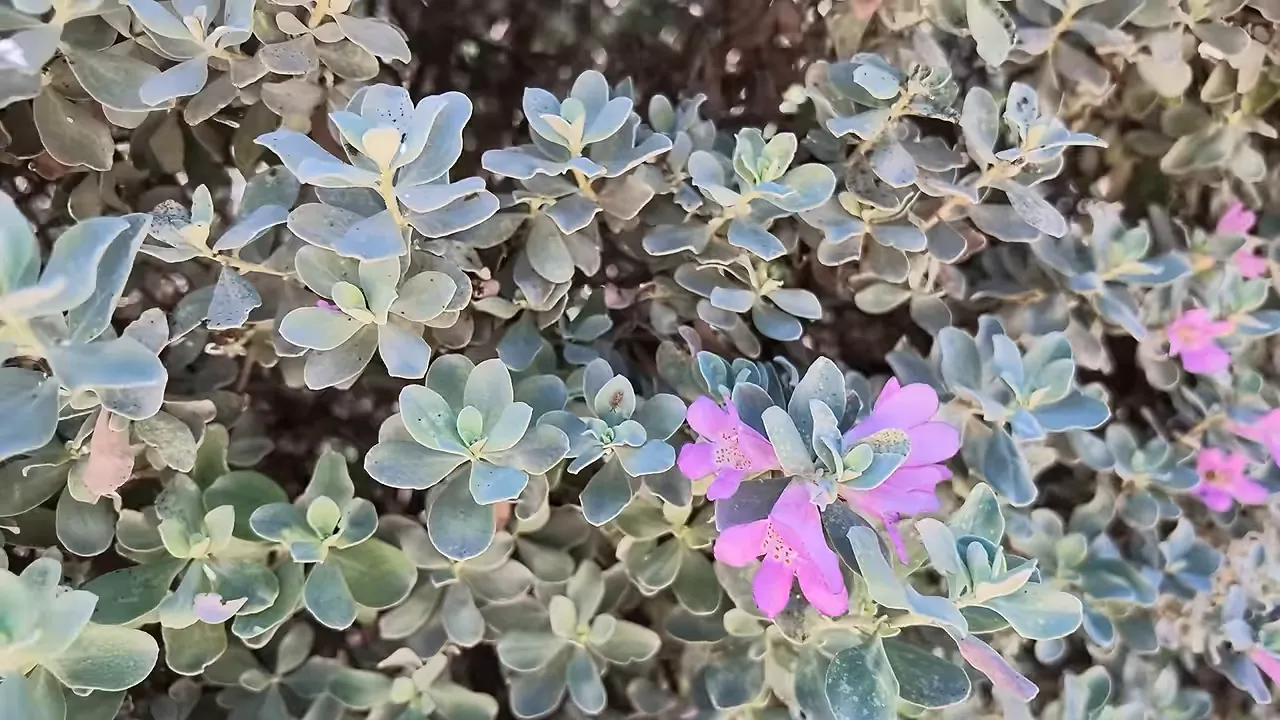
There are at least two different Texas sage selections in the front landscape, although I could not identify the cultivars. The plants in the raised bed looked a little better overall than some of those below. My suspicion was that they were receiving slightly less irrigation. That is an observation, not a diagnosis, but it fits the larger pattern of a few dry-loving plants looking a little too wet.
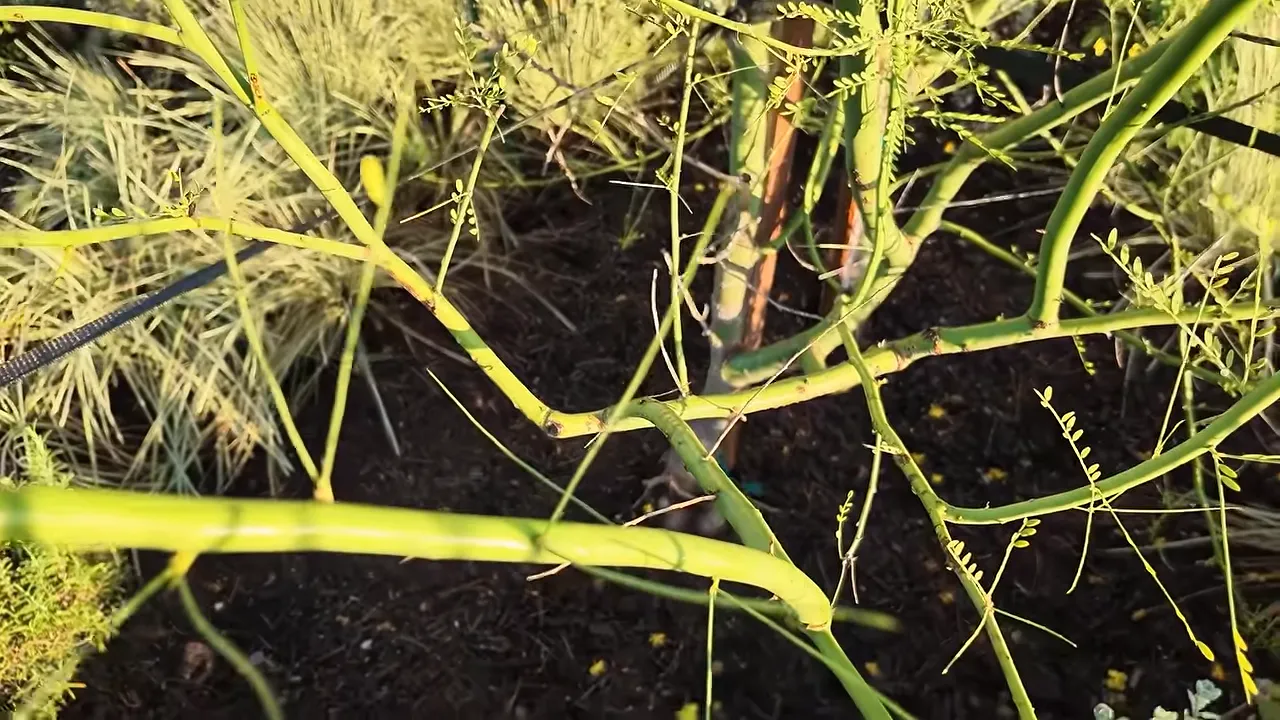
Above them are palo verde trees. There were still a few yellow flowers present, with honeybees working around the tops, although the main flowering season is typically spring.
Palo verde has a remarkable adaptation: its green stems and bark can photosynthesize. At times when it carries few leaves, it can still feed itself through those green surfaces. Think about that for a minute. It can reduce its leafy canopy and keep functioning in a hot, difficult environment. That is a pretty wild solution.
A Supporting Cast of Tough Perennials and Foliage Plants
The garden is not just agaves and grasses. Several other plants fill in the beds and give the design a longer season of interest.
- Walker’s Low catmint: We found a tag confirming this selection. It fills the center of one planting area, although most of its flowers had finished by our visit.
- Lamb’s ear: A good choice for tough conditions, especially where it is slightly dry and has some slope. Some of the best lamb’s ear I see is growing beside a road and receiving very little attention.
- Russian sage: A useful plant for this kind of heat and exposure, with adaptability to soil pH adding to its appeal.
- Achillea, or yarrow: The young planting was holding up well and should contribute flowers in spring and early summer.
- Dianella: Its strappy foliage brings another variation of green and blue into the design. It also works well in containers.
- Milky Way Dietes: This variegated iris relative has strong, upright foliage that earns its place even when it is not flowering.
Milky Way Dietes is part of the Southern Living Plant Collection. I like plants that do not need to be in bloom to justify the space they occupy, and this is one of those. Tough, strappy, ornamental foliage does a lot of work here.
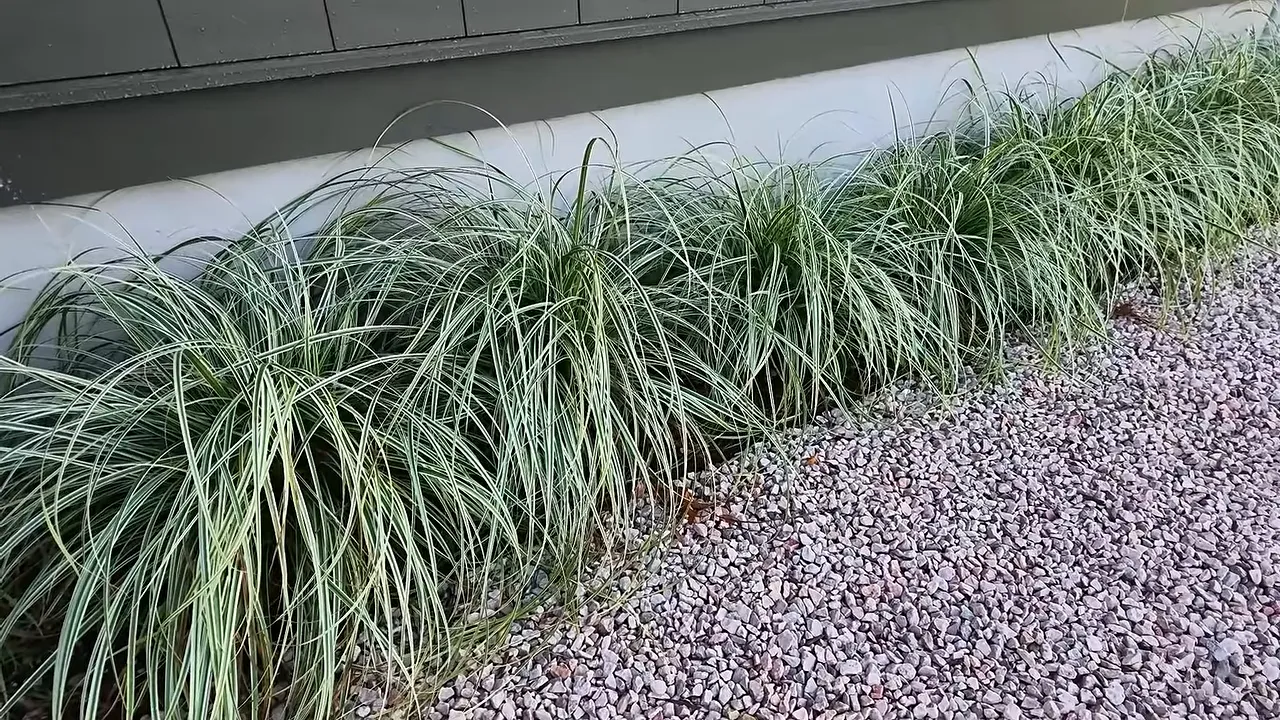
Feather Falls carex is used in groups near a bedroom alcove and along the foundation. It was holding up beautifully. This is just a tank of a carex, and its performance here really stood out to me.
Emerald Snow loropetalum supplies a low-growing, leafy evergreen element with white flowers. It may throw a few blooms as fall cools down, but the main display comes in spring. Again, I would use the mature size to decide how many belong in a home garden rather than copy the tight grouping here.
Design With Texture, Then Match the Watering
Much of this landscape lives in a fairly narrow color range: blue, silver, gray-green, and green. That is not a limitation if you pay attention to leaf size and texture.
Broad agave leaves sit beside fine grasses. Small-leaved Texas sage contrasts with striped lomandra and Dianella. Soft lamb’s ear adds another surface entirely. The foliage may share similar colors, but the plants do not look alike.
That is especially useful in the Texas Hill Country, where heat, rocky soils, seasonal rainfall, and potentially higher soil pH influence the available plant palette. You are not going to see exactly the same collection of leafy evergreens that we grow in Raleigh. Plants adapted to the Southwest, Australia, and South Africa become part of the conversation.
If you are choosing plants for a similar site, a soil test through Texas A&M AgriLife is a practical way to replace guesses about soil conditions with useful information.
But a good-looking combination still needs compatible care. Do not put every plant on the same irrigation schedule simply because it shares a bed.
An established agave may receive plenty of water from rainfall, while another plant nearby may continue to depend on supplemental irrigation. Those needs should be separated in the design and irrigation layout.
The low area near the rosemary appeared to be collecting irrigation runoff. Around the lamb’s ear, water from the driveway may also have been contributing to the wetness. That is the kind of detail worth noticing: the irrigation system is not the only thing determining how much water reaches a plant.
It is very easy to love a plant to death. Sometimes the best adjustment is less water, not more attention.
The Courtyard: Privacy, Rosemary, and Water Sound
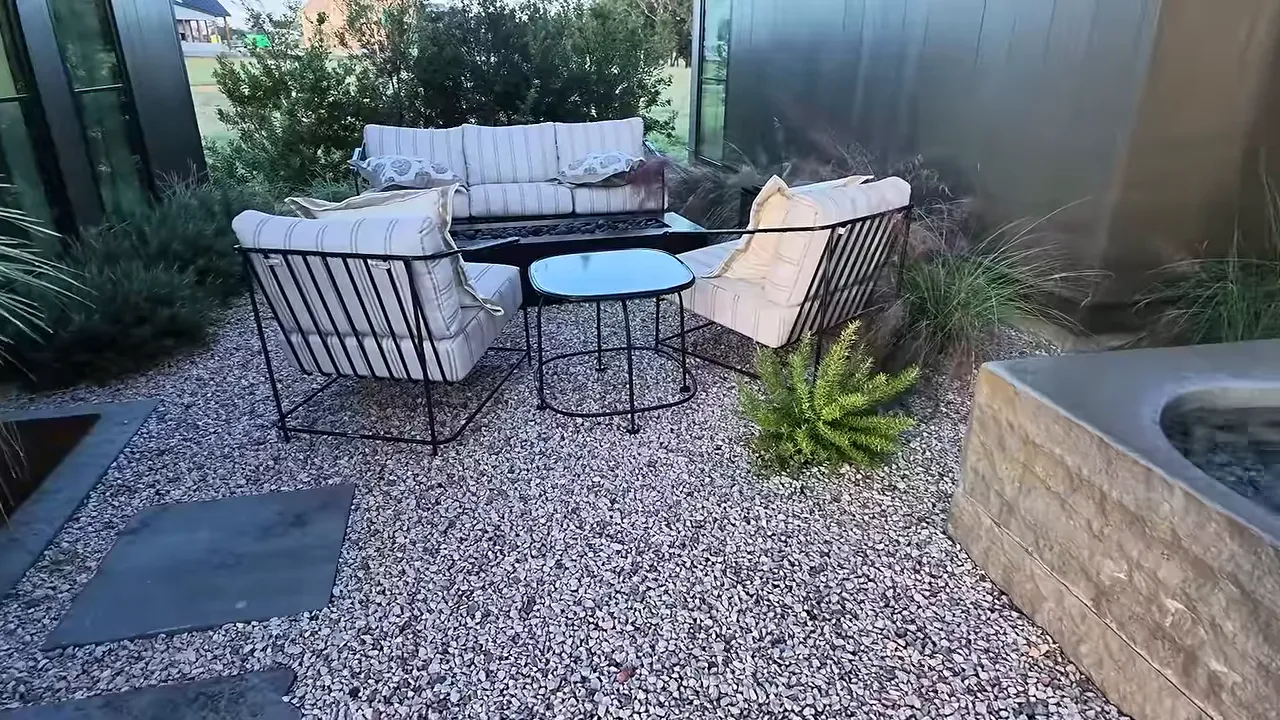
Between the main house and a separate suite is a small courtyard with seating, a fire pit, and a water feature. It is a really nice use of that space.
Most of the foundation planting stays low, but this outdoor room needs screening in a few places. Wax myrtles provide it. At about six feet tall, they were already making it fairly difficult to see through from the other side.
The important thing is to manage them for the job they are supposed to do. They could grow taller than the house, but that would not necessarily create better privacy at chair height.
- Use occasional pruning to encourage a full, compact screen.
- Avoid allowing all the foliage to move seven or eight feet above the seating area.
- Remember that large wax myrtles can be vulnerable to breakage in an ice event.
The branches are surprisingly brittle. Keeping the plants more compact makes sense both for screening and for reducing the amount of sprawling growth exposed to ice.
Deer are another challenge here. There was evidence of browsing in the garden, and a young buck was nearby among the oaks. Wax myrtle is a useful choice in that setting, although the presence of deer is a reminder to consider browsing pressure alongside heat and water needs.
Choose rosemary that fits without hard pruning
Chef’s Choice rosemary appears in the courtyard and elsewhere in the planting. We have grown several rosemaries in Raleigh, and this one keeps winning for me because it combines good culinary use with a manageable size.
That size matters. Rosemary tolerates taking some fresh growth for the kitchen, but it does not appreciate being cut in half down into old woody growth. Choosing a compact selection is much easier than continually trying to force a large one into a small space.
There were also more upright rosemary plants in the front garden, although I could not identify those selections.
Water sound changes how the space feels
Outside the courtyard, I could hear traffic from the main road. Inside it, the water sound covered that background noise remarkably well.
That is a useful design lesson. A water feature is not only something to look at. In the right location, its sound can make a small outdoor room feel much more separate from everything happening around it.
Mulch and Containers Help Shape the Garden
The landscape moves between hardwood mulch in the front beds and gravel in the courtyard and other spaces. That feels appropriate for a garden sitting between two very different gardening regions.
Hardwood mulch helps retain moisture where that is useful. Gravel creates a different setting visually, especially around rosemary, grasses, and blue-green foliage. I particularly like the clean contrast between the gravel and those plants.
The same Mexican feather grass looks different against brown organic mulch than it does against stone. You do not always need a new plant to create a different effect. Sometimes changing the material around it does the work.
Containers add another layer. The plantings include mahonia, Dietes, Dianella, lomandra, and other foliage combinations, with abelias also appearing around the outdoor living spaces. Some of those plants could be used in the ground locally, while others are being used more flexibly in pots.
Leucadendron also appears in a large container. With a drought-tolerant plant and a substantial pot, you have more flexibility between waterings than you would with a small container full of thirsty plants. I would still base any time away on the actual plant, container, and weather rather than assume every pot can be left for the same number of days.
The Dianella is particularly good up close, where you can appreciate the changing green and blue tones of its foliage.
The Back Garden Connects Outdoor Rooms to the Oaks
The back of the house opens into a series of patios and decks at different heights. There are spaces for dining, lounging, sitting outside a bedroom, and gathering around a fire pit.
I like that variety. It reminds me of a patio furniture display we built early in my horticulture career, with decking, lawn, and raised areas so people could understand how furniture worked in different settings. Different levels and surfaces can make adjacent spaces feel distinct without enclosing every one of them.
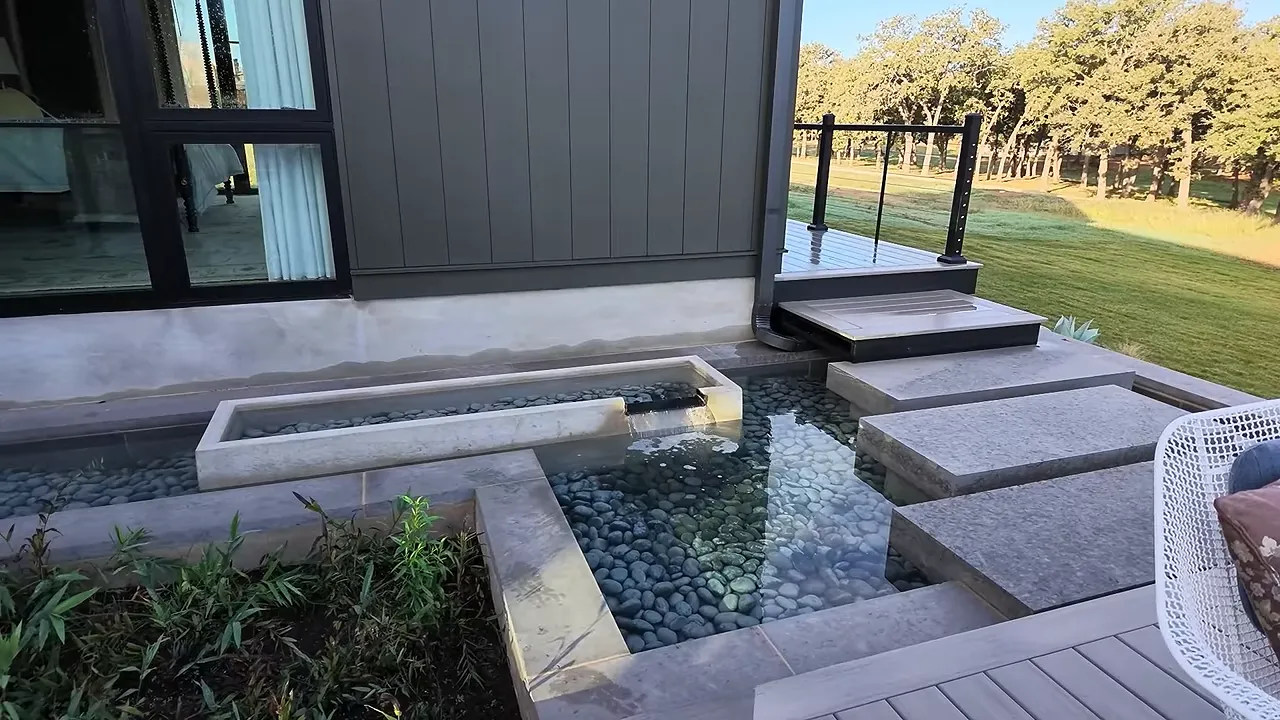
Here, broad stepping stones cross the lawn toward the lower fire pit area. Water features sit closer to the house, including one with steps that allow you to walk across the water to another patio. Containers help connect the hard surfaces to the planting.
Along the beds, the combination of agave and Mexican feather grass repeats. It is just as effective here as it is out front: strong blue rosettes, soft golden foliage, and movement in the breeze.
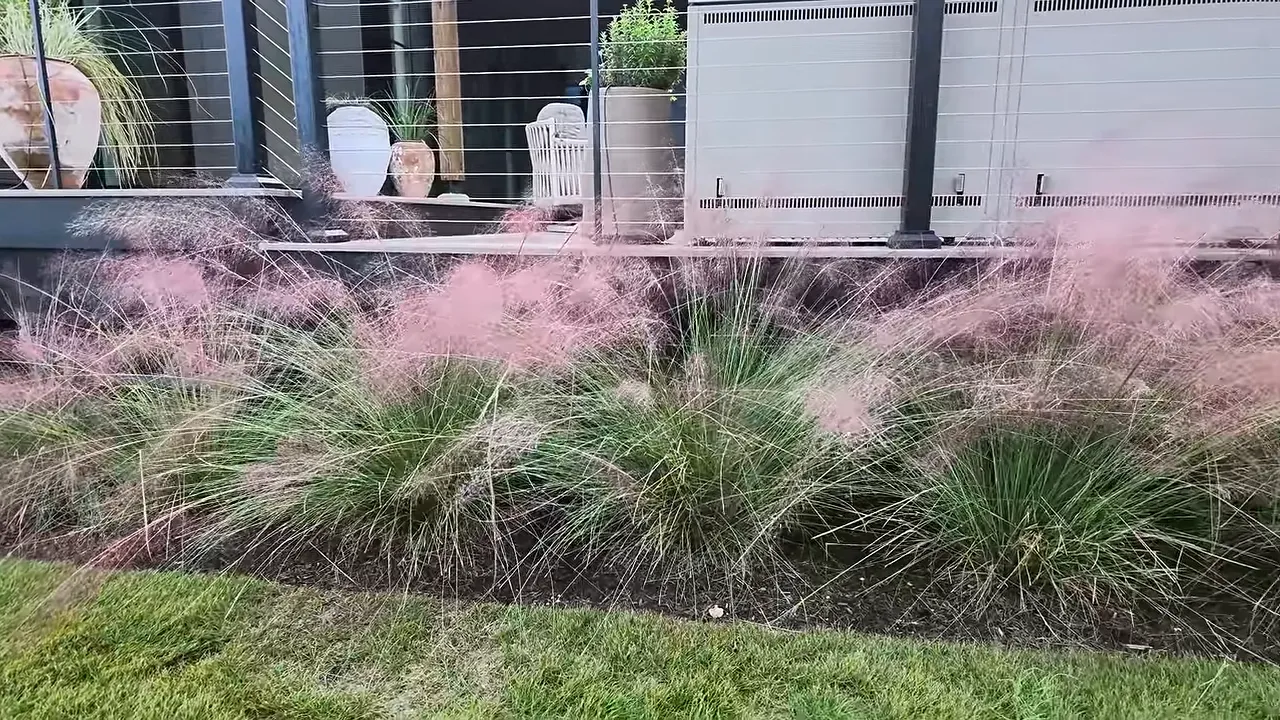
Pink muhly grass along the back foundation was approaching peak color and looked fantastic. The muhly in the more sheltered courtyard was a little floppy. I suspect that group would appreciate more sun, although rain the night before our visit may have contributed to its appearance.
Beyond the maintained garden is a pond, a neighborhood trail, and an oak landscape. Much of it has the feel of an oak savanna, with relatively low trees and open space between them.
Traveling east from Tucson through New Mexico and into the Hill Country, the change in vegetation is fascinating. Here, the landscape is becoming wooded again, but it is not the pine landscape farther east. Those surrounding oaks give the house a very specific sense of place.
A few unexpected trees
There are peach trees toward the back, losing their leaves at the end of the season. Peaches might seem unexpected in this setting, but Fredericksburg is a peach-growing area. Early bloom and the risk of a late frost are important considerations with peaches, even in a region known for growing them.
A protected pocket near the house contains a Japanese maple. It had a little crispy foliage, but overall it had held up reasonably well in that sheltered position.
For a Japanese maple-like effect in difficult climates, Korean maple hybrids are also worth investigating. Some were developed with cold hardiness in mind, but we have seen encouraging heat performance as well, including excellent plants in Clinton, Oklahoma. I would not treat that as permission to put any maple into an exposed Texas site, but it does broaden the possibilities.
One Ongoing Battle: Bermuda Grass in the Zoysia
The lawn is zoysia, and Bermuda grass was already finding its way into it. With Bermuda in adjoining areas and neighboring lawns, that is going to be an ongoing maintenance issue.
It is hard to have nice things when Bermuda grass is nearby. It wants to creep into the beds, and in a zoysia lawn it becomes a weed.
I spent several years fighting Bermuda in a zoysia display lawn early in my career. Seeing it here brought that memory right back. The lawn and stepping stones look beautiful, but the grass boundary is not something I would assume will take care of itself.
The Best Lesson Is to Work With the Site
Most of the plant choices at this Southern Living Idea House make good sense for the setting. The garden uses tough plants, repeats a restrained foliage palette, and creates interest through texture rather than asking flowers to do everything.
The outdoor rooms are just as instructive as the planting. Low foundation plants preserve views of the house, taller shrubs screen only where needed, and water sound makes intimate spaces feel quieter. Beyond that, the garden leaves room for the surrounding oaks to be part of the experience.
As the planting settles in, the biggest improvement I would look for is irrigation that responds to actual conditions: Is the soil wet? Has it rained? Does this particular plant need more water?
The right plants are a strong start. Giving them room to mature and watering them according to their needs is what lets that good design last.


